What Do Solar Farms Actually Do? Where the Energy Goes After It's Generated
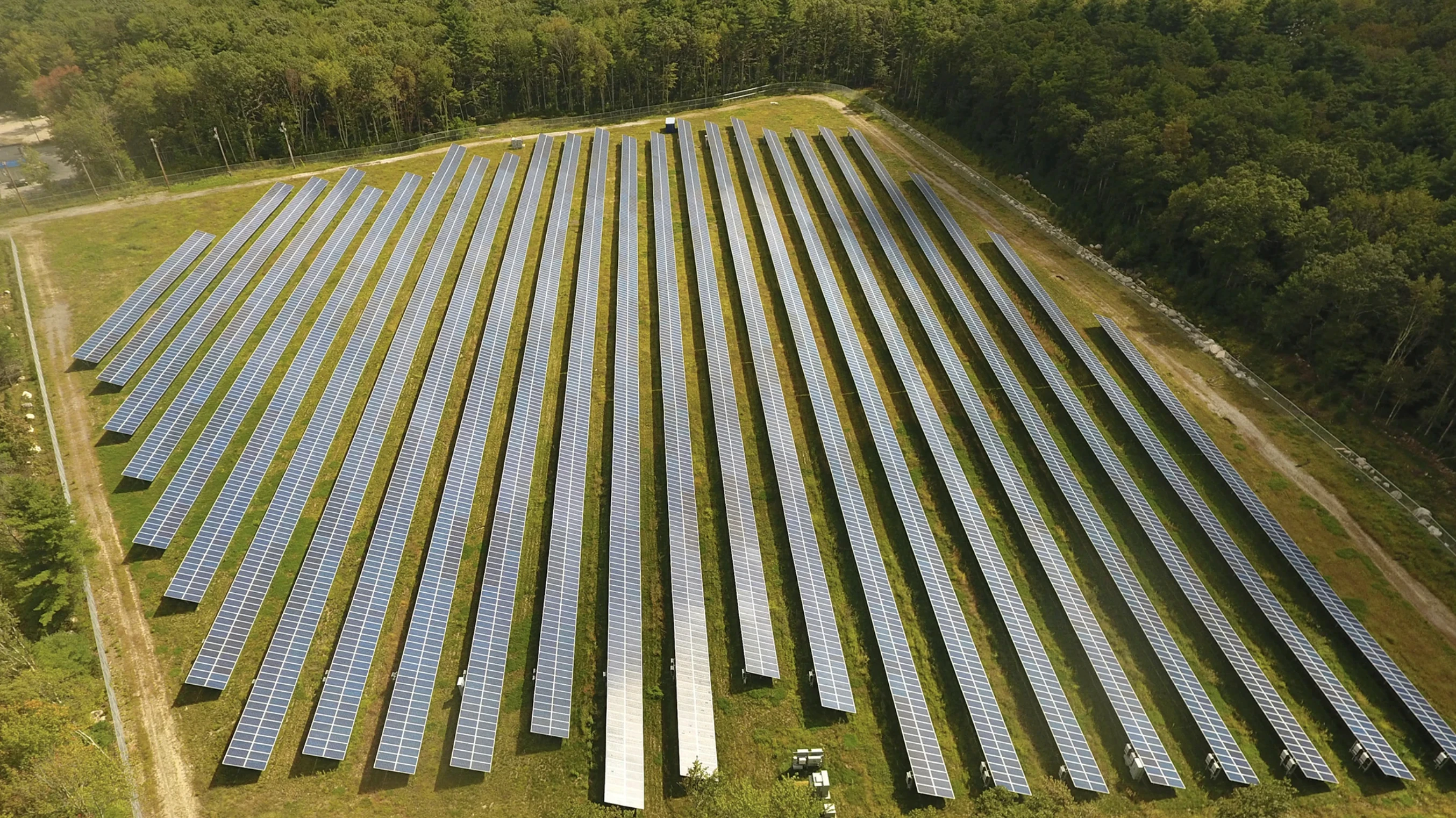
Most people have driven past a solar farm — rows of panels arranged across a field, angled south, silently facing the sky — and had a vague sense that something useful was happening without being able to say exactly what. The panels are the obvious part. Everything after that is invisible infrastructure, and it's surprisingly interesting.
This article traces the full path from sunlight to usable electricity: what happens at the panel, how the power gets from a field to a business drawing from the grid, and who the electricity actually goes to once it gets there.
What a Solar Farm Is
A solar farm — also called a photovoltaic power station, solar park, or solar garden — is a large array of ground-mounted solar panels designed to generate electricity at scale and feed it into the electrical grid. Unlike a rooftop system sized to offset one building's consumption, a solar farm generates power for a broad customer base and operates more like a power plant than a building improvement.
Projects are generally categorized by output capacity:
Type | Typical Size | Grid Connection | Primary Customer |
|---|---|---|---|
Community solar | Under 10 MW | Local distribution lines | Subscribers (homes, businesses) who receive bill credits |
Mid-scale / commercial | 10–50 MW | Distribution or subtransmission | Utilities, commercial PPAs |
Utility-scale | 50–2,000+ MW | High-voltage transmission | Wholesale electricity markets |
The farms most people drive past in rural New England — often 5 to 50 acres of panels — tend to sit in the community solar to mid-scale range, feeding into regional distribution or transmission lines that carry power across the grid.
How much land does a solar farm need? The general rule is 4–7 acres per megawatt of installed capacity. A 5 MW community solar farm might cover 25–35 acres. A 100 MW utility-scale project can span 500–700 acres.
How much electricity does that produce? One megawatt of solar capacity generates roughly 1.2–2 million kilowatt-hours per year (depending on the region and sun exposure), which is enough to power approximately 120–200 average homes annually.
The Journey: From Sunlight to Your Light Switch
Here's the step-by-step process that turns photons into usable electricity on the grid. Most people know step one. Almost nobody knows steps two through five.
Step 1: Panels Convert Sunlight to DC Electricity
Each solar panel contains photovoltaic (PV) cells — semiconductor materials, typically silicon — that release electrons when light strikes them. Those moving electrons are electricity. This is the photovoltaic effect, and it produces direct current (DC): electrons flowing in one direction, at a voltage determined by the panel's design and the intensity of the sunlight hitting it.
At this stage, the power is raw and unusable by anything connected to the electrical grid. DC at panel-level voltage can't travel efficiently over distance, and it's not the form of electricity that industrial equipment, commercial buildings, or homes actually run on.
Modern commercial solar panels convert sunlight to electricity at approximately 20–22% efficiency. Next-generation panels reaching the market now exceed 22% in commercial production, and bifacial panels — which capture light reflected off the ground onto their rear surface — can boost total energy output by 10–20%.
Step 2: Inverters Convert DC to AC
Before the electricity can go anywhere useful, inverters convert it from direct current (DC) to alternating current (AC) — the form the grid operates on and the form that virtually all electrical loads are designed to accept.
At a utility-scale solar farm, this happens through large central inverters: equipment cabinets positioned throughout the array that collect DC power from groups of panels and convert it in bulk. The inverter also sets the voltage and frequency to match utility standards — without this synchronization, the power can't safely enter the grid.
Modern inverters do more than just convert power. They include maximum power point tracking (MPPT) to extract the most energy from panels as sunlight conditions change throughout the day, and they can provide reactive power support to help stabilize the grid. If something goes wrong — a fault, a frequency deviation, a grid outage — the inverter can shut down automatically to protect both the solar farm and the grid.
Step 3: Transformers Step the Voltage Up for Transmission
Here's where it gets counterintuitive. Moving electricity over long distances at low voltage wastes enormous amounts of energy to heat loss in the wires. The solution is to move it at extremely high voltage, which reduces the current required and therefore reduces the losses.
Solar panels produce electricity at relatively low voltages — typically around 600 volts after the inverter. To push that power onto the grid's transmission infrastructure, it has to be stepped up — sometimes dramatically. A transformer at the solar farm, or at a nearby substation, increases the voltage to match whatever transmission line the farm is connecting to. Utility-scale projects typically connect to lines running at 69 kilovolts (kV) or higher, meaning the voltage has been multiplied more than a hundred times from what the panels originally produced.
Step 4: The Point of Interconnection
Every solar farm connects to the grid at a specific location called the point of interconnection (POI). This is where the farm's electricity formally enters the wider electrical system.
A substation is the physical facility where this happens. It contains transformers, circuit breakers, protection systems, and monitoring equipment. The substation is the gatekeeper — it ensures that the power entering the grid meets safety and quality standards, and it can disconnect the solar farm from the grid instantly if something goes wrong.
For developers, proximity to a substation is one of the most important factors in project economics. If the solar farm isn't adjacent to an existing substation or transmission line, a dedicated connection line — called a generation tie, or gen-tie — must be built. Gen-tie lines cost approximately $1 million per mile to construct. A solar farm 5 miles from the nearest suitable substation faces $5 million in interconnection costs before generating a single kilowatt-hour. This is why solar developers care intensely about location — and why some otherwise ideal parcels of land never become solar farms.
Step 5: The Grid Distributes It
Once the electricity enters the transmission system at high voltage, it travels through transmission lines to substations closer to population centers, where additional transformers step the voltage back down for distribution. From there it moves through progressively smaller distribution lines — the poles and wires you see along roads — until it reaches the transformer on a utility pole or pad that reduces it to the voltage a building actually uses (120/240V for residential, 208/480V for commercial).
But the grid isn't a point-to-point delivery system. It's a shared pool. Electricity from the solar farm doesn't travel in a dedicated circuit to a specific customer. It feeds into a common pool of electrons, and every connected load draws from that pool simultaneously.
Stage | Voltage | Infrastructure |
|---|---|---|
Solar panel output | ~30–50V DC per panel | Panel strings and arrays |
After inverter | ~480–600V AC | Central inverter stations |
After step-up transformer | 69–345 kV AC | Substation / gen-tie line |
Transmission | 69–345 kV | High-voltage transmission towers |
Distribution substation | 4–35 kV | Local substations |
At the building | 120/240V (residential) or 208/480V (commercial) | Utility poles, pad transformers |
Who Manages This System?
Managing the grid — keeping supply and demand in continuous balance — is the job of the regional grid operator.
In Rhode Island and the rest of New England, that operator is ISO New England (ISO-NE), a nonprofit organization that oversees the region's high-voltage transmission system and runs wholesale electricity markets. The grid must stay in near-perfect balance at all times — electricity coming onto the grid must equal electricity being consumed, continuously. ISO-NE calculates wholesale prices at five-minute intervals based on real-time system conditions, dispatching generators and managing the balance second to second.
By the end of 2023, New England had approximately 7,300 MW of total solar generating capacity, producing an estimated 8,000 gigawatt-hours of electricity — a tenfold increase from a decade earlier. ISO-NE projects the region's solar fleet will more than double over the next ten years.
To put that in perspective: 7,300 MW of solar capacity in New England is enough to power roughly 1.2 million average homes during peak production hours. The region serves 7.6 million retail electricity customers across six states.
So Who Actually Uses the Electricity?
Here's the honest answer: no one in particular. Once electricity enters the grid, it becomes indistinguishable from every other electron flowing through the system. A solar farm in rural Rhode Island doesn't send power to any specific business or household. It contributes to the regional pool, and every connected customer draws from that pool.
This creates a real question for anyone who wants to claim they're using renewable energy: if you can't trace which electrons came from where, how do you know?
The answer is Renewable Energy Certificates, or RECs.
How RECs Work
When a solar farm (or wind farm, or any renewable generator) produces one megawatt-hour of electricity and delivers it to the grid, it receives one REC — a tradeable certificate representing the environmental attributes of that generation. RECs are the legal instrument through which renewable energy generation and use claims are substantiated in the U.S. electricity market.
Businesses, utilities, and organizations that want to claim their electricity use is renewable purchase and retire RECs matching their consumption. The electricity itself flows through the shared grid. The RECs track and assign ownership of the clean generation.
It's not a perfect system — critics point out that it separates the clean attributes from the actual electrons — but it's the established mechanism for accounting for renewable energy on a shared grid.
For a solar farm owner, RECs represent a revenue stream on top of electricity sales. For a company with renewable energy commitments, purchasing RECs is how they substantiate those claims. For the grid, the practical effect is that more clean generation exists because the REC market creates a financial incentive to build it.
Community Solar vs. Utility-Scale: Two Different Models
The two most common types of solar farms serve customers in fundamentally different ways:
Utility-Scale Solar
These large installations (typically 50+ MW) sell electricity wholesale — either to a utility company or on the open market through power purchase agreements (PPAs). The power goes into the transmission grid and serves the general population. Individual customers don't interact with the solar farm directly. Their utility buys the power and delivers it through existing infrastructure.
Community Solar
Community solar is designed for people who can't or don't want to install rooftop panels — renters, people with shaded roofs, businesses in leased spaces, or anyone who simply prefers not to put panels on their building.
A community solar farm (typically under 10 MW) sells shares or subscriptions to local customers. Subscribers receive credits on their electricity bills based on the output of their share of the farm. The electricity still flows into the grid — subscribers don't receive dedicated electrons — but they receive financial credit for their portion of the generation.
In Rhode Island, community solar projects connect to local distribution infrastructure and are governed by state net metering and virtual net metering policies. Subscribers typically save 10–20% on their electricity costs with no installation, no equipment, and no maintenance.
What Happens When the Sun Isn't Shining?
Solar farms produce electricity only when there's sunlight — nothing at night, less on cloudy days, and maximum output during a roughly 5–6 hour window around solar noon. This intermittency is the most common criticism of solar energy, and it's a real engineering challenge.
The grid handles this in several ways:
Other generators fill the gap. The grid draws from a mix of sources — natural gas, nuclear, wind, hydro, and imports from other regions. When solar output drops in the evening, these sources ramp up.
Battery storage is increasingly paired with solar. Solar-plus-storage projects combine solar farms with battery systems (typically lithium-ion) that store excess daytime production and release it during evening peak demand. This is rapidly becoming the industry standard for new projects. Battery storage allows a solar farm to deliver firm, dispatchable power — not just intermittent generation — which makes solar competitive with 24-hour power plants.
Grid-scale demand management. ISO-NE and other grid operators forecast solar production and schedule other generators accordingly. The grid is managed in real time to keep supply and demand balanced regardless of what any individual generation source is doing at any given moment.
The Economics: What a Solar Farm Costs
Solar farm economics have shifted dramatically over the past decade. At current prices:
Metric | Approximate Figure |
|---|---|
Installation cost (utility-scale) | $0.95–$1.25 per watt |
Cost for a 1 MW farm | ~$950,000–$1,250,000 |
Cost for a 10 MW farm | ~$9.5–$12.5 million |
Annual energy production (1 MW) | 1.2–2 million kWh |
Operational lifespan | 25–35 years |
Panel efficiency (current standard) | 20–22% |
Maintenance cost | Minimal — no moving parts, no fuel |
Solar is now the cheapest form of new electricity generation in most U.S. markets. The U.S. added a record 50 GW of solar capacity in 2024 alone — the largest single-year addition by any energy technology in over two decades. The Department of Energy projects solar could provide 45% of U.S. electricity by 2050.
Environmental Impact: The Full Picture
Solar farms produce zero emissions during operation — no carbon dioxide, no particulates, no water pollution. Over their full lifecycle (including manufacturing, transportation, installation, and eventual decommissioning), solar panels generate 10–20 times more energy than was required to produce them.
Land use is the most common concern. A 100 MW solar farm occupies 500–700 acres. However, solar farms can be built on land that isn't suitable for other productive uses — capped landfills, brownfields, marginal farmland — and many projects incorporate dual-use design. Agrivoltaics, the practice of combining solar panels with agricultural activity (grazing, pollinator habitat, compatible crop production), is increasingly standard in new projects.
Panel end-of-life is an emerging challenge. Solar panels last 25–35 years. First-generation panels installed in the 2000s are now approaching retirement, and recycling infrastructure is still developing. The industry is working on this — several companies now offer panel recycling services — but it's an area that needs continued investment.
Manufacturing requires energy and mined materials (silicon, silver, aluminum, copper). The environmental cost of manufacturing is real but is paid back many times over during the panel's operating life.
Solar and Electric Vehicles: The Connection
As electric vehicle adoption grows, solar farms are increasingly powering transportation — not just buildings. Every kilowatt-hour of solar electricity that enters the grid can charge an EV instead of drawing from fossil-fuel generation.
For EV owners, pairing a home or business solar installation with an electric vehicle means driving on nearly free fuel. For fleet operators, commercial solar can dramatically reduce the cost of charging electric delivery vehicles, buses, or company cars.
The Permitting and Development Process
Solar farms don't appear overnight. The development timeline from initial concept to operational project typically looks like this:
Phase | Timeline | What Happens |
|---|---|---|
Site selection and feasibility | 3–6 months | Evaluate land, sun exposure, grid proximity, zoning |
Interconnection application | 6–18 months | Apply to utility, receive study results, negotiate terms |
Permitting and environmental review | 6–24 months | Local planning approval, environmental impact review, community engagement |
Financing and PPA negotiation | 3–12 months (often concurrent) | Secure financing, negotiate power purchase agreements |
Construction | 3–12 months | Site preparation, panel installation, electrical infrastructure |
Commissioning and operation | 1–3 months | Testing, utility approval, commercial operation begins |
From start to finish, a solar farm project typically takes 2–5 years to develop. Once constructed, operation is largely automated — solar farms have no moving parts (except trackers on some projects), require minimal staffing, and produce electricity for 25–35 years with routine maintenance.
Frequently Asked Questions
Does a solar farm send electricity directly to nearby homes?
No. A solar farm feeds electricity into the grid — a shared regional network — not to specific buildings. The electricity becomes part of a common pool that all connected customers draw from. Community solar subscribers receive bill credits for their share of generation, but the electrons themselves are indistinguishable from any other power on the grid.
How much electricity does a solar farm produce?
A 1 MW solar farm produces roughly 1.2–2 million kilowatt-hours per year, depending on location and sun exposure. That's enough to power approximately 120–200 average homes annually. A 10 MW community solar farm could power 1,200–2,000 homes.
Can a solar farm power a town?
A small town, potentially. A 10 MW solar farm produces enough electricity for roughly 1,200–2,000 homes. But solar only produces during daylight hours, so the town would still need grid power (or battery storage) at night and on cloudy days.
Do solar farms work on cloudy days?
Yes, but at reduced output. Solar panels produce electricity from light, not direct sunlight specifically. On a fully overcast day, a solar farm may produce 10–25% of its rated capacity. On a partly cloudy day, output might be 50–75% of peak. Annual energy projections account for local weather patterns.
How long does a solar farm last?
Most solar farms are designed for a 25–35 year operational life. Solar panels degrade slowly — typically losing about 0.5% efficiency per year — so a panel producing 400 watts in year one will still produce roughly 340 watts in year 30. Many panels continue producing useful electricity well beyond their warranted lifespan.
What happens to a solar farm when it reaches end of life?
The panels are decommissioned and the site is typically restored to its previous condition (per the terms of the land lease). Panels can be recycled — the glass, silicon, aluminum, and copper all have value — though recycling infrastructure is still scaling up. Some developers repower existing sites with newer, more efficient panels rather than decommissioning.
Are solar farms noisy?
No. Solar panels have no moving parts and produce no noise. Inverters and transformers produce a low-level electrical hum, but this is typically inaudible beyond the farm's perimeter fence. Solar farms are among the quietest power generation facilities that exist.
Do solar farms affect property values nearby?
Research on this is mixed. Some studies show a small negative impact on immediately adjacent properties, while others show no measurable effect. The impact depends heavily on the specific project — its size, visual screening, setback distances, and how well the developer has engaged with the local community. Well-designed projects with landscaping buffers and community benefits tend to have minimal or no impact on surrounding property values.
Solar in Rhode Island and New England
In Rhode Island, where Newport Renewables works, the grid is the ISO New England system — serving 7.6 million retail electricity customers across six states, running 24 hours a day, and increasingly powered by solar. The region's solar fleet has grown tenfold in a decade and is projected to more than double again over the next ten years.
Rhode Island has strong policy support for solar development, including net metering, virtual net metering for community solar, renewable energy standard requirements, and federal Investment Tax Credits that make solar projects economically attractive for developers, businesses, and subscribers.
For businesses considering commercial solar, or landowners evaluating whether their property is suitable for a solar project, the fundamentals are straightforward: sunlight hits panels, electrons flow, inverters convert, transformers step up, and the grid delivers. What makes a project succeed is the execution — site selection, interconnection strategy, permitting, and construction quality.
That's what Newport Renewables does.
For more on how solar economics work — what goes into the financial case for a commercial installation — see our guide to commercial solar costs and ROI. For more on how state policy shapes solar investment in New England, see our guide to commercial solar incentives.
Let's Chat
Start your next project with Newport Renewables.
OUR SERVICES
Work with Newport Renewables
We do two things, and we do them at full scale: commercial solar across Rhode Island and ground-up custom homes built to perform. Here's where you fit.
Commercial solar for your property or business?
We design and install solar for commercial buildings, warehouses, and income properties across Rhode Island — sized to your actual load, your roof or land, and the incentives available right now. The goal isn't just panels on a roof; it's a system that pays for itself and keeps producing for decades.
→ See how commercial solar works
Building a new custom home?
We design and build custom homes with integrated zero-energy systems from the ground up. When every component — orientation, envelope, electrical capacity, HVAC, solar, storage — is planned together instead of bolted on later, you get a home that's built for long-term performance and value.
→ Learn about our zero-energy home builds
316 Columbia St • Wakefield, RI 02879 | 401.619.5906




Copyright © 2024 Newport Renewables. All Rights Reserved.
316 Columbia St • Wakefield, RI 02879 | 401.619.5906
Copyright © 2024 Newport Renewables. All Rights Reserved.
What Do Solar Farms Actually Do? Where the Energy Goes After It's Generated
Most people have driven past a solar farm — rows of panels arranged across a field, angled south, silently facing the sky — and had a vague sense that something useful was happening without being able to say exactly what. The panels are the obvious part. Everything after that is invisible infrastructure, and it's surprisingly interesting.
This article traces the full path from sunlight to usable electricity: what happens at the panel, how the power gets from a field to a business drawing from the grid, and who the electricity actually goes to once it gets there.
What a Solar Farm Is
A solar farm — also called a photovoltaic power station, solar park, or solar garden — is a large array of ground-mounted solar panels designed to generate electricity at scale and feed it into the electrical grid. Unlike a rooftop system sized to offset one building's consumption, a solar farm generates power for a broad customer base and operates more like a power plant than a building improvement.
Projects are generally categorized by output capacity:
Type | Typical Size | Grid Connection | Primary Customer |
|---|---|---|---|
Community solar | Under 10 MW | Local distribution lines | Subscribers (homes, businesses) who receive bill credits |
Mid-scale / commercial | 10–50 MW | Distribution or subtransmission | Utilities, commercial PPAs |
Utility-scale | 50–2,000+ MW | High-voltage transmission | Wholesale electricity markets |
The farms most people drive past in rural New England — often 5 to 50 acres of panels — tend to sit in the community solar to mid-scale range, feeding into regional distribution or transmission lines that carry power across the grid.
How much land does a solar farm need? The general rule is 4–7 acres per megawatt of installed capacity. A 5 MW community solar farm might cover 25–35 acres. A 100 MW utility-scale project can span 500–700 acres.
How much electricity does that produce? One megawatt of solar capacity generates roughly 1.2–2 million kilowatt-hours per year (depending on the region and sun exposure), which is enough to power approximately 120–200 average homes annually.
The Journey: From Sunlight to Your Light Switch
Here's the step-by-step process that turns photons into usable electricity on the grid. Most people know step one. Almost nobody knows steps two through five.
Step 1: Panels Convert Sunlight to DC Electricity
Each solar panel contains photovoltaic (PV) cells — semiconductor materials, typically silicon — that release electrons when light strikes them. Those moving electrons are electricity. This is the photovoltaic effect, and it produces direct current (DC): electrons flowing in one direction, at a voltage determined by the panel's design and the intensity of the sunlight hitting it.
At this stage, the power is raw and unusable by anything connected to the electrical grid. DC at panel-level voltage can't travel efficiently over distance, and it's not the form of electricity that industrial equipment, commercial buildings, or homes actually run on.
Modern commercial solar panels convert sunlight to electricity at approximately 20–22% efficiency. Next-generation panels reaching the market now exceed 22% in commercial production, and bifacial panels — which capture light reflected off the ground onto their rear surface — can boost total energy output by 10–20%.
Step 2: Inverters Convert DC to AC
Before the electricity can go anywhere useful, inverters convert it from direct current (DC) to alternating current (AC) — the form the grid operates on and the form that virtually all electrical loads are designed to accept.
At a utility-scale solar farm, this happens through large central inverters: equipment cabinets positioned throughout the array that collect DC power from groups of panels and convert it in bulk. The inverter also sets the voltage and frequency to match utility standards — without this synchronization, the power can't safely enter the grid.
Modern inverters do more than just convert power. They include maximum power point tracking (MPPT) to extract the most energy from panels as sunlight conditions change throughout the day, and they can provide reactive power support to help stabilize the grid. If something goes wrong — a fault, a frequency deviation, a grid outage — the inverter can shut down automatically to protect both the solar farm and the grid.
Step 3: Transformers Step the Voltage Up for Transmission
Here's where it gets counterintuitive. Moving electricity over long distances at low voltage wastes enormous amounts of energy to heat loss in the wires. The solution is to move it at extremely high voltage, which reduces the current required and therefore reduces the losses.
Solar panels produce electricity at relatively low voltages — typically around 600 volts after the inverter. To push that power onto the grid's transmission infrastructure, it has to be stepped up — sometimes dramatically. A transformer at the solar farm, or at a nearby substation, increases the voltage to match whatever transmission line the farm is connecting to. Utility-scale projects typically connect to lines running at 69 kilovolts (kV) or higher, meaning the voltage has been multiplied more than a hundred times from what the panels originally produced.
Step 4: The Point of Interconnection
Every solar farm connects to the grid at a specific location called the point of interconnection (POI). This is where the farm's electricity formally enters the wider electrical system.
A substation is the physical facility where this happens. It contains transformers, circuit breakers, protection systems, and monitoring equipment. The substation is the gatekeeper — it ensures that the power entering the grid meets safety and quality standards, and it can disconnect the solar farm from the grid instantly if something goes wrong.
For developers, proximity to a substation is one of the most important factors in project economics. If the solar farm isn't adjacent to an existing substation or transmission line, a dedicated connection line — called a generation tie, or gen-tie — must be built. Gen-tie lines cost approximately $1 million per mile to construct. A solar farm 5 miles from the nearest suitable substation faces $5 million in interconnection costs before generating a single kilowatt-hour. This is why solar developers care intensely about location — and why some otherwise ideal parcels of land never become solar farms.
Step 5: The Grid Distributes It
Once the electricity enters the transmission system at high voltage, it travels through transmission lines to substations closer to population centers, where additional transformers step the voltage back down for distribution. From there it moves through progressively smaller distribution lines — the poles and wires you see along roads — until it reaches the transformer on a utility pole or pad that reduces it to the voltage a building actually uses (120/240V for residential, 208/480V for commercial).
But the grid isn't a point-to-point delivery system. It's a shared pool. Electricity from the solar farm doesn't travel in a dedicated circuit to a specific customer. It feeds into a common pool of electrons, and every connected load draws from that pool simultaneously.
Stage | Voltage | Infrastructure |
|---|---|---|
Solar panel output | ~30–50V DC per panel | Panel strings and arrays |
After inverter | ~480–600V AC | Central inverter stations |
After step-up transformer | 69–345 kV AC | Substation / gen-tie line |
Transmission | 69–345 kV | High-voltage transmission towers |
Distribution substation | 4–35 kV | Local substations |
At the building | 120/240V (residential) or 208/480V (commercial) | Utility poles, pad transformers |
Who Manages This System?
Managing the grid — keeping supply and demand in continuous balance — is the job of the regional grid operator.
In Rhode Island and the rest of New England, that operator is ISO New England (ISO-NE), a nonprofit organization that oversees the region's high-voltage transmission system and runs wholesale electricity markets. The grid must stay in near-perfect balance at all times — electricity coming onto the grid must equal electricity being consumed, continuously. ISO-NE calculates wholesale prices at five-minute intervals based on real-time system conditions, dispatching generators and managing the balance second to second.
By the end of 2023, New England had approximately 7,300 MW of total solar generating capacity, producing an estimated 8,000 gigawatt-hours of electricity — a tenfold increase from a decade earlier. ISO-NE projects the region's solar fleet will more than double over the next ten years.
To put that in perspective: 7,300 MW of solar capacity in New England is enough to power roughly 1.2 million average homes during peak production hours. The region serves 7.6 million retail electricity customers across six states.
So Who Actually Uses the Electricity?
Here's the honest answer: no one in particular. Once electricity enters the grid, it becomes indistinguishable from every other electron flowing through the system. A solar farm in rural Rhode Island doesn't send power to any specific business or household. It contributes to the regional pool, and every connected customer draws from that pool.
This creates a real question for anyone who wants to claim they're using renewable energy: if you can't trace which electrons came from where, how do you know?
The answer is Renewable Energy Certificates, or RECs.
How RECs Work
When a solar farm (or wind farm, or any renewable generator) produces one megawatt-hour of electricity and delivers it to the grid, it receives one REC — a tradeable certificate representing the environmental attributes of that generation. RECs are the legal instrument through which renewable energy generation and use claims are substantiated in the U.S. electricity market.
Businesses, utilities, and organizations that want to claim their electricity use is renewable purchase and retire RECs matching their consumption. The electricity itself flows through the shared grid. The RECs track and assign ownership of the clean generation.
It's not a perfect system — critics point out that it separates the clean attributes from the actual electrons — but it's the established mechanism for accounting for renewable energy on a shared grid.
For a solar farm owner, RECs represent a revenue stream on top of electricity sales. For a company with renewable energy commitments, purchasing RECs is how they substantiate those claims. For the grid, the practical effect is that more clean generation exists because the REC market creates a financial incentive to build it.
Community Solar vs. Utility-Scale: Two Different Models
The two most common types of solar farms serve customers in fundamentally different ways:
Utility-Scale Solar
These large installations (typically 50+ MW) sell electricity wholesale — either to a utility company or on the open market through power purchase agreements (PPAs). The power goes into the transmission grid and serves the general population. Individual customers don't interact with the solar farm directly. Their utility buys the power and delivers it through existing infrastructure.
Community Solar
Community solar is designed for people who can't or don't want to install rooftop panels — renters, people with shaded roofs, businesses in leased spaces, or anyone who simply prefers not to put panels on their building.
A community solar farm (typically under 10 MW) sells shares or subscriptions to local customers. Subscribers receive credits on their electricity bills based on the output of their share of the farm. The electricity still flows into the grid — subscribers don't receive dedicated electrons — but they receive financial credit for their portion of the generation.
In Rhode Island, community solar projects connect to local distribution infrastructure and are governed by state net metering and virtual net metering policies. Subscribers typically save 10–20% on their electricity costs with no installation, no equipment, and no maintenance.
What Happens When the Sun Isn't Shining?
Solar farms produce electricity only when there's sunlight — nothing at night, less on cloudy days, and maximum output during a roughly 5–6 hour window around solar noon. This intermittency is the most common criticism of solar energy, and it's a real engineering challenge.
The grid handles this in several ways:
Other generators fill the gap. The grid draws from a mix of sources — natural gas, nuclear, wind, hydro, and imports from other regions. When solar output drops in the evening, these sources ramp up.
Battery storage is increasingly paired with solar. Solar-plus-storage projects combine solar farms with battery systems (typically lithium-ion) that store excess daytime production and release it during evening peak demand. This is rapidly becoming the industry standard for new projects. Battery storage allows a solar farm to deliver firm, dispatchable power — not just intermittent generation — which makes solar competitive with 24-hour power plants.
Grid-scale demand management. ISO-NE and other grid operators forecast solar production and schedule other generators accordingly. The grid is managed in real time to keep supply and demand balanced regardless of what any individual generation source is doing at any given moment.
The Economics: What a Solar Farm Costs
Solar farm economics have shifted dramatically over the past decade. At current prices:
Metric | Approximate Figure |
|---|---|
Installation cost (utility-scale) | $0.95–$1.25 per watt |
Cost for a 1 MW farm | ~$950,000–$1,250,000 |
Cost for a 10 MW farm | ~$9.5–$12.5 million |
Annual energy production (1 MW) | 1.2–2 million kWh |
Operational lifespan | 25–35 years |
Panel efficiency (current standard) | 20–22% |
Maintenance cost | Minimal — no moving parts, no fuel |
Solar is now the cheapest form of new electricity generation in most U.S. markets. The U.S. added a record 50 GW of solar capacity in 2024 alone — the largest single-year addition by any energy technology in over two decades. The Department of Energy projects solar could provide 45% of U.S. electricity by 2050.
Environmental Impact: The Full Picture
Solar farms produce zero emissions during operation — no carbon dioxide, no particulates, no water pollution. Over their full lifecycle (including manufacturing, transportation, installation, and eventual decommissioning), solar panels generate 10–20 times more energy than was required to produce them.
Land use is the most common concern. A 100 MW solar farm occupies 500–700 acres. However, solar farms can be built on land that isn't suitable for other productive uses — capped landfills, brownfields, marginal farmland — and many projects incorporate dual-use design. Agrivoltaics, the practice of combining solar panels with agricultural activity (grazing, pollinator habitat, compatible crop production), is increasingly standard in new projects.
Panel end-of-life is an emerging challenge. Solar panels last 25–35 years. First-generation panels installed in the 2000s are now approaching retirement, and recycling infrastructure is still developing. The industry is working on this — several companies now offer panel recycling services — but it's an area that needs continued investment.
Manufacturing requires energy and mined materials (silicon, silver, aluminum, copper). The environmental cost of manufacturing is real but is paid back many times over during the panel's operating life.
Solar and Electric Vehicles: The Connection
As electric vehicle adoption grows, solar farms are increasingly powering transportation — not just buildings. Every kilowatt-hour of solar electricity that enters the grid can charge an EV instead of drawing from fossil-fuel generation.
For EV owners, pairing a home or business solar installation with an electric vehicle means driving on nearly free fuel. For fleet operators, commercial solar can dramatically reduce the cost of charging electric delivery vehicles, buses, or company cars.
The Permitting and Development Process
Solar farms don't appear overnight. The development timeline from initial concept to operational project typically looks like this:
Phase | Timeline | What Happens |
|---|---|---|
Site selection and feasibility | 3–6 months | Evaluate land, sun exposure, grid proximity, zoning |
Interconnection application | 6–18 months | Apply to utility, receive study results, negotiate terms |
Permitting and environmental review | 6–24 months | Local planning approval, environmental impact review, community engagement |
Financing and PPA negotiation | 3–12 months (often concurrent) | Secure financing, negotiate power purchase agreements |
Construction | 3–12 months | Site preparation, panel installation, electrical infrastructure |
Commissioning and operation | 1–3 months | Testing, utility approval, commercial operation begins |
From start to finish, a solar farm project typically takes 2–5 years to develop. Once constructed, operation is largely automated — solar farms have no moving parts (except trackers on some projects), require minimal staffing, and produce electricity for 25–35 years with routine maintenance.
Frequently Asked Questions
Does a solar farm send electricity directly to nearby homes?
No. A solar farm feeds electricity into the grid — a shared regional network — not to specific buildings. The electricity becomes part of a common pool that all connected customers draw from. Community solar subscribers receive bill credits for their share of generation, but the electrons themselves are indistinguishable from any other power on the grid.
How much electricity does a solar farm produce?
A 1 MW solar farm produces roughly 1.2–2 million kilowatt-hours per year, depending on location and sun exposure. That's enough to power approximately 120–200 average homes annually. A 10 MW community solar farm could power 1,200–2,000 homes.
Can a solar farm power a town?
A small town, potentially. A 10 MW solar farm produces enough electricity for roughly 1,200–2,000 homes. But solar only produces during daylight hours, so the town would still need grid power (or battery storage) at night and on cloudy days.
Do solar farms work on cloudy days?
Yes, but at reduced output. Solar panels produce electricity from light, not direct sunlight specifically. On a fully overcast day, a solar farm may produce 10–25% of its rated capacity. On a partly cloudy day, output might be 50–75% of peak. Annual energy projections account for local weather patterns.
How long does a solar farm last?
Most solar farms are designed for a 25–35 year operational life. Solar panels degrade slowly — typically losing about 0.5% efficiency per year — so a panel producing 400 watts in year one will still produce roughly 340 watts in year 30. Many panels continue producing useful electricity well beyond their warranted lifespan.
What happens to a solar farm when it reaches end of life?
The panels are decommissioned and the site is typically restored to its previous condition (per the terms of the land lease). Panels can be recycled — the glass, silicon, aluminum, and copper all have value — though recycling infrastructure is still scaling up. Some developers repower existing sites with newer, more efficient panels rather than decommissioning.
Are solar farms noisy?
No. Solar panels have no moving parts and produce no noise. Inverters and transformers produce a low-level electrical hum, but this is typically inaudible beyond the farm's perimeter fence. Solar farms are among the quietest power generation facilities that exist.
Do solar farms affect property values nearby?
Research on this is mixed. Some studies show a small negative impact on immediately adjacent properties, while others show no measurable effect. The impact depends heavily on the specific project — its size, visual screening, setback distances, and how well the developer has engaged with the local community. Well-designed projects with landscaping buffers and community benefits tend to have minimal or no impact on surrounding property values.
Solar in Rhode Island and New England
In Rhode Island, where Newport Renewables works, the grid is the ISO New England system — serving 7.6 million retail electricity customers across six states, running 24 hours a day, and increasingly powered by solar. The region's solar fleet has grown tenfold in a decade and is projected to more than double again over the next ten years.
Rhode Island has strong policy support for solar development, including net metering, virtual net metering for community solar, renewable energy standard requirements, and federal Investment Tax Credits that make solar projects economically attractive for developers, businesses, and subscribers.
For businesses considering commercial solar, or landowners evaluating whether their property is suitable for a solar project, the fundamentals are straightforward: sunlight hits panels, electrons flow, inverters convert, transformers step up, and the grid delivers. What makes a project succeed is the execution — site selection, interconnection strategy, permitting, and construction quality.
That's what Newport Renewables does.
For more on how solar economics work — what goes into the financial case for a commercial installation — see our guide to commercial solar costs and ROI. For more on how state policy shapes solar investment in New England, see our guide to commercial solar incentives.
OUR SERVICES
Work with Newport Renewables
We do two things, and we do them at full scale: commercial solar across Rhode Island and ground-up custom homes built to perform. Here's where you fit.
Commercial solar for your property or business?
We design and install solar for commercial buildings, warehouses, and income properties across Rhode Island — sized to your actual load, your roof or land, and the incentives available right now. The goal isn't just panels on a roof; it's a system that pays for itself and keeps producing for decades.
→ See how commercial solar works
Building a new custom home?
We design and build custom homes with integrated zero-energy systems from the ground up. When every component — orientation, envelope, electrical capacity, HVAC, solar, storage — is planned together instead of bolted on later, you get a home that's built for long-term performance and value.
→ Learn about our zero-energy home builds
316 Columbia St • Wakefield, RI 02879 | 401.619.5906
Copyright © 2024 Newport Renewables. All Rights Reserved.

What Do Solar Farms Actually Do? Where the Energy Goes After It's Generated
Most people have driven past a solar farm — rows of panels arranged across a field, angled south, silently facing the sky — and had a vague sense that something useful was happening without being able to say exactly what. The panels are the obvious part. Everything after that is invisible infrastructure, and it's surprisingly interesting.
This article traces the full path from sunlight to usable electricity: what happens at the panel, how the power gets from a field to a business drawing from the grid, and who the electricity actually goes to once it gets there.
What a Solar Farm Is
A solar farm — also called a photovoltaic power station, solar park, or solar garden — is a large array of ground-mounted solar panels designed to generate electricity at scale and feed it into the electrical grid. Unlike a rooftop system sized to offset one building's consumption, a solar farm generates power for a broad customer base and operates more like a power plant than a building improvement.
Projects are generally categorized by output capacity:
Type | Typical Size | Grid Connection | Primary Customer |
|---|---|---|---|
Community solar | Under 10 MW | Local distribution lines | Subscribers (homes, businesses) who receive bill credits |
Mid-scale / commercial | 10–50 MW | Distribution or subtransmission | Utilities, commercial PPAs |
Utility-scale | 50–2,000+ MW | High-voltage transmission | Wholesale electricity markets |
The farms most people drive past in rural New England — often 5 to 50 acres of panels — tend to sit in the community solar to mid-scale range, feeding into regional distribution or transmission lines that carry power across the grid.
How much land does a solar farm need? The general rule is 4–7 acres per megawatt of installed capacity. A 5 MW community solar farm might cover 25–35 acres. A 100 MW utility-scale project can span 500–700 acres.
How much electricity does that produce? One megawatt of solar capacity generates roughly 1.2–2 million kilowatt-hours per year (depending on the region and sun exposure), which is enough to power approximately 120–200 average homes annually.
The Journey: From Sunlight to Your Light Switch
Here's the step-by-step process that turns photons into usable electricity on the grid. Most people know step one. Almost nobody knows steps two through five.
Step 1: Panels Convert Sunlight to DC Electricity
Each solar panel contains photovoltaic (PV) cells — semiconductor materials, typically silicon — that release electrons when light strikes them. Those moving electrons are electricity. This is the photovoltaic effect, and it produces direct current (DC): electrons flowing in one direction, at a voltage determined by the panel's design and the intensity of the sunlight hitting it.
At this stage, the power is raw and unusable by anything connected to the electrical grid. DC at panel-level voltage can't travel efficiently over distance, and it's not the form of electricity that industrial equipment, commercial buildings, or homes actually run on.
Modern commercial solar panels convert sunlight to electricity at approximately 20–22% efficiency. Next-generation panels reaching the market now exceed 22% in commercial production, and bifacial panels — which capture light reflected off the ground onto their rear surface — can boost total energy output by 10–20%.
Step 2: Inverters Convert DC to AC
Before the electricity can go anywhere useful, inverters convert it from direct current (DC) to alternating current (AC) — the form the grid operates on and the form that virtually all electrical loads are designed to accept.
At a utility-scale solar farm, this happens through large central inverters: equipment cabinets positioned throughout the array that collect DC power from groups of panels and convert it in bulk. The inverter also sets the voltage and frequency to match utility standards — without this synchronization, the power can't safely enter the grid.
Modern inverters do more than just convert power. They include maximum power point tracking (MPPT) to extract the most energy from panels as sunlight conditions change throughout the day, and they can provide reactive power support to help stabilize the grid. If something goes wrong — a fault, a frequency deviation, a grid outage — the inverter can shut down automatically to protect both the solar farm and the grid.
Step 3: Transformers Step the Voltage Up for Transmission
Here's where it gets counterintuitive. Moving electricity over long distances at low voltage wastes enormous amounts of energy to heat loss in the wires. The solution is to move it at extremely high voltage, which reduces the current required and therefore reduces the losses.
Solar panels produce electricity at relatively low voltages — typically around 600 volts after the inverter. To push that power onto the grid's transmission infrastructure, it has to be stepped up — sometimes dramatically. A transformer at the solar farm, or at a nearby substation, increases the voltage to match whatever transmission line the farm is connecting to. Utility-scale projects typically connect to lines running at 69 kilovolts (kV) or higher, meaning the voltage has been multiplied more than a hundred times from what the panels originally produced.
Step 4: The Point of Interconnection
Every solar farm connects to the grid at a specific location called the point of interconnection (POI). This is where the farm's electricity formally enters the wider electrical system.
A substation is the physical facility where this happens. It contains transformers, circuit breakers, protection systems, and monitoring equipment. The substation is the gatekeeper — it ensures that the power entering the grid meets safety and quality standards, and it can disconnect the solar farm from the grid instantly if something goes wrong.
For developers, proximity to a substation is one of the most important factors in project economics. If the solar farm isn't adjacent to an existing substation or transmission line, a dedicated connection line — called a generation tie, or gen-tie — must be built. Gen-tie lines cost approximately $1 million per mile to construct. A solar farm 5 miles from the nearest suitable substation faces $5 million in interconnection costs before generating a single kilowatt-hour. This is why solar developers care intensely about location — and why some otherwise ideal parcels of land never become solar farms.
Step 5: The Grid Distributes It
Once the electricity enters the transmission system at high voltage, it travels through transmission lines to substations closer to population centers, where additional transformers step the voltage back down for distribution. From there it moves through progressively smaller distribution lines — the poles and wires you see along roads — until it reaches the transformer on a utility pole or pad that reduces it to the voltage a building actually uses (120/240V for residential, 208/480V for commercial).
But the grid isn't a point-to-point delivery system. It's a shared pool. Electricity from the solar farm doesn't travel in a dedicated circuit to a specific customer. It feeds into a common pool of electrons, and every connected load draws from that pool simultaneously.
Stage | Voltage | Infrastructure |
|---|---|---|
Solar panel output | ~30–50V DC per panel | Panel strings and arrays |
After inverter | ~480–600V AC | Central inverter stations |
After step-up transformer | 69–345 kV AC | Substation / gen-tie line |
Transmission | 69–345 kV | High-voltage transmission towers |
Distribution substation | 4–35 kV | Local substations |
At the building | 120/240V (residential) or 208/480V (commercial) | Utility poles, pad transformers |
Who Manages This System?
Managing the grid — keeping supply and demand in continuous balance — is the job of the regional grid operator.
In Rhode Island and the rest of New England, that operator is ISO New England (ISO-NE), a nonprofit organization that oversees the region's high-voltage transmission system and runs wholesale electricity markets. The grid must stay in near-perfect balance at all times — electricity coming onto the grid must equal electricity being consumed, continuously. ISO-NE calculates wholesale prices at five-minute intervals based on real-time system conditions, dispatching generators and managing the balance second to second.
By the end of 2023, New England had approximately 7,300 MW of total solar generating capacity, producing an estimated 8,000 gigawatt-hours of electricity — a tenfold increase from a decade earlier. ISO-NE projects the region's solar fleet will more than double over the next ten years.
To put that in perspective: 7,300 MW of solar capacity in New England is enough to power roughly 1.2 million average homes during peak production hours. The region serves 7.6 million retail electricity customers across six states.
So Who Actually Uses the Electricity?
Here's the honest answer: no one in particular. Once electricity enters the grid, it becomes indistinguishable from every other electron flowing through the system. A solar farm in rural Rhode Island doesn't send power to any specific business or household. It contributes to the regional pool, and every connected customer draws from that pool.
This creates a real question for anyone who wants to claim they're using renewable energy: if you can't trace which electrons came from where, how do you know?
The answer is Renewable Energy Certificates, or RECs.
How RECs Work
When a solar farm (or wind farm, or any renewable generator) produces one megawatt-hour of electricity and delivers it to the grid, it receives one REC — a tradeable certificate representing the environmental attributes of that generation. RECs are the legal instrument through which renewable energy generation and use claims are substantiated in the U.S. electricity market.
Businesses, utilities, and organizations that want to claim their electricity use is renewable purchase and retire RECs matching their consumption. The electricity itself flows through the shared grid. The RECs track and assign ownership of the clean generation.
It's not a perfect system — critics point out that it separates the clean attributes from the actual electrons — but it's the established mechanism for accounting for renewable energy on a shared grid.
For a solar farm owner, RECs represent a revenue stream on top of electricity sales. For a company with renewable energy commitments, purchasing RECs is how they substantiate those claims. For the grid, the practical effect is that more clean generation exists because the REC market creates a financial incentive to build it.
Community Solar vs. Utility-Scale: Two Different Models
The two most common types of solar farms serve customers in fundamentally different ways:
Utility-Scale Solar
These large installations (typically 50+ MW) sell electricity wholesale — either to a utility company or on the open market through power purchase agreements (PPAs). The power goes into the transmission grid and serves the general population. Individual customers don't interact with the solar farm directly. Their utility buys the power and delivers it through existing infrastructure.
Community Solar
Community solar is designed for people who can't or don't want to install rooftop panels — renters, people with shaded roofs, businesses in leased spaces, or anyone who simply prefers not to put panels on their building.
A community solar farm (typically under 10 MW) sells shares or subscriptions to local customers. Subscribers receive credits on their electricity bills based on the output of their share of the farm. The electricity still flows into the grid — subscribers don't receive dedicated electrons — but they receive financial credit for their portion of the generation.
In Rhode Island, community solar projects connect to local distribution infrastructure and are governed by state net metering and virtual net metering policies. Subscribers typically save 10–20% on their electricity costs with no installation, no equipment, and no maintenance.
What Happens When the Sun Isn't Shining?
Solar farms produce electricity only when there's sunlight — nothing at night, less on cloudy days, and maximum output during a roughly 5–6 hour window around solar noon. This intermittency is the most common criticism of solar energy, and it's a real engineering challenge.
The grid handles this in several ways:
Other generators fill the gap. The grid draws from a mix of sources — natural gas, nuclear, wind, hydro, and imports from other regions. When solar output drops in the evening, these sources ramp up.
Battery storage is increasingly paired with solar. Solar-plus-storage projects combine solar farms with battery systems (typically lithium-ion) that store excess daytime production and release it during evening peak demand. This is rapidly becoming the industry standard for new projects. Battery storage allows a solar farm to deliver firm, dispatchable power — not just intermittent generation — which makes solar competitive with 24-hour power plants.
Grid-scale demand management. ISO-NE and other grid operators forecast solar production and schedule other generators accordingly. The grid is managed in real time to keep supply and demand balanced regardless of what any individual generation source is doing at any given moment.
The Economics: What a Solar Farm Costs
Solar farm economics have shifted dramatically over the past decade. At current prices:
Metric | Approximate Figure |
|---|---|
Installation cost (utility-scale) | $0.95–$1.25 per watt |
Cost for a 1 MW farm | ~$950,000–$1,250,000 |
Cost for a 10 MW farm | ~$9.5–$12.5 million |
Annual energy production (1 MW) | 1.2–2 million kWh |
Operational lifespan | 25–35 years |
Panel efficiency (current standard) | 20–22% |
Maintenance cost | Minimal — no moving parts, no fuel |
Solar is now the cheapest form of new electricity generation in most U.S. markets. The U.S. added a record 50 GW of solar capacity in 2024 alone — the largest single-year addition by any energy technology in over two decades. The Department of Energy projects solar could provide 45% of U.S. electricity by 2050.
Environmental Impact: The Full Picture
Solar farms produce zero emissions during operation — no carbon dioxide, no particulates, no water pollution. Over their full lifecycle (including manufacturing, transportation, installation, and eventual decommissioning), solar panels generate 10–20 times more energy than was required to produce them.
Land use is the most common concern. A 100 MW solar farm occupies 500–700 acres. However, solar farms can be built on land that isn't suitable for other productive uses — capped landfills, brownfields, marginal farmland — and many projects incorporate dual-use design. Agrivoltaics, the practice of combining solar panels with agricultural activity (grazing, pollinator habitat, compatible crop production), is increasingly standard in new projects.
Panel end-of-life is an emerging challenge. Solar panels last 25–35 years. First-generation panels installed in the 2000s are now approaching retirement, and recycling infrastructure is still developing. The industry is working on this — several companies now offer panel recycling services — but it's an area that needs continued investment.
Manufacturing requires energy and mined materials (silicon, silver, aluminum, copper). The environmental cost of manufacturing is real but is paid back many times over during the panel's operating life.
Solar and Electric Vehicles: The Connection
As electric vehicle adoption grows, solar farms are increasingly powering transportation — not just buildings. Every kilowatt-hour of solar electricity that enters the grid can charge an EV instead of drawing from fossil-fuel generation.
For EV owners, pairing a home or business solar installation with an electric vehicle means driving on nearly free fuel. For fleet operators, commercial solar can dramatically reduce the cost of charging electric delivery vehicles, buses, or company cars.
The Permitting and Development Process
Solar farms don't appear overnight. The development timeline from initial concept to operational project typically looks like this:
Phase | Timeline | What Happens |
|---|---|---|
Site selection and feasibility | 3–6 months | Evaluate land, sun exposure, grid proximity, zoning |
Interconnection application | 6–18 months | Apply to utility, receive study results, negotiate terms |
Permitting and environmental review | 6–24 months | Local planning approval, environmental impact review, community engagement |
Financing and PPA negotiation | 3–12 months (often concurrent) | Secure financing, negotiate power purchase agreements |
Construction | 3–12 months | Site preparation, panel installation, electrical infrastructure |
Commissioning and operation | 1–3 months | Testing, utility approval, commercial operation begins |
From start to finish, a solar farm project typically takes 2–5 years to develop. Once constructed, operation is largely automated — solar farms have no moving parts (except trackers on some projects), require minimal staffing, and produce electricity for 25–35 years with routine maintenance.
Frequently Asked Questions
Does a solar farm send electricity directly to nearby homes?
No. A solar farm feeds electricity into the grid — a shared regional network — not to specific buildings. The electricity becomes part of a common pool that all connected customers draw from. Community solar subscribers receive bill credits for their share of generation, but the electrons themselves are indistinguishable from any other power on the grid.
How much electricity does a solar farm produce?
A 1 MW solar farm produces roughly 1.2–2 million kilowatt-hours per year, depending on location and sun exposure. That's enough to power approximately 120–200 average homes annually. A 10 MW community solar farm could power 1,200–2,000 homes.
Can a solar farm power a town?
A small town, potentially. A 10 MW solar farm produces enough electricity for roughly 1,200–2,000 homes. But solar only produces during daylight hours, so the town would still need grid power (or battery storage) at night and on cloudy days.
Do solar farms work on cloudy days?
Yes, but at reduced output. Solar panels produce electricity from light, not direct sunlight specifically. On a fully overcast day, a solar farm may produce 10–25% of its rated capacity. On a partly cloudy day, output might be 50–75% of peak. Annual energy projections account for local weather patterns.
How long does a solar farm last?
Most solar farms are designed for a 25–35 year operational life. Solar panels degrade slowly — typically losing about 0.5% efficiency per year — so a panel producing 400 watts in year one will still produce roughly 340 watts in year 30. Many panels continue producing useful electricity well beyond their warranted lifespan.
What happens to a solar farm when it reaches end of life?
The panels are decommissioned and the site is typically restored to its previous condition (per the terms of the land lease). Panels can be recycled — the glass, silicon, aluminum, and copper all have value — though recycling infrastructure is still scaling up. Some developers repower existing sites with newer, more efficient panels rather than decommissioning.
Are solar farms noisy?
No. Solar panels have no moving parts and produce no noise. Inverters and transformers produce a low-level electrical hum, but this is typically inaudible beyond the farm's perimeter fence. Solar farms are among the quietest power generation facilities that exist.
Do solar farms affect property values nearby?
Research on this is mixed. Some studies show a small negative impact on immediately adjacent properties, while others show no measurable effect. The impact depends heavily on the specific project — its size, visual screening, setback distances, and how well the developer has engaged with the local community. Well-designed projects with landscaping buffers and community benefits tend to have minimal or no impact on surrounding property values.
Solar in Rhode Island and New England
In Rhode Island, where Newport Renewables works, the grid is the ISO New England system — serving 7.6 million retail electricity customers across six states, running 24 hours a day, and increasingly powered by solar. The region's solar fleet has grown tenfold in a decade and is projected to more than double again over the next ten years.
Rhode Island has strong policy support for solar development, including net metering, virtual net metering for community solar, renewable energy standard requirements, and federal Investment Tax Credits that make solar projects economically attractive for developers, businesses, and subscribers.
For businesses considering commercial solar, or landowners evaluating whether their property is suitable for a solar project, the fundamentals are straightforward: sunlight hits panels, electrons flow, inverters convert, transformers step up, and the grid delivers. What makes a project succeed is the execution — site selection, interconnection strategy, permitting, and construction quality.
That's what Newport Renewables does.
For more on how solar economics work — what goes into the financial case for a commercial installation — see our guide to commercial solar costs and ROI. For more on how state policy shapes solar investment in New England, see our guide to commercial solar incentives.
OUR SERVICES
Work with Newport Renewables
We do two things, and we do them at full scale: commercial solar across Rhode Island and ground-up custom homes built to perform. Here's where you fit.
Commercial solar for your property or business?
We design and install solar for commercial buildings, warehouses, and income properties across Rhode Island — sized to your actual load, your roof or land, and the incentives available right now. The goal isn't just panels on a roof; it's a system that pays for itself and keeps producing for decades.
→ See how commercial solar works
Building a new custom home?
We design and build custom homes with integrated zero-energy systems from the ground up. When every component — orientation, envelope, electrical capacity, HVAC, solar, storage — is planned together instead of bolted on later, you get a home that's built for long-term performance and value.
→ Learn about our zero-energy home builds
Let's Chat
Start your next project with Newport Renewables.
316 Columbia St • Wakefield, RI 02879 | 401.619.5906
Copyright © 2024 Newport Renewables. All Rights Reserved.
316 Columbia St • Wakefield, RI 02879 | 401.619.5906
Copyright © 2024 Newport Renewables. All Rights Reserved.