Types of Solar Panels: Which Is Right for Your Property?
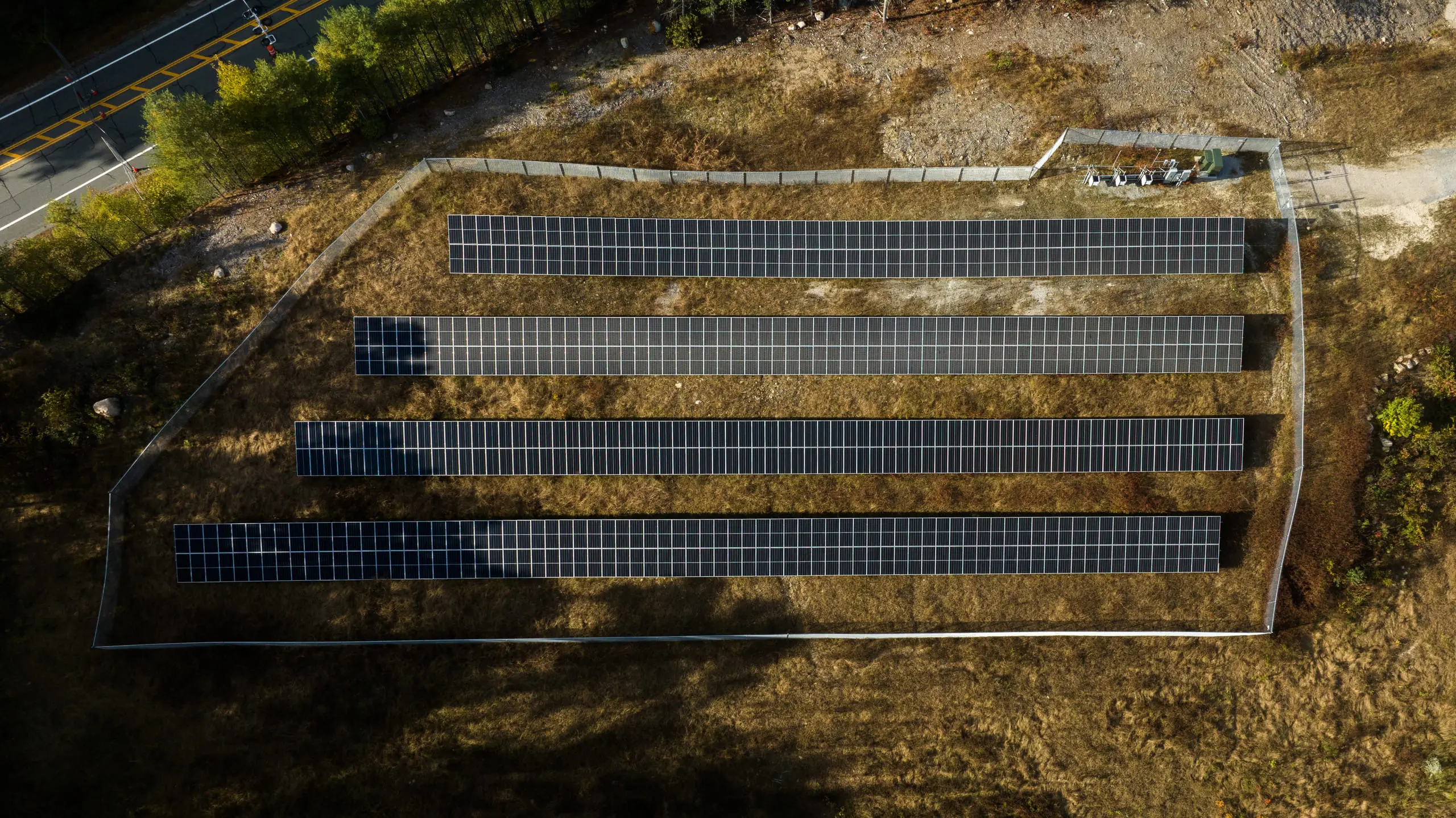
If you've started researching solar for your business, you've probably already noticed that not every panel is the same. Different types, different prices, different claims about efficiency — and most of the guides out there are written for homeowners putting a dozen panels on a suburban roof.
Commercial and industrial buyers are working with a different set of problems. You have larger buildings, higher energy bills, tighter timelines on return on investment, and in many cases, older roofs where the weight of what you install actually matters. Picking the wrong panel type for your property doesn't just mean slightly lower output — it can quietly cost you tens of thousands of dollars over a 25-year system life.
This guide cuts through the noise. We'll break down the three main types of solar panels available today — monocrystalline, polycrystalline, and thin-film — explain what actually makes them different, and give you a practical framework for matching panel type to your specific building and location. No engineering degree required.
The Three Main Types of Solar Panels
Nearly all solar panels sold today fall into one of three categories. They're all doing the same basic job — converting sunlight into electricity — but the way they're built, how efficiently they work, and where they perform best is meaningfully different.
The three types are:
Monocrystalline — the current standard for most commercial and industrial installs
Polycrystalline — an older technology that has largely disappeared from the market
Thin-film — a lighter, more flexible option that outperforms the alternatives in specific commercial applications
Understanding the difference between them takes about ten minutes and will make every conversation you have with a solar installer significantly more productive.
Monocrystalline Solar Panels
Monocrystalline panels are made from a single, continuous crystal of silicon. Think of it like the difference between a single flawless gemstone and a rock made up of many smaller fragments fused together — the single crystal structure gives electrons a cleaner, more direct path to travel, which is what makes these panels more efficient at turning sunlight into electricity.
They have a characteristic dark, almost black appearance and a uniform look across the panel surface. If you've seen modern solar panels going up on commercial rooftops and thought they looked sleek — those are almost certainly monocrystalline.
How efficient are they?
Efficiency is the percentage of sunlight a panel converts into usable electricity. Monocrystalline panels typically convert between 20% and 23% of the sunlight that hits them, with the best panels on the market now pushing past 24%. That might not sound like a lot, but it means more electricity generated from the same amount of roof space — which matters enormously when you're working with a fixed footprint.
What do they cost?
Panel costs can represent roughly 30–40% of your total system price, with the rest going to installation, wiring, inverters, and permitting. Monocrystalline panels themselves typically run $0.70–$1.50 per watt. Their higher efficiency means you often need fewer panels to hit your energy target, which can offset the higher per-panel cost.
How long do they last?
Most monocrystalline panels come with a 25–30 year performance warranty. Research from the National Renewable Energy Laboratory tracking nearly 2,000 panel degradation measurements found a median degradation rate of just 0.5% per year — meaning a panel producing well today should still be producing around 87% of that output after 25 years. For a commercial buyer with a long ownership horizon, that long tail of reliable production is where a significant chunk of the ROI lives.
Pros and cons at a glance:
✓ Highest efficiency — more electricity per square foot
✓ Best performance on overcast days and in low-light conditions
✓ Longest lifespan and strongest warranties
✓ Clean, professional appearance
✗ Higher upfront cost per panel
✗ Manufacturing process is more resource-intensive
Polycrystalline Solar Panels
Polycrystalline panels are also made from silicon, but instead of being grown as a single crystal, the silicon is melted down and poured into molds where it cools into a mosaic of many smaller crystals fused together. That fragmented structure — which gives the panels their distinctive speckled blue appearance — means electrons have a less efficient path through the material, which is why these panels have always lagged behind monocrystalline on performance.
The honest truth about polycrystalline panels in 2025 is straightforward: they have effectively disappeared from the market. According to the International Energy Agency, the shift to monocrystalline accelerated in 2022, with monocrystalline technology capturing almost all crystalline PV production. Polycrystalline panels — which made up close to 60% of global solar shipments as recently as 2015 — now represent a negligible share of new installations.
The reason is simple. As monocrystalline manufacturing scaled up over the past decade, its costs dropped dramatically. The price gap that once made polycrystalline attractive closed, and buyers were left with a cheaper panel that still required more roof space to hit the same output target. When you factor in the extra panels, extra racking, and extra installation labor needed to compensate for lower efficiency, the economics stopped making sense for almost any commercial application.
Pros and cons at a glance:
✓ Lower upfront cost per panel
✓ Simpler manufacturing process
✗ Lower efficiency — requires significantly more space for the same output
✗ Poorer performance in heat and low-light conditions
✗ Largely out of production — limited manufacturer support and warranty coverage
✗ Shorter lifespan than monocrystalline
Thin-Film Solar Panels
Thin-film is a genuinely different technology from crystalline silicon. Instead of cutting wafers from a block of silicon, thin-film panels are made by depositing ultra-thin layers of photovoltaic material directly onto a surface — typically glass, metal, or plastic. The result is a panel that is significantly lighter and, in some versions, flexible enough to conform to curved or irregular surfaces.
The two main types of thin-film panels you'll encounter commercially are cadmium telluride (CdTe) — which the US Department of Energy notes is the second most common solar technology after crystalline silicon, holding 21% of the US market as of 2022 — and copper indium gallium selenide (CIGS), which offers slightly higher efficiency but is more complex to manufacture.
How efficient are they?
Thin-film panels typically convert 10–13% of sunlight into electricity. That's lower than monocrystalline — but here's the thing: efficiency matters most when space is constrained. If you have a large flat roof or abundant land, the efficiency gap can be resolved. You simply install more panels to hit your target output.
Where thin-film wins
Weight. This is the factor that changes the conversation on a lot of commercial buildings. Thin-film panels are substantially lighter than crystalline silicon alternatives. On warehouses, older industrial buildings, and any structure where a structural engineer has flagged concerns about roof load capacity, thin-film can be the difference between a viable project and one that requires expensive structural reinforcement work before a single panel goes up.
Heat performance.
This is a technical advantage that has real financial consequences. All solar panels lose some efficiency as they heat up — but thin-film panels lose less. The DOE's own research confirms that modern CdTe panels produce favorable energy yields compared to silicon panels in part because of their superior temperature response. First Solar's CdTe Series 6 panels, for example, carry a temperature coefficient of -0.28%/°C — meaning for every degree above 25°C they lose just 0.28% of output. Most crystalline silicon panels lose 0.35–0.45% per degree. On a hot summer day, on a dark membrane roof that absorbs heat, that difference compounds into meaningful annual production gains.
One thing to know before committing to CdTe thin-film:
cadmium is a regulated material. The EPA is clear that end-of-life solar panels containing cadmium may be classified as hazardous waste under federal law, and commercial generators are legally responsible for proper disposal or recycling. This is worth understanding and factoring into your total project cost before signing anything.
Pros and cons at a glance:
✓ Lightest weight — critical for structurally constrained buildings
✓ Superior heat performance — better output on hot days
✓ Lower cost in large flat roof and ground-mount applications
✓ Flexible form factors for non-standard surfaces
✗ Lower efficiency — needs more space than monocrystalline
✗ Shorter lifespan in most products
✗ CdTe end-of-life disposal carries regulatory obligations
✗ Fewer manufacturer options than crystalline silicon
Side-by-Side: How the Three Types Compare
Monocrystalline | Polycrystalline | Thin-Film (CdTe) | |
|---|---|---|---|
Efficiency | 20–23% | 15–17% | 10–13% |
Cost per watt (panels) | $0.70–$1.50 | $0.50–$0.90 | $0.40–$0.80 |
Avg. annual degradation | ~0.5% | ~0.7% | ~0.7–1.0% |
Lifespan | 25–30+ years | 20–25 years | 15–20 years |
Heat performance | Moderate | Poor | Good |
Low-light performance | Excellent | Moderate | Moderate |
Weight | Heavy | Heavy | Light |
Which Panel Type Is Right for Your Property?
The right panel is never just about efficiency ratings on a spec sheet. It's about matching the technology to your building, your budget, and your climate. Here's how to think through it.
Rooftop — limited space, standard building
Monocrystalline is the right answer for the vast majority of commercial rooftop installs. When roof space limits how many panels you can fit, every percentage point of efficiency translates directly into more electricity — and more savings. The higher per-panel cost is well justified by the longer lifespan and stronger long-term output.
Warehouse or large flat industrial roof
This is where the decision gets more nuanced and where many commercial buyers leave money on the table by defaulting to monocrystalline without running the numbers. If your roof has strong structural capacity and abundant space, monocrystalline still performs well. But if you're working with an older building where load capacity is a concern, thin-film deserves serious consideration — the weight reduction alone can eliminate significant structural remediation costs.
Ground-mount installations
For most ground-mount commercial and industrial projects, monocrystalline delivers the best output per acre. However, on very large ground-mount systems in warmer climates where land isn't a constraint, thin-film's lower installed cost and better heat performance can shift the economics meaningfully — particularly as project scale increases.
Municipal buildings and nonprofits
Public buildings present a unique combination of challenges: older construction, tighter capital budgets, and long planning horizons. Monocrystalline's durability aligns well with the long ownership cycles of public institutions. But structural realities and budget constraints on older buildings sometimes point toward thin-film. Either way, a professional structural assessment is non-negotiable before any panel decision on a municipal project.
Climate considerations
In the Northeast and Pacific Northwest — where winters are overcast and daylight hours shorten significantly in Q4 and Q1 — monocrystalline's strong low-light performance is a genuine advantage. In hot southern and southwestern climates, thin-film's heat performance starts to shine.
Conclusion
For most commercial properties, monocrystalline panels are the right answer — and the industry has largely moved that direction, with monocrystalline now capturing almost all new solar production globally. But the properties that benefit most from a thorough panel-type evaluation are large warehouses with flat roofs, older buildings with structural constraints, and ground-mount projects in high-heat climates where thin-film's advantages shift the economics in a meaningful way.
The best panel for your building is the one that delivers the strongest long-term return given your specific roof, your energy load, and your location — not the one with the most impressive number on a brochure.
Sources
U.S. Department of Energy. Solar Photovoltaic Cell Basics. energy.gov/eere/solar/solar-photovoltaic-cell-basics
U.S. Department of Energy. Solar Photovoltaic Technology Basics. energy.gov/eere/solar/solar-photovoltaic-technology-basics
National Renewable Energy Laboratory. Best Research-Cell Efficiency Chart. nrel.gov/pv/cell-efficiency
National Renewable Energy Laboratory. Photovoltaic Degradation Rates — An Analytical Review. Jordan, D.C. & Kurtz, S.R. docs.nrel.gov/docs/fy12osti/51664.pdf
Lawrence Berkeley National Laboratory. Tracking the Sun, 2023 Edition. emp.lbl.gov/tracking-the-sun
International Energy Agency. Solar PV. iea.org/energy-system/renewables/solar-pv
U.S. Department of Energy. Cadmium Telluride. energy.gov/eere/solar/cadmium-telluride
U.S. Department of Energy. Cadmium Telluride Photovoltaics Perspective Paper.energy.gov/eere/solar/cadmium-telluride-photovoltaics-perspective-paper
First Solar. Series 6 CuRe Module Datasheet. firstsolar.com
U.S. Environmental Protection Agency. End-of-Life Solar Panels: Regulations and Management.epa.gov/hw/end-life-solar-panels-regulations-and-management
National Renewable Energy Laboratory. PVWatts Calculator. pvwatts.nrel.gov
Let's Chat
Start your next project with Newport Renewables.
OUR SERVICES
Work with Newport Renewables
We do two things, and we do them at full scale: commercial solar across Rhode Island and ground-up custom homes built to perform. Here's where you fit.
Commercial solar for your property or business?
We design and install solar for commercial buildings, warehouses, and income properties across Rhode Island — sized to your actual load, your roof or land, and the incentives available right now. The goal isn't just panels on a roof; it's a system that pays for itself and keeps producing for decades.
→ See how commercial solar works
Building a new custom home?
We design and build custom homes with integrated zero-energy systems from the ground up. When every component — orientation, envelope, electrical capacity, HVAC, solar, storage — is planned together instead of bolted on later, you get a home that's built for long-term performance and value.
→ Learn about our zero-energy home builds
316 Columbia St • Wakefield, RI 02879 | 401.619.5906




Copyright © 2024 Newport Renewables. All Rights Reserved.
316 Columbia St • Wakefield, RI 02879 | 401.619.5906
Copyright © 2024 Newport Renewables. All Rights Reserved.
Types of Solar Panels: Which Is Right for Your Property?
If you've started researching solar for your business, you've probably already noticed that not every panel is the same. Different types, different prices, different claims about efficiency — and most of the guides out there are written for homeowners putting a dozen panels on a suburban roof.
Commercial and industrial buyers are working with a different set of problems. You have larger buildings, higher energy bills, tighter timelines on return on investment, and in many cases, older roofs where the weight of what you install actually matters. Picking the wrong panel type for your property doesn't just mean slightly lower output — it can quietly cost you tens of thousands of dollars over a 25-year system life.
This guide cuts through the noise. We'll break down the three main types of solar panels available today — monocrystalline, polycrystalline, and thin-film — explain what actually makes them different, and give you a practical framework for matching panel type to your specific building and location. No engineering degree required.
The Three Main Types of Solar Panels
Nearly all solar panels sold today fall into one of three categories. They're all doing the same basic job — converting sunlight into electricity — but the way they're built, how efficiently they work, and where they perform best is meaningfully different.
The three types are:
Monocrystalline — the current standard for most commercial and industrial installs
Polycrystalline — an older technology that has largely disappeared from the market
Thin-film — a lighter, more flexible option that outperforms the alternatives in specific commercial applications
Understanding the difference between them takes about ten minutes and will make every conversation you have with a solar installer significantly more productive.
Monocrystalline Solar Panels
Monocrystalline panels are made from a single, continuous crystal of silicon. Think of it like the difference between a single flawless gemstone and a rock made up of many smaller fragments fused together — the single crystal structure gives electrons a cleaner, more direct path to travel, which is what makes these panels more efficient at turning sunlight into electricity.
They have a characteristic dark, almost black appearance and a uniform look across the panel surface. If you've seen modern solar panels going up on commercial rooftops and thought they looked sleek — those are almost certainly monocrystalline.
How efficient are they?
Efficiency is the percentage of sunlight a panel converts into usable electricity. Monocrystalline panels typically convert between 20% and 23% of the sunlight that hits them, with the best panels on the market now pushing past 24%. That might not sound like a lot, but it means more electricity generated from the same amount of roof space — which matters enormously when you're working with a fixed footprint.
What do they cost?
Panel costs can represent roughly 30–40% of your total system price, with the rest going to installation, wiring, inverters, and permitting. Monocrystalline panels themselves typically run $0.70–$1.50 per watt. Their higher efficiency means you often need fewer panels to hit your energy target, which can offset the higher per-panel cost.
How long do they last?
Most monocrystalline panels come with a 25–30 year performance warranty. Research from the National Renewable Energy Laboratory tracking nearly 2,000 panel degradation measurements found a median degradation rate of just 0.5% per year — meaning a panel producing well today should still be producing around 87% of that output after 25 years. For a commercial buyer with a long ownership horizon, that long tail of reliable production is where a significant chunk of the ROI lives.
Pros and cons at a glance:
✓ Highest efficiency — more electricity per square foot
✓ Best performance on overcast days and in low-light conditions
✓ Longest lifespan and strongest warranties
✓ Clean, professional appearance
✗ Higher upfront cost per panel
✗ Manufacturing process is more resource-intensive
Polycrystalline Solar Panels
Polycrystalline panels are also made from silicon, but instead of being grown as a single crystal, the silicon is melted down and poured into molds where it cools into a mosaic of many smaller crystals fused together. That fragmented structure — which gives the panels their distinctive speckled blue appearance — means electrons have a less efficient path through the material, which is why these panels have always lagged behind monocrystalline on performance.
The honest truth about polycrystalline panels in 2025 is straightforward: they have effectively disappeared from the market. According to the International Energy Agency, the shift to monocrystalline accelerated in 2022, with monocrystalline technology capturing almost all crystalline PV production. Polycrystalline panels — which made up close to 60% of global solar shipments as recently as 2015 — now represent a negligible share of new installations.
The reason is simple. As monocrystalline manufacturing scaled up over the past decade, its costs dropped dramatically. The price gap that once made polycrystalline attractive closed, and buyers were left with a cheaper panel that still required more roof space to hit the same output target. When you factor in the extra panels, extra racking, and extra installation labor needed to compensate for lower efficiency, the economics stopped making sense for almost any commercial application.
Pros and cons at a glance:
✓ Lower upfront cost per panel
✓ Simpler manufacturing process
✗ Lower efficiency — requires significantly more space for the same output
✗ Poorer performance in heat and low-light conditions
✗ Largely out of production — limited manufacturer support and warranty coverage
✗ Shorter lifespan than monocrystalline
Thin-Film Solar Panels
Thin-film is a genuinely different technology from crystalline silicon. Instead of cutting wafers from a block of silicon, thin-film panels are made by depositing ultra-thin layers of photovoltaic material directly onto a surface — typically glass, metal, or plastic. The result is a panel that is significantly lighter and, in some versions, flexible enough to conform to curved or irregular surfaces.
The two main types of thin-film panels you'll encounter commercially are cadmium telluride (CdTe) — which the US Department of Energy notes is the second most common solar technology after crystalline silicon, holding 21% of the US market as of 2022 — and copper indium gallium selenide (CIGS), which offers slightly higher efficiency but is more complex to manufacture.
How efficient are they?
Thin-film panels typically convert 10–13% of sunlight into electricity. That's lower than monocrystalline — but here's the thing: efficiency matters most when space is constrained. If you have a large flat roof or abundant land, the efficiency gap can be resolved. You simply install more panels to hit your target output.
Where thin-film wins
Weight. This is the factor that changes the conversation on a lot of commercial buildings. Thin-film panels are substantially lighter than crystalline silicon alternatives. On warehouses, older industrial buildings, and any structure where a structural engineer has flagged concerns about roof load capacity, thin-film can be the difference between a viable project and one that requires expensive structural reinforcement work before a single panel goes up.
Heat performance.
This is a technical advantage that has real financial consequences. All solar panels lose some efficiency as they heat up — but thin-film panels lose less. The DOE's own research confirms that modern CdTe panels produce favorable energy yields compared to silicon panels in part because of their superior temperature response. First Solar's CdTe Series 6 panels, for example, carry a temperature coefficient of -0.28%/°C — meaning for every degree above 25°C they lose just 0.28% of output. Most crystalline silicon panels lose 0.35–0.45% per degree. On a hot summer day, on a dark membrane roof that absorbs heat, that difference compounds into meaningful annual production gains.
One thing to know before committing to CdTe thin-film:
cadmium is a regulated material. The EPA is clear that end-of-life solar panels containing cadmium may be classified as hazardous waste under federal law, and commercial generators are legally responsible for proper disposal or recycling. This is worth understanding and factoring into your total project cost before signing anything.
Pros and cons at a glance:
✓ Lightest weight — critical for structurally constrained buildings
✓ Superior heat performance — better output on hot days
✓ Lower cost in large flat roof and ground-mount applications
✓ Flexible form factors for non-standard surfaces
✗ Lower efficiency — needs more space than monocrystalline
✗ Shorter lifespan in most products
✗ CdTe end-of-life disposal carries regulatory obligations
✗ Fewer manufacturer options than crystalline silicon
Side-by-Side: How the Three Types Compare
Monocrystalline | Polycrystalline | Thin-Film (CdTe) | |
|---|---|---|---|
Efficiency | 20–23% | 15–17% | 10–13% |
Cost per watt (panels) | $0.70–$1.50 | $0.50–$0.90 | $0.40–$0.80 |
Avg. annual degradation | ~0.5% | ~0.7% | ~0.7–1.0% |
Lifespan | 25–30+ years | 20–25 years | 15–20 years |
Heat performance | Moderate | Poor | Good |
Low-light performance | Excellent | Moderate | Moderate |
Weight | Heavy | Heavy | Light |
Which Panel Type Is Right for Your Property?
The right panel is never just about efficiency ratings on a spec sheet. It's about matching the technology to your building, your budget, and your climate. Here's how to think through it.
Rooftop — limited space, standard building
Monocrystalline is the right answer for the vast majority of commercial rooftop installs. When roof space limits how many panels you can fit, every percentage point of efficiency translates directly into more electricity — and more savings. The higher per-panel cost is well justified by the longer lifespan and stronger long-term output.
Warehouse or large flat industrial roof
This is where the decision gets more nuanced and where many commercial buyers leave money on the table by defaulting to monocrystalline without running the numbers. If your roof has strong structural capacity and abundant space, monocrystalline still performs well. But if you're working with an older building where load capacity is a concern, thin-film deserves serious consideration — the weight reduction alone can eliminate significant structural remediation costs.
Ground-mount installations
For most ground-mount commercial and industrial projects, monocrystalline delivers the best output per acre. However, on very large ground-mount systems in warmer climates where land isn't a constraint, thin-film's lower installed cost and better heat performance can shift the economics meaningfully — particularly as project scale increases.
Municipal buildings and nonprofits
Public buildings present a unique combination of challenges: older construction, tighter capital budgets, and long planning horizons. Monocrystalline's durability aligns well with the long ownership cycles of public institutions. But structural realities and budget constraints on older buildings sometimes point toward thin-film. Either way, a professional structural assessment is non-negotiable before any panel decision on a municipal project.
Climate considerations
In the Northeast and Pacific Northwest — where winters are overcast and daylight hours shorten significantly in Q4 and Q1 — monocrystalline's strong low-light performance is a genuine advantage. In hot southern and southwestern climates, thin-film's heat performance starts to shine.
Conclusion
For most commercial properties, monocrystalline panels are the right answer — and the industry has largely moved that direction, with monocrystalline now capturing almost all new solar production globally. But the properties that benefit most from a thorough panel-type evaluation are large warehouses with flat roofs, older buildings with structural constraints, and ground-mount projects in high-heat climates where thin-film's advantages shift the economics in a meaningful way.
The best panel for your building is the one that delivers the strongest long-term return given your specific roof, your energy load, and your location — not the one with the most impressive number on a brochure.
Sources
U.S. Department of Energy. Solar Photovoltaic Cell Basics. energy.gov/eere/solar/solar-photovoltaic-cell-basics
U.S. Department of Energy. Solar Photovoltaic Technology Basics. energy.gov/eere/solar/solar-photovoltaic-technology-basics
National Renewable Energy Laboratory. Best Research-Cell Efficiency Chart. nrel.gov/pv/cell-efficiency
National Renewable Energy Laboratory. Photovoltaic Degradation Rates — An Analytical Review. Jordan, D.C. & Kurtz, S.R. docs.nrel.gov/docs/fy12osti/51664.pdf
Lawrence Berkeley National Laboratory. Tracking the Sun, 2023 Edition. emp.lbl.gov/tracking-the-sun
International Energy Agency. Solar PV. iea.org/energy-system/renewables/solar-pv
U.S. Department of Energy. Cadmium Telluride. energy.gov/eere/solar/cadmium-telluride
U.S. Department of Energy. Cadmium Telluride Photovoltaics Perspective Paper.energy.gov/eere/solar/cadmium-telluride-photovoltaics-perspective-paper
First Solar. Series 6 CuRe Module Datasheet. firstsolar.com
U.S. Environmental Protection Agency. End-of-Life Solar Panels: Regulations and Management.epa.gov/hw/end-life-solar-panels-regulations-and-management
National Renewable Energy Laboratory. PVWatts Calculator. pvwatts.nrel.gov
OUR SERVICES
Work with Newport Renewables
We do two things, and we do them at full scale: commercial solar across Rhode Island and ground-up custom homes built to perform. Here's where you fit.
Commercial solar for your property or business?
We design and install solar for commercial buildings, warehouses, and income properties across Rhode Island — sized to your actual load, your roof or land, and the incentives available right now. The goal isn't just panels on a roof; it's a system that pays for itself and keeps producing for decades.
→ See how commercial solar works
Building a new custom home?
We design and build custom homes with integrated zero-energy systems from the ground up. When every component — orientation, envelope, electrical capacity, HVAC, solar, storage — is planned together instead of bolted on later, you get a home that's built for long-term performance and value.
→ Learn about our zero-energy home builds
316 Columbia St • Wakefield, RI 02879 | 401.619.5906
Copyright © 2024 Newport Renewables. All Rights Reserved.

Types of Solar Panels: Which Is Right for Your Property?
If you've started researching solar for your business, you've probably already noticed that not every panel is the same. Different types, different prices, different claims about efficiency — and most of the guides out there are written for homeowners putting a dozen panels on a suburban roof.
Commercial and industrial buyers are working with a different set of problems. You have larger buildings, higher energy bills, tighter timelines on return on investment, and in many cases, older roofs where the weight of what you install actually matters. Picking the wrong panel type for your property doesn't just mean slightly lower output — it can quietly cost you tens of thousands of dollars over a 25-year system life.
This guide cuts through the noise. We'll break down the three main types of solar panels available today — monocrystalline, polycrystalline, and thin-film — explain what actually makes them different, and give you a practical framework for matching panel type to your specific building and location. No engineering degree required.
The Three Main Types of Solar Panels
Nearly all solar panels sold today fall into one of three categories. They're all doing the same basic job — converting sunlight into electricity — but the way they're built, how efficiently they work, and where they perform best is meaningfully different.
The three types are:
Monocrystalline — the current standard for most commercial and industrial installs
Polycrystalline — an older technology that has largely disappeared from the market
Thin-film — a lighter, more flexible option that outperforms the alternatives in specific commercial applications
Understanding the difference between them takes about ten minutes and will make every conversation you have with a solar installer significantly more productive.
Monocrystalline Solar Panels
Monocrystalline panels are made from a single, continuous crystal of silicon. Think of it like the difference between a single flawless gemstone and a rock made up of many smaller fragments fused together — the single crystal structure gives electrons a cleaner, more direct path to travel, which is what makes these panels more efficient at turning sunlight into electricity.
They have a characteristic dark, almost black appearance and a uniform look across the panel surface. If you've seen modern solar panels going up on commercial rooftops and thought they looked sleek — those are almost certainly monocrystalline.
How efficient are they?
Efficiency is the percentage of sunlight a panel converts into usable electricity. Monocrystalline panels typically convert between 20% and 23% of the sunlight that hits them, with the best panels on the market now pushing past 24%. That might not sound like a lot, but it means more electricity generated from the same amount of roof space — which matters enormously when you're working with a fixed footprint.
What do they cost?
Panel costs can represent roughly 30–40% of your total system price, with the rest going to installation, wiring, inverters, and permitting. Monocrystalline panels themselves typically run $0.70–$1.50 per watt. Their higher efficiency means you often need fewer panels to hit your energy target, which can offset the higher per-panel cost.
How long do they last?
Most monocrystalline panels come with a 25–30 year performance warranty. Research from the National Renewable Energy Laboratory tracking nearly 2,000 panel degradation measurements found a median degradation rate of just 0.5% per year — meaning a panel producing well today should still be producing around 87% of that output after 25 years. For a commercial buyer with a long ownership horizon, that long tail of reliable production is where a significant chunk of the ROI lives.
Pros and cons at a glance:
✓ Highest efficiency — more electricity per square foot
✓ Best performance on overcast days and in low-light conditions
✓ Longest lifespan and strongest warranties
✓ Clean, professional appearance
✗ Higher upfront cost per panel
✗ Manufacturing process is more resource-intensive
Polycrystalline Solar Panels
Polycrystalline panels are also made from silicon, but instead of being grown as a single crystal, the silicon is melted down and poured into molds where it cools into a mosaic of many smaller crystals fused together. That fragmented structure — which gives the panels their distinctive speckled blue appearance — means electrons have a less efficient path through the material, which is why these panels have always lagged behind monocrystalline on performance.
The honest truth about polycrystalline panels in 2025 is straightforward: they have effectively disappeared from the market. According to the International Energy Agency, the shift to monocrystalline accelerated in 2022, with monocrystalline technology capturing almost all crystalline PV production. Polycrystalline panels — which made up close to 60% of global solar shipments as recently as 2015 — now represent a negligible share of new installations.
The reason is simple. As monocrystalline manufacturing scaled up over the past decade, its costs dropped dramatically. The price gap that once made polycrystalline attractive closed, and buyers were left with a cheaper panel that still required more roof space to hit the same output target. When you factor in the extra panels, extra racking, and extra installation labor needed to compensate for lower efficiency, the economics stopped making sense for almost any commercial application.
Pros and cons at a glance:
✓ Lower upfront cost per panel
✓ Simpler manufacturing process
✗ Lower efficiency — requires significantly more space for the same output
✗ Poorer performance in heat and low-light conditions
✗ Largely out of production — limited manufacturer support and warranty coverage
✗ Shorter lifespan than monocrystalline
Thin-Film Solar Panels
Thin-film is a genuinely different technology from crystalline silicon. Instead of cutting wafers from a block of silicon, thin-film panels are made by depositing ultra-thin layers of photovoltaic material directly onto a surface — typically glass, metal, or plastic. The result is a panel that is significantly lighter and, in some versions, flexible enough to conform to curved or irregular surfaces.
The two main types of thin-film panels you'll encounter commercially are cadmium telluride (CdTe) — which the US Department of Energy notes is the second most common solar technology after crystalline silicon, holding 21% of the US market as of 2022 — and copper indium gallium selenide (CIGS), which offers slightly higher efficiency but is more complex to manufacture.
How efficient are they?
Thin-film panels typically convert 10–13% of sunlight into electricity. That's lower than monocrystalline — but here's the thing: efficiency matters most when space is constrained. If you have a large flat roof or abundant land, the efficiency gap can be resolved. You simply install more panels to hit your target output.
Where thin-film wins
Weight. This is the factor that changes the conversation on a lot of commercial buildings. Thin-film panels are substantially lighter than crystalline silicon alternatives. On warehouses, older industrial buildings, and any structure where a structural engineer has flagged concerns about roof load capacity, thin-film can be the difference between a viable project and one that requires expensive structural reinforcement work before a single panel goes up.
Heat performance.
This is a technical advantage that has real financial consequences. All solar panels lose some efficiency as they heat up — but thin-film panels lose less. The DOE's own research confirms that modern CdTe panels produce favorable energy yields compared to silicon panels in part because of their superior temperature response. First Solar's CdTe Series 6 panels, for example, carry a temperature coefficient of -0.28%/°C — meaning for every degree above 25°C they lose just 0.28% of output. Most crystalline silicon panels lose 0.35–0.45% per degree. On a hot summer day, on a dark membrane roof that absorbs heat, that difference compounds into meaningful annual production gains.
One thing to know before committing to CdTe thin-film:
cadmium is a regulated material. The EPA is clear that end-of-life solar panels containing cadmium may be classified as hazardous waste under federal law, and commercial generators are legally responsible for proper disposal or recycling. This is worth understanding and factoring into your total project cost before signing anything.
Pros and cons at a glance:
✓ Lightest weight — critical for structurally constrained buildings
✓ Superior heat performance — better output on hot days
✓ Lower cost in large flat roof and ground-mount applications
✓ Flexible form factors for non-standard surfaces
✗ Lower efficiency — needs more space than monocrystalline
✗ Shorter lifespan in most products
✗ CdTe end-of-life disposal carries regulatory obligations
✗ Fewer manufacturer options than crystalline silicon
Side-by-Side: How the Three Types Compare
Monocrystalline | Polycrystalline | Thin-Film (CdTe) | |
|---|---|---|---|
Efficiency | 20–23% | 15–17% | 10–13% |
Cost per watt (panels) | $0.70–$1.50 | $0.50–$0.90 | $0.40–$0.80 |
Avg. annual degradation | ~0.5% | ~0.7% | ~0.7–1.0% |
Lifespan | 25–30+ years | 20–25 years | 15–20 years |
Heat performance | Moderate | Poor | Good |
Low-light performance | Excellent | Moderate | Moderate |
Weight | Heavy | Heavy | Light |
Which Panel Type Is Right for Your Property?
The right panel is never just about efficiency ratings on a spec sheet. It's about matching the technology to your building, your budget, and your climate. Here's how to think through it.
Rooftop — limited space, standard building
Monocrystalline is the right answer for the vast majority of commercial rooftop installs. When roof space limits how many panels you can fit, every percentage point of efficiency translates directly into more electricity — and more savings. The higher per-panel cost is well justified by the longer lifespan and stronger long-term output.
Warehouse or large flat industrial roof
This is where the decision gets more nuanced and where many commercial buyers leave money on the table by defaulting to monocrystalline without running the numbers. If your roof has strong structural capacity and abundant space, monocrystalline still performs well. But if you're working with an older building where load capacity is a concern, thin-film deserves serious consideration — the weight reduction alone can eliminate significant structural remediation costs.
Ground-mount installations
For most ground-mount commercial and industrial projects, monocrystalline delivers the best output per acre. However, on very large ground-mount systems in warmer climates where land isn't a constraint, thin-film's lower installed cost and better heat performance can shift the economics meaningfully — particularly as project scale increases.
Municipal buildings and nonprofits
Public buildings present a unique combination of challenges: older construction, tighter capital budgets, and long planning horizons. Monocrystalline's durability aligns well with the long ownership cycles of public institutions. But structural realities and budget constraints on older buildings sometimes point toward thin-film. Either way, a professional structural assessment is non-negotiable before any panel decision on a municipal project.
Climate considerations
In the Northeast and Pacific Northwest — where winters are overcast and daylight hours shorten significantly in Q4 and Q1 — monocrystalline's strong low-light performance is a genuine advantage. In hot southern and southwestern climates, thin-film's heat performance starts to shine.
Conclusion
For most commercial properties, monocrystalline panels are the right answer — and the industry has largely moved that direction, with monocrystalline now capturing almost all new solar production globally. But the properties that benefit most from a thorough panel-type evaluation are large warehouses with flat roofs, older buildings with structural constraints, and ground-mount projects in high-heat climates where thin-film's advantages shift the economics in a meaningful way.
The best panel for your building is the one that delivers the strongest long-term return given your specific roof, your energy load, and your location — not the one with the most impressive number on a brochure.
Sources
U.S. Department of Energy. Solar Photovoltaic Cell Basics. energy.gov/eere/solar/solar-photovoltaic-cell-basics
U.S. Department of Energy. Solar Photovoltaic Technology Basics. energy.gov/eere/solar/solar-photovoltaic-technology-basics
National Renewable Energy Laboratory. Best Research-Cell Efficiency Chart. nrel.gov/pv/cell-efficiency
National Renewable Energy Laboratory. Photovoltaic Degradation Rates — An Analytical Review. Jordan, D.C. & Kurtz, S.R. docs.nrel.gov/docs/fy12osti/51664.pdf
Lawrence Berkeley National Laboratory. Tracking the Sun, 2023 Edition. emp.lbl.gov/tracking-the-sun
International Energy Agency. Solar PV. iea.org/energy-system/renewables/solar-pv
U.S. Department of Energy. Cadmium Telluride. energy.gov/eere/solar/cadmium-telluride
U.S. Department of Energy. Cadmium Telluride Photovoltaics Perspective Paper.energy.gov/eere/solar/cadmium-telluride-photovoltaics-perspective-paper
First Solar. Series 6 CuRe Module Datasheet. firstsolar.com
U.S. Environmental Protection Agency. End-of-Life Solar Panels: Regulations and Management.epa.gov/hw/end-life-solar-panels-regulations-and-management
National Renewable Energy Laboratory. PVWatts Calculator. pvwatts.nrel.gov
OUR SERVICES
Work with Newport Renewables
We do two things, and we do them at full scale: commercial solar across Rhode Island and ground-up custom homes built to perform. Here's where you fit.
Commercial solar for your property or business?
We design and install solar for commercial buildings, warehouses, and income properties across Rhode Island — sized to your actual load, your roof or land, and the incentives available right now. The goal isn't just panels on a roof; it's a system that pays for itself and keeps producing for decades.
→ See how commercial solar works
Building a new custom home?
We design and build custom homes with integrated zero-energy systems from the ground up. When every component — orientation, envelope, electrical capacity, HVAC, solar, storage — is planned together instead of bolted on later, you get a home that's built for long-term performance and value.
→ Learn about our zero-energy home builds
Let's Chat
Start your next project with Newport Renewables.
316 Columbia St • Wakefield, RI 02879 | 401.619.5906
Copyright © 2024 Newport Renewables. All Rights Reserved.
316 Columbia St • Wakefield, RI 02879 | 401.619.5906
Copyright © 2024 Newport Renewables. All Rights Reserved.