Solar Adoption by State: Where the U.S. Stands and Where It's Going
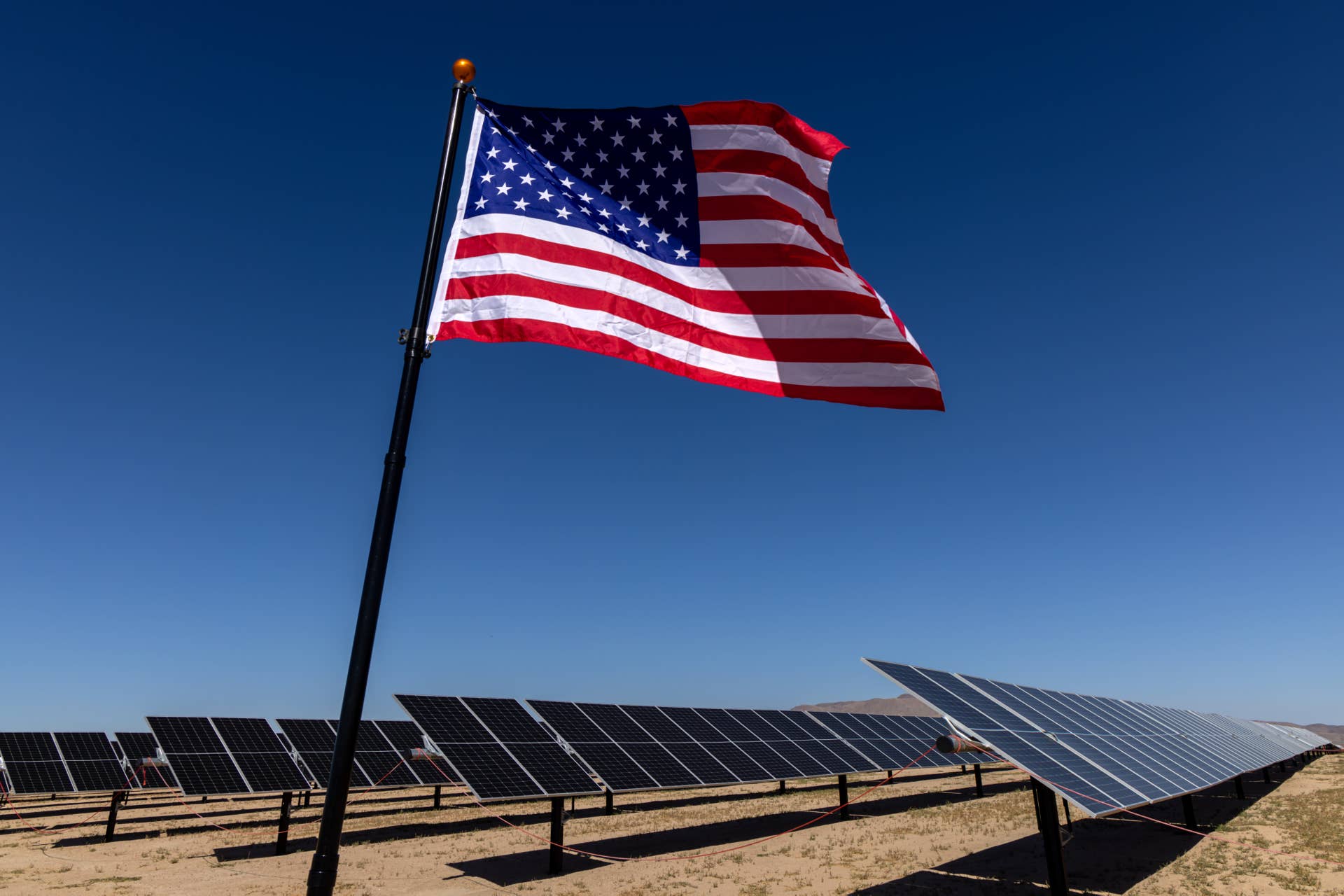
The United States solar industry has crossed a threshold that would have seemed implausible fifteen years ago. Solar is now the dominant form of new energy being added to the American grid — not occasionally, not in favorable years, but consistently, year after year.
In 2025, the U.S. solar industry installed 43 gigawatts of new capacity, marking solar as the top source of new electricity-generating capacity for the fifth consecutive year. Combined, solar and storage made up 79% of all new capacity added to the grid that year. National solar generation grew 19.2% between December 2024 and December 2025 alone. The cumulative installed base now stands at 279 gigawatts — and industry projections expect that number to nearly triple to 769 GW by 2036.
How the U.S. Got Here
The story of American solar adoption is mostly a cost story.
In 2010, a residential solar installation cost roughly $8.70 per watt. By the second half of 2024, the median had fallen to an all-time low of $2.50 per watt — a decline of more than 70% in fourteen years. Zooming out further: solar photovoltaic costs have fallen by 90% over the last decade, following what economists call Wright's Law — the consistent pattern where the cost of a technology falls as cumulative production scales up. Solar has followed that curve more reliably than almost any technology in history.
That cost collapse, combined with federal incentives and falling installation soft costs, turned solar from a niche product for early adopters into the most economically rational choice for new power generation across most of the United States.
The result: solar accounted for 54% of all new electricity-generating capacity added to the U.S. grid in 2025, and by end of that year, solar had become the second-largest source of U.S. generation capacity by installed base — behind only natural gas.
As of December 2025, solar accounts for approximately 5.5% of all electricity produced nationally. That number is growing fast — but it also means the majority of the buildout is still ahead.
What a 2021 DOE Study Said Was Possible
In September 2021, the Department of Energy's Solar Energy Technologies Office and the National Renewable Energy Laboratory released the Solar Futures Study — a 310-page modeling exercise exploring how far solar could go. The study found that solar could account for up to 40% of the nation's electricity supply by 2035, and potentially 45% by 2050, under scenarios involving aggressive cost reductions, supportive policies, and widespread electrification.
Full State-by-State Table
The table below combines four data sets that are typically published separately: monthly solar generation, the percentage of the state's electricity coming from solar, the residential electricity rate, and year-over-year generation growth. Reading these columns together tells a more complete story than any single metric alone.
A state like Louisiana has low solar generation and a low electricity rate — the economic incentive to go solar is weaker there. A state like Rhode Island has modest absolute generation but one of the highest electricity rates in the country, which means every kilowatt-hour generated by solar displaces electricity that would otherwise cost 31.30 cents. The math works differently in different places.
State | Solar Gen (thousand MWh) | % of Grid (Nov 2025) | Residential Rate (¢/kWh) | YoY Change |
|---|---|---|---|---|
Alabama | 67 † | NA | 16.79 | — |
Alaska | — ‡ | — | 26.57 | — |
Arizona | 1,290 | 16.4% | 15.62 | +22.9% |
Arkansas | 253 | 6.3% | 13.32 | +27.8% |
California | 4,620 | 34.4% | 33.75 | +3.3% |
Colorado | 458 | 12.0% | 16.33 | +18.0% |
Connecticut | 136 | 4.0% | 27.84 | +34.7% |
Delaware | 21 | 5.9% | 18.39 | +5.0% |
Florida | 2,004 | 12.4% | 15.77 | +19.3% |
Georgia | 622 | 7.2% | 14.60 | -4.6% |
Hawaii | 173 | 23.4% | 39.89 | +1.8% |
Idaho | 64 | 5.4% | 12.51 | +39.1% |
Illinois | 393 | 3.3% | 18.82 | +53.5% |
Indiana | 309 | 5.0% | 17.42 | +100.6% |
Iowa | 73 | 1.5% | 13.54 | +30.4% |
Kansas | 45 | 1.2% | 15.23 | +150.0% |
Kentucky | 91 | 2.4% | 13.68 | +127.5% |
Louisiana | 143 | 2.3% | 12.44 | +4.4% |
Maine | 144 | 12.1% | 29.55 | +33.3% |
Maryland | 178 | 7.2% | 22.40 | +36.9% |
Massachusetts | 341 | 19.3% | 31.51 | +16.0% |
Michigan | 138 | 1.8% | 20.55 | +126.2% |
Minnesota | 162 | 4.4% | 16.44 | +84.1% |
Mississippi | 147 | 3.5% | 14.53 | +13.1% |
Missouri | 137 | 3.0% | 13.01 | +95.7% |
Montana | 16 | 0.8% | 14.33 | -5.9% |
Nebraska | 16 | 0.6% | 13.19 | +33.3% |
Nevada | 816 | 28.8% | 13.83 | +2.5% |
New Hampshire | 20 † | NA | 27.39 | — |
New Jersey | 331 | 7.6% | 22.65 | +28.3% |
New Mexico | 486 | 14.7% | 15.00 | +22.4% |
New York | 527 | 5.7% | 27.07 | +55.9% |
North Carolina | 713 | 9.2% | 15.12 | -2.1% |
North Dakota | — ‡ | — | 12.87 | — |
Ohio | 271 | 3.2% | 17.93 | +26.6% |
Oklahoma | 90 | 1.0% | 14.48 | +172.7% |
Oregon | 123 | 2.8% | 16.23 | +64.0% |
Pennsylvania | 170 | 1.1% | 20.58 | +78.9% |
Rhode Island | 52 | 7.7% | 31.30 | +20.9% |
South Carolina | 223 | 3.7% | 15.71 | +9.9% |
South Dakota | 14 | 1.1% | 14.15 | -12.5% |
Tennessee | 74 | 1.9% | 13.12 | +34.5% |
Texas | 3,916 | 10.8% | 16.18 | +34.1% |
Utah | 336 | 11.8% | 13.75 | +5.3% |
Vermont | 18 | 14.6% | 24.89 | +20.0% |
Virginia | 475 | 8.8% | 16.43 | +3.7% |
Washington | 37 | 0.6% | 14.12 | +23.3% |
West Virginia | 15 | 0.5% | 16.26 | +25.0% |
Wisconsin | 158 | 4.0% | 18.45 | +50.5% |
Wyoming | 22 | 0.6% | 15.18 | -4.3% |
U.S. Total | 20,962 | 7.3% | 18.05 | +19.2% |
† December 2025 data not reported to EIA. Figure shown is December 2024, the most recent available. % of grid and YoY change are not calculable from available data. Both Alabama and New Hampshire have established solar infrastructure — Alabama has several utility-scale facilities and New Hampshire generates approximately 2% of its electricity from solar, almost entirely from small-scale distributed installations — but December generation in low-sun months can fall below EIA's monthly reporting threshold.
‡ No reportable utility-scale solar generation in EIA monthly data for any recent period. Alaska and North Dakota have minimal installed solar infrastructure and do not appear in EIA's monthly generation dataset. Both are excluded from national adoption analyses.
Top 10 States by Total Solar Production
These are the states generating the most solar electricity in absolute terms. Raw production is largely a function of installed capacity, which in turn reflects years of cumulative investment, policy environment, and available land.
1. California — 4,620 thousand MWh (22% of national output) California remains the undisputed leader, producing more than one in five solar kilowatt-hours generated in the entire country. More than 34% of California's own electricity now comes from solar — the highest grid penetration of any large state. The state has set a goal of 100% clean energy by 2045, and solar is already the primary driver of that transition.
2. Texas — 3,916 thousand MWh (18.7%) Texas has been the fastest-growing solar market in the country for consecutive years. In 2025 alone, the state added 11 GW of new solar capacity — more than any other state by a significant margin. Solar's rise in Texas is driven by available land, low installation costs, a deregulated electricity market that encourages competition, and surging power demand from data centers and industrial growth along the Gulf Coast. Texas now accounts for nearly one in five solar kilowatt-hours produced nationally, despite solar making up a relatively small share of the state's enormous overall grid.
3. Florida — 2,004 thousand MWh (10.3%) Florida has become one of the top solar states despite the absence of a state renewable portfolio standard and restrictions on power purchase agreements that limit third-party solar ownership. The state's combination of abundant sunlight and a large population base has driven utility-scale investment regardless of policy gaps at the state level.
4. Arizona — 1,290 thousand MWh (16.4%) Arizona has some of the best solar resources in the country, and 16.4% of its grid now runs on solar. Utility-scale and commercial solar have both expanded rapidly. In 2025, Arizona was one of the four states receiving more than half of planned new utility-scale capacity nationally — alongside Texas, California, and Michigan.
5. Nevada — 816 thousand MWh (28.8%) Nevada is second only to California for grid penetration, with solar providing more than one in four kilowatt-hours of the state's electricity. Nevada consistently ranks near the top on a per-capita basis as well, thanks to exceptional sun resources and a relatively small population concentrated in the Las Vegas metro area.
6. North Carolina — 713 thousand MWh (9.2%) North Carolina is the Southeast's solar leader, a result of strong renewable energy portfolio standards and significant utility-scale investment. The state was one of the earliest southeastern states to build out utility-scale solar at scale and remains a model for what deliberate state policy can accomplish.
7. Georgia — 622 thousand MWh (7.2%) Georgia's solar growth has been driven almost entirely by utility-scale facilities. The state saw a slight YoY decline in December 2025 (-4.6%), though its cumulative installed base remains substantial.
8. New York — 527 thousand MWh (+55.9% YoY) New York's 55.9% year-over-year generation increase is one of the most notable numbers in the national dataset. The state's aggressive community solar programs, net metering policies, and offshore wind development have created conditions for sustained solar expansion. New York has an installed capacity goal of 10 GW by 2030.
9. New Mexico — 486 thousand MWh (14.7%) New Mexico combines strong solar resources with a state RPS mandate, and 14.7% of its grid now runs on solar. The state is often overlooked in national rankings but has one of the higher grid penetration rates in the country.
10. Virginia — 475 thousand MWh (8.8%) Virginia's solar growth has been substantial, driven largely by corporate power purchase agreements — Amazon, Microsoft, and Google have all signed large solar offtake agreements in the state. Dominion Energy has multiple large solar projects in its development pipeline.
Top 10 States by % of Grid from Solar
Raw generation rankings favor large states. This table asks a different question: of all the electricity a state generates, what percentage comes from solar? This is the better measure of how deeply solar has penetrated a given grid.
State | Solar as % of Grid (Nov 2025) |
|---|---|
California | 34.4% |
Nevada | 28.8% |
Hawaii | 23.4% |
Massachusetts | 19.3% |
Arizona | 16.4% |
New Mexico | 14.7% |
Vermont | 14.6% |
Utah | 11.8% |
Florida | 12.4% |
Maine | 12.1% |
The presence of Massachusetts, Vermont, and Maine on this list is striking. None of these states are known for sunshine. Massachusetts gets roughly the same peak sun hours as Germany — a country that built one of the largest solar industries in the world before most of the U.S. was paying attention. What Massachusetts has, in addition to reasonable sun, is the second-highest residential electricity rate in the continental United States at 31.51¢/kWh. Every kilowatt-hour of solar generated there displaces very expensive grid electricity. The economics work.
Vermont at 14.6% is particularly notable — it has a tiny total grid, which means distributed rooftop solar installations represent a disproportionately large share of generation. Maine, at 12.1% penetration and a 33.3% year-over-year generation increase, tells the same high-rate story. Connecticut at 27.84¢/kWh and New Hampshire at 27.39¢/kWh are not far behind in their economic case for solar.
The lesson from this table: sun hours matter, but electricity rate matters more for determining whether solar makes financial sense for a homeowner or business.
Top 10 States by Installed Capacity
Installed capacity measures the cumulative investment in solar infrastructure — total megawatts of panels in the ground, regardless of how much they produced in any given month. This is the adoption metric. A state with high installed capacity has been building solar for years and has the infrastructure base to continue growing.
State | Installed Capacity (MW) |
|---|---|
California | 46,874 |
Texas | 22,872 |
Florida | 13,912 |
North Carolina | 9,310 |
Arizona | 7,675 |
Nevada | 6,382 |
Georgia | 5,913 |
New York | 5,560 |
New Jersey | 5,276 |
Massachusetts | 5,070 |
California's installed base is more than double Texas's — a reflection of California's decade-long head start. Massachusetts, despite being the 7th smallest state by area, has more installed solar capacity than states many times its size. New Jersey, consistently one of the more aggressive solar policy states, rounds out the top 10 ahead of much larger and sunnier states.
The Fastest-Growing States
The YoY generation data contains the most surprising story in the dataset. The states growing fastest are not California, Texas, or Florida — those markets are relatively mature. The explosive growth is happening in states most people wouldn't associate with solar.
State | YoY Generation Change (Dec 2024 → Dec 2025) |
|---|---|
Oklahoma | +172.7% |
Kansas | +150.0% |
Kentucky | +127.5% |
Michigan | +126.2% |
Missouri | +95.7% |
Minnesota | +84.1% |
Pennsylvania | +78.9% |
Oregon | +64.0% |
Illinois | +53.5% |
New York | +55.9% |
Wisconsin | +50.5% |
Oklahoma, Kansas, and Kentucky are not states typically associated with the energy transition. They are, however, states with large amounts of available flat land, improving state-level policy environments, and utilities that have found utility-scale solar to be cost-competitive with new natural gas plants. The growth in these states represents solar becoming an economic decision rather than a political one. Notably, SEIA's 2025 year-in-review report found that over two-thirds of all solar capacity installed in 2025 was built in states won by President Trump — a data point that reflects how thoroughly solar's appeal has decoupled from political identity.
Indiana's numbers are particularly worth noting: the state deployed nearly 3 GW of new solar capacity in 2025, up from 1.6 GW in 2024, making it one of the fastest-scaling markets in the country.
Why Electricity Rate Matters More Than Sun Hours
The conventional wisdom about solar is that it works best in sunny places. That's true at the margin — a system in Phoenix produces more kilowatt-hours than the same system in Providence. But it's an incomplete picture, and it leads people to underestimate solar's value in high-rate states.
What actually determines whether solar makes financial sense is the value of every kilowatt-hour generated, not just the number of kilowatt-hours. And the value of a kilowatt-hour is directly set by your local electricity rate.
Consider the comparison this way. A solar installation in Louisiana might generate more electricity per panel per year than one in Rhode Island. But Louisiana's residential electricity rate is 12.44¢/kWh. Rhode Island's is nearly 30¢/kWh. Every kilowatt-hour of solar generated in Rhode Island is worth about 2 times more in bill savings than the same kilowatt-hour generated in Louisiana. The Rhode Island system pays itself back much faster — even accounting for the difference in sun hours.
This is why the % of grid table tells a different story than the absolute generation rankings. Massachusetts, with the second-highest electricity rate in the continental U.S., has more installed solar capacity than Georgia, a state with significantly more sun and significantly more land. Pennsylvania at 1.1% grid penetration despite a 20.58¢/kWh rate is a clear example of a state underperforming its economic incentive — likely held back by permitting complexity and interconnection delays rather than lack of financial rationale.
The correlation between high electricity rates and high adoption is not perfect — some high-rate states have been slower to build out, held back by permitting, installer capacity constraints, and net metering policy evolution. But the direction of the relationship is clear and consistent: where electricity is expensive, solar pencils out faster, and adoption follows.
The Northeast Story
New England presents a case study in how high electricity costs can drive solar adoption in spite of geography.
The Northeast pays 42% more for electricity than the national average — 25.63¢/kWh regionally against a national average of 18.05¢. Massachusetts sits at 31.51¢, Rhode Island at 31.30¢, Maine at 29.55¢, and Connecticut at 27.84¢. These are among the five most expensive electricity markets in the country.
Against that backdrop, solar economics in New England are compelling in a way they simply aren't in low-rate states. A commercial building in Rhode Island paying 22.44¢/kWh for grid electricity can offset a meaningful portion of that cost with rooftop solar at a fixed installation price. The payback period compresses. The ROI strengthens. And unlike grid electricity, the cost of solar generation doesn't increase year over year — Rhode Island's residential rate is up 8.4% in the past twelve months alone.
Massachusetts has responded to this environment by building one of the most substantial solar fleets in the country relative to its size — 5,070 MW of installed capacity, 19.3% grid penetration, and a 16% YoY generation increase. Maine is growing at 33.3% year over year. Connecticut at 34.7%. New York at 55.9%.
The Northeast is not a solar afterthought. It is, per dollar of electricity displaced, one of the most economically rational solar markets in the country.
What Drives Solar Adoption: The Four Variables
Looking across the state data, four factors consistently explain why solar is strong in some states and lagging in others.
1. Electricity rate. As established above, this is the primary driver of solar's financial case. High-rate states see faster payback, stronger ROI, and more motivated buyers. Rhode Island, Massachusetts, Connecticut, Hawaii, and California all share the combination of high rates and high adoption.
2. State incentives and net metering policy. States with robust net metering — where exported solar energy is credited at or near the retail rate — make solar more financially attractive than states where excess generation receives minimal compensation. States with additional incentives (SRECs, rebates, state tax credits) further accelerate adoption. This is a meaningful variable, especially for small commercial and residential installations where the economics of net metering directly affect payback.
3. Solar resources (sun hours). Peak sun hours do affect generation — a system in Arizona produces roughly 20–25% more electricity per installed kilowatt than the same system in New England. This matters, but it's the least decisive of the four variables for states with high electricity rates, because the per-kWh value compensates for lower volume.
4. Policy and regulatory environment. Utility-scale solar depends heavily on interconnection policy, permitting timelines, and state renewable portfolio standards. States with clear RPS mandates (North Carolina, Massachusetts, New York) have built larger solar fleets faster than states with ambiguous or hostile policy environments. Florida's high ranking despite a weak policy environment shows that economics alone can drive utility-scale investment — but retail adoption has been slower there than economics alone would predict, partly because of restrictions on third-party ownership.
A Note on Data and Updates
The figures on this page draw from several sources updated on different timelines. Generation data reflects December 2025 figures from the EIA via ChooseEnergy's March 2026 report. The % of grid column reflects November 2025 figures from the EIA via ChooseEnergy's February 2026 electricity sources report — one month behind the generation column, as the two are published on separate schedules. Installed capacity by state reflects March 2024 figures from ConsumerAffairs/EIA and is acknowledged as dated — every state's installed base has grown meaningfully since then. Electricity rate data is from ElectricChoice's March 2026 publication, sourced from EIA and refreshed March 5, 2026.
FAQ
Which state generates the most solar power? California leads all states in total solar generation, producing 4,620 thousand MWh in December 2025 — approximately 22% of all solar electricity generated in the United States that month. Texas is second at 3,916 thousand MWh (18.7% of national output), followed by Florida at 2,004 thousand MWh.
Which state has the highest percentage of electricity from solar? California leads with 34.4% of its total electricity coming from solar as of November 2025. Nevada is second at 28.8%, followed by Hawaii at 23.4% and Massachusetts at 19.3%. Massachusetts's placement on this list — ahead of Arizona and Florida — reflects the outsized impact of very high electricity rates on adoption, even in states with modest sun resources.
Is solar growing faster in sunny states or cold states? By absolute generation, sunny Sun Belt states lead. But the fastest year-over-year growth in 2025 was concentrated in Midwest and Plains states — Oklahoma (+172.7%), Kansas (+150%), Kentucky (+127.5%), Michigan (+126.2%), and Indiana (+100.6%). These states are building utility-scale solar at a rapid pace because it has become the most cost-competitive form of new power generation, regardless of climate or political identity.
Why does electricity rate matter so much for solar adoption? The financial case for solar depends not just on how much electricity a system generates, but on the value of each kilowatt-hour it generates. In a state with a 12¢/kWh electricity rate, each solar kWh saves 12 cents. In a state with a 31¢/kWh rate, the same kilowatt-hour saves 31 cents — nearly three times as much. High-rate states like Massachusetts, Rhode Island, Connecticut, and Hawaii therefore see stronger solar ROI and faster payback periods even with fewer annual sun hours than Arizona or Nevada.
How much has solar grown nationally? National solar generation grew 19.2% between December 2024 and December 2025. The U.S. installed 43 GW of new solar capacity in 2025 — the fifth consecutive year solar was the top source of new generating capacity added to the grid. Cumulative installed capacity reached 279 GWdc at year-end 2025, up from essentially zero commercially meaningful capacity fifteen years ago.
What is the future of solar in the U.S.? SEIA's 2025 outlook projects cumulative U.S. solar capacity to nearly triple from 279 GWdc at year-end 2025 to 769 GWdc by 2036. The trajectory depends on policy stability — particularly federal tax credit continuity — as well as resolution of interconnection backlogs and labor availability. A 2021 DOE/NREL study modeled a scenario where solar could provide 40% of U.S. electricity by 2035, contingent on policy conditions that have since shifted. The direction is clear; the pace is the variable.
Sources
Solar generation by state, December 2025: ChooseEnergy Solar Energy Generation by State Report, March 2026 (EIA data) — chooseenergy.com/solar-energy/solar-energy-production-by-state/
% of grid from solar by state, November 2025: ChooseEnergy Electricity Generation by State Report, February 2026 (EIA data) — chooseenergy.com/data-center/electricity-sources-by-state/
Residential and commercial electricity rates by state, March 2026: ElectricChoice — electricchoice.com/electricity-prices-by-state/
Installed capacity by state, March 2024: ConsumerAffairs/EIA — consumeraffairs.com/solar-energy/solar-capacity-by-state.html
SEIA 2025 Year in Review: seia.org/research-resources/us-solar-market-insight/
SEIA 2025 annual capacity press release: seia.org/news/report-u-s-adds-43-gw-of-new-solar-capacity-in-2025/
Solar cost decline 90%: Our World in Data / IRENA — ourworldindata.org
Residential solar price all-time low $2.50/W: EnergySage, 2024 — energysage.com
DOE Solar Futures Study 40% by 2035: NREL/DOE, September 2021 — energy.gov
Solar second-largest U.S. generation capacity source: NREL Spring 2025 Solar Industry Update — docs.nrel.gov/docs/fy25osti/95135.pdf
New Hampshire solar profile: EIA State Energy Profile — eia.gov/state/analysis.php?sid=NH
Alabama solar profile: EIA State Energy Profile — eia.gov/state/print.php?sid=AL
Let's Chat
Start your next project with Newport Renewables.
OUR SERVICES
Work with Newport Renewables
We do two things, and we do them at full scale: commercial solar across Rhode Island and ground-up custom homes built to perform. Here's where you fit.
Commercial solar for your property or business?
We design and install solar for commercial buildings, warehouses, and income properties across Rhode Island — sized to your actual load, your roof or land, and the incentives available right now. The goal isn't just panels on a roof; it's a system that pays for itself and keeps producing for decades.
→ See how commercial solar works
Building a new custom home?
We design and build custom homes with integrated zero-energy systems from the ground up. When every component — orientation, envelope, electrical capacity, HVAC, solar, storage — is planned together instead of bolted on later, you get a home that's built for long-term performance and value.
→ Learn about our zero-energy home builds
316 Columbia St • Wakefield, RI 02879 | 401.619.5906




Copyright © 2024 Newport Renewables. All Rights Reserved.
316 Columbia St • Wakefield, RI 02879 | 401.619.5906
Copyright © 2024 Newport Renewables. All Rights Reserved.
Solar Adoption by State: Where the U.S. Stands and Where It's Going
The United States solar industry has crossed a threshold that would have seemed implausible fifteen years ago. Solar is now the dominant form of new energy being added to the American grid — not occasionally, not in favorable years, but consistently, year after year.
In 2025, the U.S. solar industry installed 43 gigawatts of new capacity, marking solar as the top source of new electricity-generating capacity for the fifth consecutive year. Combined, solar and storage made up 79% of all new capacity added to the grid that year. National solar generation grew 19.2% between December 2024 and December 2025 alone. The cumulative installed base now stands at 279 gigawatts — and industry projections expect that number to nearly triple to 769 GW by 2036.
How the U.S. Got Here
The story of American solar adoption is mostly a cost story.
In 2010, a residential solar installation cost roughly $8.70 per watt. By the second half of 2024, the median had fallen to an all-time low of $2.50 per watt — a decline of more than 70% in fourteen years. Zooming out further: solar photovoltaic costs have fallen by 90% over the last decade, following what economists call Wright's Law — the consistent pattern where the cost of a technology falls as cumulative production scales up. Solar has followed that curve more reliably than almost any technology in history.
That cost collapse, combined with federal incentives and falling installation soft costs, turned solar from a niche product for early adopters into the most economically rational choice for new power generation across most of the United States.
The result: solar accounted for 54% of all new electricity-generating capacity added to the U.S. grid in 2025, and by end of that year, solar had become the second-largest source of U.S. generation capacity by installed base — behind only natural gas.
As of December 2025, solar accounts for approximately 5.5% of all electricity produced nationally. That number is growing fast — but it also means the majority of the buildout is still ahead.
What a 2021 DOE Study Said Was Possible
In September 2021, the Department of Energy's Solar Energy Technologies Office and the National Renewable Energy Laboratory released the Solar Futures Study — a 310-page modeling exercise exploring how far solar could go. The study found that solar could account for up to 40% of the nation's electricity supply by 2035, and potentially 45% by 2050, under scenarios involving aggressive cost reductions, supportive policies, and widespread electrification.
Full State-by-State Table
The table below combines four data sets that are typically published separately: monthly solar generation, the percentage of the state's electricity coming from solar, the residential electricity rate, and year-over-year generation growth. Reading these columns together tells a more complete story than any single metric alone.
A state like Louisiana has low solar generation and a low electricity rate — the economic incentive to go solar is weaker there. A state like Rhode Island has modest absolute generation but one of the highest electricity rates in the country, which means every kilowatt-hour generated by solar displaces electricity that would otherwise cost 31.30 cents. The math works differently in different places.
State | Solar Gen (thousand MWh) | % of Grid (Nov 2025) | Residential Rate (¢/kWh) | YoY Change |
|---|---|---|---|---|
Alabama | 67 † | NA | 16.79 | — |
Alaska | — ‡ | — | 26.57 | — |
Arizona | 1,290 | 16.4% | 15.62 | +22.9% |
Arkansas | 253 | 6.3% | 13.32 | +27.8% |
California | 4,620 | 34.4% | 33.75 | +3.3% |
Colorado | 458 | 12.0% | 16.33 | +18.0% |
Connecticut | 136 | 4.0% | 27.84 | +34.7% |
Delaware | 21 | 5.9% | 18.39 | +5.0% |
Florida | 2,004 | 12.4% | 15.77 | +19.3% |
Georgia | 622 | 7.2% | 14.60 | -4.6% |
Hawaii | 173 | 23.4% | 39.89 | +1.8% |
Idaho | 64 | 5.4% | 12.51 | +39.1% |
Illinois | 393 | 3.3% | 18.82 | +53.5% |
Indiana | 309 | 5.0% | 17.42 | +100.6% |
Iowa | 73 | 1.5% | 13.54 | +30.4% |
Kansas | 45 | 1.2% | 15.23 | +150.0% |
Kentucky | 91 | 2.4% | 13.68 | +127.5% |
Louisiana | 143 | 2.3% | 12.44 | +4.4% |
Maine | 144 | 12.1% | 29.55 | +33.3% |
Maryland | 178 | 7.2% | 22.40 | +36.9% |
Massachusetts | 341 | 19.3% | 31.51 | +16.0% |
Michigan | 138 | 1.8% | 20.55 | +126.2% |
Minnesota | 162 | 4.4% | 16.44 | +84.1% |
Mississippi | 147 | 3.5% | 14.53 | +13.1% |
Missouri | 137 | 3.0% | 13.01 | +95.7% |
Montana | 16 | 0.8% | 14.33 | -5.9% |
Nebraska | 16 | 0.6% | 13.19 | +33.3% |
Nevada | 816 | 28.8% | 13.83 | +2.5% |
New Hampshire | 20 † | NA | 27.39 | — |
New Jersey | 331 | 7.6% | 22.65 | +28.3% |
New Mexico | 486 | 14.7% | 15.00 | +22.4% |
New York | 527 | 5.7% | 27.07 | +55.9% |
North Carolina | 713 | 9.2% | 15.12 | -2.1% |
North Dakota | — ‡ | — | 12.87 | — |
Ohio | 271 | 3.2% | 17.93 | +26.6% |
Oklahoma | 90 | 1.0% | 14.48 | +172.7% |
Oregon | 123 | 2.8% | 16.23 | +64.0% |
Pennsylvania | 170 | 1.1% | 20.58 | +78.9% |
Rhode Island | 52 | 7.7% | 31.30 | +20.9% |
South Carolina | 223 | 3.7% | 15.71 | +9.9% |
South Dakota | 14 | 1.1% | 14.15 | -12.5% |
Tennessee | 74 | 1.9% | 13.12 | +34.5% |
Texas | 3,916 | 10.8% | 16.18 | +34.1% |
Utah | 336 | 11.8% | 13.75 | +5.3% |
Vermont | 18 | 14.6% | 24.89 | +20.0% |
Virginia | 475 | 8.8% | 16.43 | +3.7% |
Washington | 37 | 0.6% | 14.12 | +23.3% |
West Virginia | 15 | 0.5% | 16.26 | +25.0% |
Wisconsin | 158 | 4.0% | 18.45 | +50.5% |
Wyoming | 22 | 0.6% | 15.18 | -4.3% |
U.S. Total | 20,962 | 7.3% | 18.05 | +19.2% |
† December 2025 data not reported to EIA. Figure shown is December 2024, the most recent available. % of grid and YoY change are not calculable from available data. Both Alabama and New Hampshire have established solar infrastructure — Alabama has several utility-scale facilities and New Hampshire generates approximately 2% of its electricity from solar, almost entirely from small-scale distributed installations — but December generation in low-sun months can fall below EIA's monthly reporting threshold.
‡ No reportable utility-scale solar generation in EIA monthly data for any recent period. Alaska and North Dakota have minimal installed solar infrastructure and do not appear in EIA's monthly generation dataset. Both are excluded from national adoption analyses.
Top 10 States by Total Solar Production
These are the states generating the most solar electricity in absolute terms. Raw production is largely a function of installed capacity, which in turn reflects years of cumulative investment, policy environment, and available land.
1. California — 4,620 thousand MWh (22% of national output) California remains the undisputed leader, producing more than one in five solar kilowatt-hours generated in the entire country. More than 34% of California's own electricity now comes from solar — the highest grid penetration of any large state. The state has set a goal of 100% clean energy by 2045, and solar is already the primary driver of that transition.
2. Texas — 3,916 thousand MWh (18.7%) Texas has been the fastest-growing solar market in the country for consecutive years. In 2025 alone, the state added 11 GW of new solar capacity — more than any other state by a significant margin. Solar's rise in Texas is driven by available land, low installation costs, a deregulated electricity market that encourages competition, and surging power demand from data centers and industrial growth along the Gulf Coast. Texas now accounts for nearly one in five solar kilowatt-hours produced nationally, despite solar making up a relatively small share of the state's enormous overall grid.
3. Florida — 2,004 thousand MWh (10.3%) Florida has become one of the top solar states despite the absence of a state renewable portfolio standard and restrictions on power purchase agreements that limit third-party solar ownership. The state's combination of abundant sunlight and a large population base has driven utility-scale investment regardless of policy gaps at the state level.
4. Arizona — 1,290 thousand MWh (16.4%) Arizona has some of the best solar resources in the country, and 16.4% of its grid now runs on solar. Utility-scale and commercial solar have both expanded rapidly. In 2025, Arizona was one of the four states receiving more than half of planned new utility-scale capacity nationally — alongside Texas, California, and Michigan.
5. Nevada — 816 thousand MWh (28.8%) Nevada is second only to California for grid penetration, with solar providing more than one in four kilowatt-hours of the state's electricity. Nevada consistently ranks near the top on a per-capita basis as well, thanks to exceptional sun resources and a relatively small population concentrated in the Las Vegas metro area.
6. North Carolina — 713 thousand MWh (9.2%) North Carolina is the Southeast's solar leader, a result of strong renewable energy portfolio standards and significant utility-scale investment. The state was one of the earliest southeastern states to build out utility-scale solar at scale and remains a model for what deliberate state policy can accomplish.
7. Georgia — 622 thousand MWh (7.2%) Georgia's solar growth has been driven almost entirely by utility-scale facilities. The state saw a slight YoY decline in December 2025 (-4.6%), though its cumulative installed base remains substantial.
8. New York — 527 thousand MWh (+55.9% YoY) New York's 55.9% year-over-year generation increase is one of the most notable numbers in the national dataset. The state's aggressive community solar programs, net metering policies, and offshore wind development have created conditions for sustained solar expansion. New York has an installed capacity goal of 10 GW by 2030.
9. New Mexico — 486 thousand MWh (14.7%) New Mexico combines strong solar resources with a state RPS mandate, and 14.7% of its grid now runs on solar. The state is often overlooked in national rankings but has one of the higher grid penetration rates in the country.
10. Virginia — 475 thousand MWh (8.8%) Virginia's solar growth has been substantial, driven largely by corporate power purchase agreements — Amazon, Microsoft, and Google have all signed large solar offtake agreements in the state. Dominion Energy has multiple large solar projects in its development pipeline.
Top 10 States by % of Grid from Solar
Raw generation rankings favor large states. This table asks a different question: of all the electricity a state generates, what percentage comes from solar? This is the better measure of how deeply solar has penetrated a given grid.
State | Solar as % of Grid (Nov 2025) |
|---|---|
California | 34.4% |
Nevada | 28.8% |
Hawaii | 23.4% |
Massachusetts | 19.3% |
Arizona | 16.4% |
New Mexico | 14.7% |
Vermont | 14.6% |
Utah | 11.8% |
Florida | 12.4% |
Maine | 12.1% |
The presence of Massachusetts, Vermont, and Maine on this list is striking. None of these states are known for sunshine. Massachusetts gets roughly the same peak sun hours as Germany — a country that built one of the largest solar industries in the world before most of the U.S. was paying attention. What Massachusetts has, in addition to reasonable sun, is the second-highest residential electricity rate in the continental United States at 31.51¢/kWh. Every kilowatt-hour of solar generated there displaces very expensive grid electricity. The economics work.
Vermont at 14.6% is particularly notable — it has a tiny total grid, which means distributed rooftop solar installations represent a disproportionately large share of generation. Maine, at 12.1% penetration and a 33.3% year-over-year generation increase, tells the same high-rate story. Connecticut at 27.84¢/kWh and New Hampshire at 27.39¢/kWh are not far behind in their economic case for solar.
The lesson from this table: sun hours matter, but electricity rate matters more for determining whether solar makes financial sense for a homeowner or business.
Top 10 States by Installed Capacity
Installed capacity measures the cumulative investment in solar infrastructure — total megawatts of panels in the ground, regardless of how much they produced in any given month. This is the adoption metric. A state with high installed capacity has been building solar for years and has the infrastructure base to continue growing.
State | Installed Capacity (MW) |
|---|---|
California | 46,874 |
Texas | 22,872 |
Florida | 13,912 |
North Carolina | 9,310 |
Arizona | 7,675 |
Nevada | 6,382 |
Georgia | 5,913 |
New York | 5,560 |
New Jersey | 5,276 |
Massachusetts | 5,070 |
California's installed base is more than double Texas's — a reflection of California's decade-long head start. Massachusetts, despite being the 7th smallest state by area, has more installed solar capacity than states many times its size. New Jersey, consistently one of the more aggressive solar policy states, rounds out the top 10 ahead of much larger and sunnier states.
The Fastest-Growing States
The YoY generation data contains the most surprising story in the dataset. The states growing fastest are not California, Texas, or Florida — those markets are relatively mature. The explosive growth is happening in states most people wouldn't associate with solar.
State | YoY Generation Change (Dec 2024 → Dec 2025) |
|---|---|
Oklahoma | +172.7% |
Kansas | +150.0% |
Kentucky | +127.5% |
Michigan | +126.2% |
Missouri | +95.7% |
Minnesota | +84.1% |
Pennsylvania | +78.9% |
Oregon | +64.0% |
Illinois | +53.5% |
New York | +55.9% |
Wisconsin | +50.5% |
Oklahoma, Kansas, and Kentucky are not states typically associated with the energy transition. They are, however, states with large amounts of available flat land, improving state-level policy environments, and utilities that have found utility-scale solar to be cost-competitive with new natural gas plants. The growth in these states represents solar becoming an economic decision rather than a political one. Notably, SEIA's 2025 year-in-review report found that over two-thirds of all solar capacity installed in 2025 was built in states won by President Trump — a data point that reflects how thoroughly solar's appeal has decoupled from political identity.
Indiana's numbers are particularly worth noting: the state deployed nearly 3 GW of new solar capacity in 2025, up from 1.6 GW in 2024, making it one of the fastest-scaling markets in the country.
Why Electricity Rate Matters More Than Sun Hours
The conventional wisdom about solar is that it works best in sunny places. That's true at the margin — a system in Phoenix produces more kilowatt-hours than the same system in Providence. But it's an incomplete picture, and it leads people to underestimate solar's value in high-rate states.
What actually determines whether solar makes financial sense is the value of every kilowatt-hour generated, not just the number of kilowatt-hours. And the value of a kilowatt-hour is directly set by your local electricity rate.
Consider the comparison this way. A solar installation in Louisiana might generate more electricity per panel per year than one in Rhode Island. But Louisiana's residential electricity rate is 12.44¢/kWh. Rhode Island's is nearly 30¢/kWh. Every kilowatt-hour of solar generated in Rhode Island is worth about 2 times more in bill savings than the same kilowatt-hour generated in Louisiana. The Rhode Island system pays itself back much faster — even accounting for the difference in sun hours.
This is why the % of grid table tells a different story than the absolute generation rankings. Massachusetts, with the second-highest electricity rate in the continental U.S., has more installed solar capacity than Georgia, a state with significantly more sun and significantly more land. Pennsylvania at 1.1% grid penetration despite a 20.58¢/kWh rate is a clear example of a state underperforming its economic incentive — likely held back by permitting complexity and interconnection delays rather than lack of financial rationale.
The correlation between high electricity rates and high adoption is not perfect — some high-rate states have been slower to build out, held back by permitting, installer capacity constraints, and net metering policy evolution. But the direction of the relationship is clear and consistent: where electricity is expensive, solar pencils out faster, and adoption follows.
The Northeast Story
New England presents a case study in how high electricity costs can drive solar adoption in spite of geography.
The Northeast pays 42% more for electricity than the national average — 25.63¢/kWh regionally against a national average of 18.05¢. Massachusetts sits at 31.51¢, Rhode Island at 31.30¢, Maine at 29.55¢, and Connecticut at 27.84¢. These are among the five most expensive electricity markets in the country.
Against that backdrop, solar economics in New England are compelling in a way they simply aren't in low-rate states. A commercial building in Rhode Island paying 22.44¢/kWh for grid electricity can offset a meaningful portion of that cost with rooftop solar at a fixed installation price. The payback period compresses. The ROI strengthens. And unlike grid electricity, the cost of solar generation doesn't increase year over year — Rhode Island's residential rate is up 8.4% in the past twelve months alone.
Massachusetts has responded to this environment by building one of the most substantial solar fleets in the country relative to its size — 5,070 MW of installed capacity, 19.3% grid penetration, and a 16% YoY generation increase. Maine is growing at 33.3% year over year. Connecticut at 34.7%. New York at 55.9%.
The Northeast is not a solar afterthought. It is, per dollar of electricity displaced, one of the most economically rational solar markets in the country.
What Drives Solar Adoption: The Four Variables
Looking across the state data, four factors consistently explain why solar is strong in some states and lagging in others.
1. Electricity rate. As established above, this is the primary driver of solar's financial case. High-rate states see faster payback, stronger ROI, and more motivated buyers. Rhode Island, Massachusetts, Connecticut, Hawaii, and California all share the combination of high rates and high adoption.
2. State incentives and net metering policy. States with robust net metering — where exported solar energy is credited at or near the retail rate — make solar more financially attractive than states where excess generation receives minimal compensation. States with additional incentives (SRECs, rebates, state tax credits) further accelerate adoption. This is a meaningful variable, especially for small commercial and residential installations where the economics of net metering directly affect payback.
3. Solar resources (sun hours). Peak sun hours do affect generation — a system in Arizona produces roughly 20–25% more electricity per installed kilowatt than the same system in New England. This matters, but it's the least decisive of the four variables for states with high electricity rates, because the per-kWh value compensates for lower volume.
4. Policy and regulatory environment. Utility-scale solar depends heavily on interconnection policy, permitting timelines, and state renewable portfolio standards. States with clear RPS mandates (North Carolina, Massachusetts, New York) have built larger solar fleets faster than states with ambiguous or hostile policy environments. Florida's high ranking despite a weak policy environment shows that economics alone can drive utility-scale investment — but retail adoption has been slower there than economics alone would predict, partly because of restrictions on third-party ownership.
A Note on Data and Updates
The figures on this page draw from several sources updated on different timelines. Generation data reflects December 2025 figures from the EIA via ChooseEnergy's March 2026 report. The % of grid column reflects November 2025 figures from the EIA via ChooseEnergy's February 2026 electricity sources report — one month behind the generation column, as the two are published on separate schedules. Installed capacity by state reflects March 2024 figures from ConsumerAffairs/EIA and is acknowledged as dated — every state's installed base has grown meaningfully since then. Electricity rate data is from ElectricChoice's March 2026 publication, sourced from EIA and refreshed March 5, 2026.
FAQ
Which state generates the most solar power? California leads all states in total solar generation, producing 4,620 thousand MWh in December 2025 — approximately 22% of all solar electricity generated in the United States that month. Texas is second at 3,916 thousand MWh (18.7% of national output), followed by Florida at 2,004 thousand MWh.
Which state has the highest percentage of electricity from solar? California leads with 34.4% of its total electricity coming from solar as of November 2025. Nevada is second at 28.8%, followed by Hawaii at 23.4% and Massachusetts at 19.3%. Massachusetts's placement on this list — ahead of Arizona and Florida — reflects the outsized impact of very high electricity rates on adoption, even in states with modest sun resources.
Is solar growing faster in sunny states or cold states? By absolute generation, sunny Sun Belt states lead. But the fastest year-over-year growth in 2025 was concentrated in Midwest and Plains states — Oklahoma (+172.7%), Kansas (+150%), Kentucky (+127.5%), Michigan (+126.2%), and Indiana (+100.6%). These states are building utility-scale solar at a rapid pace because it has become the most cost-competitive form of new power generation, regardless of climate or political identity.
Why does electricity rate matter so much for solar adoption? The financial case for solar depends not just on how much electricity a system generates, but on the value of each kilowatt-hour it generates. In a state with a 12¢/kWh electricity rate, each solar kWh saves 12 cents. In a state with a 31¢/kWh rate, the same kilowatt-hour saves 31 cents — nearly three times as much. High-rate states like Massachusetts, Rhode Island, Connecticut, and Hawaii therefore see stronger solar ROI and faster payback periods even with fewer annual sun hours than Arizona or Nevada.
How much has solar grown nationally? National solar generation grew 19.2% between December 2024 and December 2025. The U.S. installed 43 GW of new solar capacity in 2025 — the fifth consecutive year solar was the top source of new generating capacity added to the grid. Cumulative installed capacity reached 279 GWdc at year-end 2025, up from essentially zero commercially meaningful capacity fifteen years ago.
What is the future of solar in the U.S.? SEIA's 2025 outlook projects cumulative U.S. solar capacity to nearly triple from 279 GWdc at year-end 2025 to 769 GWdc by 2036. The trajectory depends on policy stability — particularly federal tax credit continuity — as well as resolution of interconnection backlogs and labor availability. A 2021 DOE/NREL study modeled a scenario where solar could provide 40% of U.S. electricity by 2035, contingent on policy conditions that have since shifted. The direction is clear; the pace is the variable.
Sources
Solar generation by state, December 2025: ChooseEnergy Solar Energy Generation by State Report, March 2026 (EIA data) — chooseenergy.com/solar-energy/solar-energy-production-by-state/
% of grid from solar by state, November 2025: ChooseEnergy Electricity Generation by State Report, February 2026 (EIA data) — chooseenergy.com/data-center/electricity-sources-by-state/
Residential and commercial electricity rates by state, March 2026: ElectricChoice — electricchoice.com/electricity-prices-by-state/
Installed capacity by state, March 2024: ConsumerAffairs/EIA — consumeraffairs.com/solar-energy/solar-capacity-by-state.html
SEIA 2025 Year in Review: seia.org/research-resources/us-solar-market-insight/
SEIA 2025 annual capacity press release: seia.org/news/report-u-s-adds-43-gw-of-new-solar-capacity-in-2025/
Solar cost decline 90%: Our World in Data / IRENA — ourworldindata.org
Residential solar price all-time low $2.50/W: EnergySage, 2024 — energysage.com
DOE Solar Futures Study 40% by 2035: NREL/DOE, September 2021 — energy.gov
Solar second-largest U.S. generation capacity source: NREL Spring 2025 Solar Industry Update — docs.nrel.gov/docs/fy25osti/95135.pdf
New Hampshire solar profile: EIA State Energy Profile — eia.gov/state/analysis.php?sid=NH
Alabama solar profile: EIA State Energy Profile — eia.gov/state/print.php?sid=AL
OUR SERVICES
Work with Newport Renewables
We do two things, and we do them at full scale: commercial solar across Rhode Island and ground-up custom homes built to perform. Here's where you fit.
Commercial solar for your property or business?
We design and install solar for commercial buildings, warehouses, and income properties across Rhode Island — sized to your actual load, your roof or land, and the incentives available right now. The goal isn't just panels on a roof; it's a system that pays for itself and keeps producing for decades.
→ See how commercial solar works
Building a new custom home?
We design and build custom homes with integrated zero-energy systems from the ground up. When every component — orientation, envelope, electrical capacity, HVAC, solar, storage — is planned together instead of bolted on later, you get a home that's built for long-term performance and value.
→ Learn about our zero-energy home builds
316 Columbia St • Wakefield, RI 02879 | 401.619.5906
Copyright © 2024 Newport Renewables. All Rights Reserved.

Solar Adoption by State: Where the U.S. Stands and Where It's Going
The United States solar industry has crossed a threshold that would have seemed implausible fifteen years ago. Solar is now the dominant form of new energy being added to the American grid — not occasionally, not in favorable years, but consistently, year after year.
In 2025, the U.S. solar industry installed 43 gigawatts of new capacity, marking solar as the top source of new electricity-generating capacity for the fifth consecutive year. Combined, solar and storage made up 79% of all new capacity added to the grid that year. National solar generation grew 19.2% between December 2024 and December 2025 alone. The cumulative installed base now stands at 279 gigawatts — and industry projections expect that number to nearly triple to 769 GW by 2036.
How the U.S. Got Here
The story of American solar adoption is mostly a cost story.
In 2010, a residential solar installation cost roughly $8.70 per watt. By the second half of 2024, the median had fallen to an all-time low of $2.50 per watt — a decline of more than 70% in fourteen years. Zooming out further: solar photovoltaic costs have fallen by 90% over the last decade, following what economists call Wright's Law — the consistent pattern where the cost of a technology falls as cumulative production scales up. Solar has followed that curve more reliably than almost any technology in history.
That cost collapse, combined with federal incentives and falling installation soft costs, turned solar from a niche product for early adopters into the most economically rational choice for new power generation across most of the United States.
The result: solar accounted for 54% of all new electricity-generating capacity added to the U.S. grid in 2025, and by end of that year, solar had become the second-largest source of U.S. generation capacity by installed base — behind only natural gas.
As of December 2025, solar accounts for approximately 5.5% of all electricity produced nationally. That number is growing fast — but it also means the majority of the buildout is still ahead.
What a 2021 DOE Study Said Was Possible
In September 2021, the Department of Energy's Solar Energy Technologies Office and the National Renewable Energy Laboratory released the Solar Futures Study — a 310-page modeling exercise exploring how far solar could go. The study found that solar could account for up to 40% of the nation's electricity supply by 2035, and potentially 45% by 2050, under scenarios involving aggressive cost reductions, supportive policies, and widespread electrification.
Full State-by-State Table
The table below combines four data sets that are typically published separately: monthly solar generation, the percentage of the state's electricity coming from solar, the residential electricity rate, and year-over-year generation growth. Reading these columns together tells a more complete story than any single metric alone.
A state like Louisiana has low solar generation and a low electricity rate — the economic incentive to go solar is weaker there. A state like Rhode Island has modest absolute generation but one of the highest electricity rates in the country, which means every kilowatt-hour generated by solar displaces electricity that would otherwise cost 31.30 cents. The math works differently in different places.
State | Solar Gen (thousand MWh) | % of Grid (Nov 2025) | Residential Rate (¢/kWh) | YoY Change |
|---|---|---|---|---|
Alabama | 67 † | NA | 16.79 | — |
Alaska | — ‡ | — | 26.57 | — |
Arizona | 1,290 | 16.4% | 15.62 | +22.9% |
Arkansas | 253 | 6.3% | 13.32 | +27.8% |
California | 4,620 | 34.4% | 33.75 | +3.3% |
Colorado | 458 | 12.0% | 16.33 | +18.0% |
Connecticut | 136 | 4.0% | 27.84 | +34.7% |
Delaware | 21 | 5.9% | 18.39 | +5.0% |
Florida | 2,004 | 12.4% | 15.77 | +19.3% |
Georgia | 622 | 7.2% | 14.60 | -4.6% |
Hawaii | 173 | 23.4% | 39.89 | +1.8% |
Idaho | 64 | 5.4% | 12.51 | +39.1% |
Illinois | 393 | 3.3% | 18.82 | +53.5% |
Indiana | 309 | 5.0% | 17.42 | +100.6% |
Iowa | 73 | 1.5% | 13.54 | +30.4% |
Kansas | 45 | 1.2% | 15.23 | +150.0% |
Kentucky | 91 | 2.4% | 13.68 | +127.5% |
Louisiana | 143 | 2.3% | 12.44 | +4.4% |
Maine | 144 | 12.1% | 29.55 | +33.3% |
Maryland | 178 | 7.2% | 22.40 | +36.9% |
Massachusetts | 341 | 19.3% | 31.51 | +16.0% |
Michigan | 138 | 1.8% | 20.55 | +126.2% |
Minnesota | 162 | 4.4% | 16.44 | +84.1% |
Mississippi | 147 | 3.5% | 14.53 | +13.1% |
Missouri | 137 | 3.0% | 13.01 | +95.7% |
Montana | 16 | 0.8% | 14.33 | -5.9% |
Nebraska | 16 | 0.6% | 13.19 | +33.3% |
Nevada | 816 | 28.8% | 13.83 | +2.5% |
New Hampshire | 20 † | NA | 27.39 | — |
New Jersey | 331 | 7.6% | 22.65 | +28.3% |
New Mexico | 486 | 14.7% | 15.00 | +22.4% |
New York | 527 | 5.7% | 27.07 | +55.9% |
North Carolina | 713 | 9.2% | 15.12 | -2.1% |
North Dakota | — ‡ | — | 12.87 | — |
Ohio | 271 | 3.2% | 17.93 | +26.6% |
Oklahoma | 90 | 1.0% | 14.48 | +172.7% |
Oregon | 123 | 2.8% | 16.23 | +64.0% |
Pennsylvania | 170 | 1.1% | 20.58 | +78.9% |
Rhode Island | 52 | 7.7% | 31.30 | +20.9% |
South Carolina | 223 | 3.7% | 15.71 | +9.9% |
South Dakota | 14 | 1.1% | 14.15 | -12.5% |
Tennessee | 74 | 1.9% | 13.12 | +34.5% |
Texas | 3,916 | 10.8% | 16.18 | +34.1% |
Utah | 336 | 11.8% | 13.75 | +5.3% |
Vermont | 18 | 14.6% | 24.89 | +20.0% |
Virginia | 475 | 8.8% | 16.43 | +3.7% |
Washington | 37 | 0.6% | 14.12 | +23.3% |
West Virginia | 15 | 0.5% | 16.26 | +25.0% |
Wisconsin | 158 | 4.0% | 18.45 | +50.5% |
Wyoming | 22 | 0.6% | 15.18 | -4.3% |
U.S. Total | 20,962 | 7.3% | 18.05 | +19.2% |
† December 2025 data not reported to EIA. Figure shown is December 2024, the most recent available. % of grid and YoY change are not calculable from available data. Both Alabama and New Hampshire have established solar infrastructure — Alabama has several utility-scale facilities and New Hampshire generates approximately 2% of its electricity from solar, almost entirely from small-scale distributed installations — but December generation in low-sun months can fall below EIA's monthly reporting threshold.
‡ No reportable utility-scale solar generation in EIA monthly data for any recent period. Alaska and North Dakota have minimal installed solar infrastructure and do not appear in EIA's monthly generation dataset. Both are excluded from national adoption analyses.
Top 10 States by Total Solar Production
These are the states generating the most solar electricity in absolute terms. Raw production is largely a function of installed capacity, which in turn reflects years of cumulative investment, policy environment, and available land.
1. California — 4,620 thousand MWh (22% of national output) California remains the undisputed leader, producing more than one in five solar kilowatt-hours generated in the entire country. More than 34% of California's own electricity now comes from solar — the highest grid penetration of any large state. The state has set a goal of 100% clean energy by 2045, and solar is already the primary driver of that transition.
2. Texas — 3,916 thousand MWh (18.7%) Texas has been the fastest-growing solar market in the country for consecutive years. In 2025 alone, the state added 11 GW of new solar capacity — more than any other state by a significant margin. Solar's rise in Texas is driven by available land, low installation costs, a deregulated electricity market that encourages competition, and surging power demand from data centers and industrial growth along the Gulf Coast. Texas now accounts for nearly one in five solar kilowatt-hours produced nationally, despite solar making up a relatively small share of the state's enormous overall grid.
3. Florida — 2,004 thousand MWh (10.3%) Florida has become one of the top solar states despite the absence of a state renewable portfolio standard and restrictions on power purchase agreements that limit third-party solar ownership. The state's combination of abundant sunlight and a large population base has driven utility-scale investment regardless of policy gaps at the state level.
4. Arizona — 1,290 thousand MWh (16.4%) Arizona has some of the best solar resources in the country, and 16.4% of its grid now runs on solar. Utility-scale and commercial solar have both expanded rapidly. In 2025, Arizona was one of the four states receiving more than half of planned new utility-scale capacity nationally — alongside Texas, California, and Michigan.
5. Nevada — 816 thousand MWh (28.8%) Nevada is second only to California for grid penetration, with solar providing more than one in four kilowatt-hours of the state's electricity. Nevada consistently ranks near the top on a per-capita basis as well, thanks to exceptional sun resources and a relatively small population concentrated in the Las Vegas metro area.
6. North Carolina — 713 thousand MWh (9.2%) North Carolina is the Southeast's solar leader, a result of strong renewable energy portfolio standards and significant utility-scale investment. The state was one of the earliest southeastern states to build out utility-scale solar at scale and remains a model for what deliberate state policy can accomplish.
7. Georgia — 622 thousand MWh (7.2%) Georgia's solar growth has been driven almost entirely by utility-scale facilities. The state saw a slight YoY decline in December 2025 (-4.6%), though its cumulative installed base remains substantial.
8. New York — 527 thousand MWh (+55.9% YoY) New York's 55.9% year-over-year generation increase is one of the most notable numbers in the national dataset. The state's aggressive community solar programs, net metering policies, and offshore wind development have created conditions for sustained solar expansion. New York has an installed capacity goal of 10 GW by 2030.
9. New Mexico — 486 thousand MWh (14.7%) New Mexico combines strong solar resources with a state RPS mandate, and 14.7% of its grid now runs on solar. The state is often overlooked in national rankings but has one of the higher grid penetration rates in the country.
10. Virginia — 475 thousand MWh (8.8%) Virginia's solar growth has been substantial, driven largely by corporate power purchase agreements — Amazon, Microsoft, and Google have all signed large solar offtake agreements in the state. Dominion Energy has multiple large solar projects in its development pipeline.
Top 10 States by % of Grid from Solar
Raw generation rankings favor large states. This table asks a different question: of all the electricity a state generates, what percentage comes from solar? This is the better measure of how deeply solar has penetrated a given grid.
State | Solar as % of Grid (Nov 2025) |
|---|---|
California | 34.4% |
Nevada | 28.8% |
Hawaii | 23.4% |
Massachusetts | 19.3% |
Arizona | 16.4% |
New Mexico | 14.7% |
Vermont | 14.6% |
Utah | 11.8% |
Florida | 12.4% |
Maine | 12.1% |
The presence of Massachusetts, Vermont, and Maine on this list is striking. None of these states are known for sunshine. Massachusetts gets roughly the same peak sun hours as Germany — a country that built one of the largest solar industries in the world before most of the U.S. was paying attention. What Massachusetts has, in addition to reasonable sun, is the second-highest residential electricity rate in the continental United States at 31.51¢/kWh. Every kilowatt-hour of solar generated there displaces very expensive grid electricity. The economics work.
Vermont at 14.6% is particularly notable — it has a tiny total grid, which means distributed rooftop solar installations represent a disproportionately large share of generation. Maine, at 12.1% penetration and a 33.3% year-over-year generation increase, tells the same high-rate story. Connecticut at 27.84¢/kWh and New Hampshire at 27.39¢/kWh are not far behind in their economic case for solar.
The lesson from this table: sun hours matter, but electricity rate matters more for determining whether solar makes financial sense for a homeowner or business.
Top 10 States by Installed Capacity
Installed capacity measures the cumulative investment in solar infrastructure — total megawatts of panels in the ground, regardless of how much they produced in any given month. This is the adoption metric. A state with high installed capacity has been building solar for years and has the infrastructure base to continue growing.
State | Installed Capacity (MW) |
|---|---|
California | 46,874 |
Texas | 22,872 |
Florida | 13,912 |
North Carolina | 9,310 |
Arizona | 7,675 |
Nevada | 6,382 |
Georgia | 5,913 |
New York | 5,560 |
New Jersey | 5,276 |
Massachusetts | 5,070 |
California's installed base is more than double Texas's — a reflection of California's decade-long head start. Massachusetts, despite being the 7th smallest state by area, has more installed solar capacity than states many times its size. New Jersey, consistently one of the more aggressive solar policy states, rounds out the top 10 ahead of much larger and sunnier states.
The Fastest-Growing States
The YoY generation data contains the most surprising story in the dataset. The states growing fastest are not California, Texas, or Florida — those markets are relatively mature. The explosive growth is happening in states most people wouldn't associate with solar.
State | YoY Generation Change (Dec 2024 → Dec 2025) |
|---|---|
Oklahoma | +172.7% |
Kansas | +150.0% |
Kentucky | +127.5% |
Michigan | +126.2% |
Missouri | +95.7% |
Minnesota | +84.1% |
Pennsylvania | +78.9% |
Oregon | +64.0% |
Illinois | +53.5% |
New York | +55.9% |
Wisconsin | +50.5% |
Oklahoma, Kansas, and Kentucky are not states typically associated with the energy transition. They are, however, states with large amounts of available flat land, improving state-level policy environments, and utilities that have found utility-scale solar to be cost-competitive with new natural gas plants. The growth in these states represents solar becoming an economic decision rather than a political one. Notably, SEIA's 2025 year-in-review report found that over two-thirds of all solar capacity installed in 2025 was built in states won by President Trump — a data point that reflects how thoroughly solar's appeal has decoupled from political identity.
Indiana's numbers are particularly worth noting: the state deployed nearly 3 GW of new solar capacity in 2025, up from 1.6 GW in 2024, making it one of the fastest-scaling markets in the country.
Why Electricity Rate Matters More Than Sun Hours
The conventional wisdom about solar is that it works best in sunny places. That's true at the margin — a system in Phoenix produces more kilowatt-hours than the same system in Providence. But it's an incomplete picture, and it leads people to underestimate solar's value in high-rate states.
What actually determines whether solar makes financial sense is the value of every kilowatt-hour generated, not just the number of kilowatt-hours. And the value of a kilowatt-hour is directly set by your local electricity rate.
Consider the comparison this way. A solar installation in Louisiana might generate more electricity per panel per year than one in Rhode Island. But Louisiana's residential electricity rate is 12.44¢/kWh. Rhode Island's is nearly 30¢/kWh. Every kilowatt-hour of solar generated in Rhode Island is worth about 2 times more in bill savings than the same kilowatt-hour generated in Louisiana. The Rhode Island system pays itself back much faster — even accounting for the difference in sun hours.
This is why the % of grid table tells a different story than the absolute generation rankings. Massachusetts, with the second-highest electricity rate in the continental U.S., has more installed solar capacity than Georgia, a state with significantly more sun and significantly more land. Pennsylvania at 1.1% grid penetration despite a 20.58¢/kWh rate is a clear example of a state underperforming its economic incentive — likely held back by permitting complexity and interconnection delays rather than lack of financial rationale.
The correlation between high electricity rates and high adoption is not perfect — some high-rate states have been slower to build out, held back by permitting, installer capacity constraints, and net metering policy evolution. But the direction of the relationship is clear and consistent: where electricity is expensive, solar pencils out faster, and adoption follows.
The Northeast Story
New England presents a case study in how high electricity costs can drive solar adoption in spite of geography.
The Northeast pays 42% more for electricity than the national average — 25.63¢/kWh regionally against a national average of 18.05¢. Massachusetts sits at 31.51¢, Rhode Island at 31.30¢, Maine at 29.55¢, and Connecticut at 27.84¢. These are among the five most expensive electricity markets in the country.
Against that backdrop, solar economics in New England are compelling in a way they simply aren't in low-rate states. A commercial building in Rhode Island paying 22.44¢/kWh for grid electricity can offset a meaningful portion of that cost with rooftop solar at a fixed installation price. The payback period compresses. The ROI strengthens. And unlike grid electricity, the cost of solar generation doesn't increase year over year — Rhode Island's residential rate is up 8.4% in the past twelve months alone.
Massachusetts has responded to this environment by building one of the most substantial solar fleets in the country relative to its size — 5,070 MW of installed capacity, 19.3% grid penetration, and a 16% YoY generation increase. Maine is growing at 33.3% year over year. Connecticut at 34.7%. New York at 55.9%.
The Northeast is not a solar afterthought. It is, per dollar of electricity displaced, one of the most economically rational solar markets in the country.
What Drives Solar Adoption: The Four Variables
Looking across the state data, four factors consistently explain why solar is strong in some states and lagging in others.
1. Electricity rate. As established above, this is the primary driver of solar's financial case. High-rate states see faster payback, stronger ROI, and more motivated buyers. Rhode Island, Massachusetts, Connecticut, Hawaii, and California all share the combination of high rates and high adoption.
2. State incentives and net metering policy. States with robust net metering — where exported solar energy is credited at or near the retail rate — make solar more financially attractive than states where excess generation receives minimal compensation. States with additional incentives (SRECs, rebates, state tax credits) further accelerate adoption. This is a meaningful variable, especially for small commercial and residential installations where the economics of net metering directly affect payback.
3. Solar resources (sun hours). Peak sun hours do affect generation — a system in Arizona produces roughly 20–25% more electricity per installed kilowatt than the same system in New England. This matters, but it's the least decisive of the four variables for states with high electricity rates, because the per-kWh value compensates for lower volume.
4. Policy and regulatory environment. Utility-scale solar depends heavily on interconnection policy, permitting timelines, and state renewable portfolio standards. States with clear RPS mandates (North Carolina, Massachusetts, New York) have built larger solar fleets faster than states with ambiguous or hostile policy environments. Florida's high ranking despite a weak policy environment shows that economics alone can drive utility-scale investment — but retail adoption has been slower there than economics alone would predict, partly because of restrictions on third-party ownership.
A Note on Data and Updates
The figures on this page draw from several sources updated on different timelines. Generation data reflects December 2025 figures from the EIA via ChooseEnergy's March 2026 report. The % of grid column reflects November 2025 figures from the EIA via ChooseEnergy's February 2026 electricity sources report — one month behind the generation column, as the two are published on separate schedules. Installed capacity by state reflects March 2024 figures from ConsumerAffairs/EIA and is acknowledged as dated — every state's installed base has grown meaningfully since then. Electricity rate data is from ElectricChoice's March 2026 publication, sourced from EIA and refreshed March 5, 2026.
FAQ
Which state generates the most solar power? California leads all states in total solar generation, producing 4,620 thousand MWh in December 2025 — approximately 22% of all solar electricity generated in the United States that month. Texas is second at 3,916 thousand MWh (18.7% of national output), followed by Florida at 2,004 thousand MWh.
Which state has the highest percentage of electricity from solar? California leads with 34.4% of its total electricity coming from solar as of November 2025. Nevada is second at 28.8%, followed by Hawaii at 23.4% and Massachusetts at 19.3%. Massachusetts's placement on this list — ahead of Arizona and Florida — reflects the outsized impact of very high electricity rates on adoption, even in states with modest sun resources.
Is solar growing faster in sunny states or cold states? By absolute generation, sunny Sun Belt states lead. But the fastest year-over-year growth in 2025 was concentrated in Midwest and Plains states — Oklahoma (+172.7%), Kansas (+150%), Kentucky (+127.5%), Michigan (+126.2%), and Indiana (+100.6%). These states are building utility-scale solar at a rapid pace because it has become the most cost-competitive form of new power generation, regardless of climate or political identity.
Why does electricity rate matter so much for solar adoption? The financial case for solar depends not just on how much electricity a system generates, but on the value of each kilowatt-hour it generates. In a state with a 12¢/kWh electricity rate, each solar kWh saves 12 cents. In a state with a 31¢/kWh rate, the same kilowatt-hour saves 31 cents — nearly three times as much. High-rate states like Massachusetts, Rhode Island, Connecticut, and Hawaii therefore see stronger solar ROI and faster payback periods even with fewer annual sun hours than Arizona or Nevada.
How much has solar grown nationally? National solar generation grew 19.2% between December 2024 and December 2025. The U.S. installed 43 GW of new solar capacity in 2025 — the fifth consecutive year solar was the top source of new generating capacity added to the grid. Cumulative installed capacity reached 279 GWdc at year-end 2025, up from essentially zero commercially meaningful capacity fifteen years ago.
What is the future of solar in the U.S.? SEIA's 2025 outlook projects cumulative U.S. solar capacity to nearly triple from 279 GWdc at year-end 2025 to 769 GWdc by 2036. The trajectory depends on policy stability — particularly federal tax credit continuity — as well as resolution of interconnection backlogs and labor availability. A 2021 DOE/NREL study modeled a scenario where solar could provide 40% of U.S. electricity by 2035, contingent on policy conditions that have since shifted. The direction is clear; the pace is the variable.
Sources
Solar generation by state, December 2025: ChooseEnergy Solar Energy Generation by State Report, March 2026 (EIA data) — chooseenergy.com/solar-energy/solar-energy-production-by-state/
% of grid from solar by state, November 2025: ChooseEnergy Electricity Generation by State Report, February 2026 (EIA data) — chooseenergy.com/data-center/electricity-sources-by-state/
Residential and commercial electricity rates by state, March 2026: ElectricChoice — electricchoice.com/electricity-prices-by-state/
Installed capacity by state, March 2024: ConsumerAffairs/EIA — consumeraffairs.com/solar-energy/solar-capacity-by-state.html
SEIA 2025 Year in Review: seia.org/research-resources/us-solar-market-insight/
SEIA 2025 annual capacity press release: seia.org/news/report-u-s-adds-43-gw-of-new-solar-capacity-in-2025/
Solar cost decline 90%: Our World in Data / IRENA — ourworldindata.org
Residential solar price all-time low $2.50/W: EnergySage, 2024 — energysage.com
DOE Solar Futures Study 40% by 2035: NREL/DOE, September 2021 — energy.gov
Solar second-largest U.S. generation capacity source: NREL Spring 2025 Solar Industry Update — docs.nrel.gov/docs/fy25osti/95135.pdf
New Hampshire solar profile: EIA State Energy Profile — eia.gov/state/analysis.php?sid=NH
Alabama solar profile: EIA State Energy Profile — eia.gov/state/print.php?sid=AL
OUR SERVICES
Work with Newport Renewables
We do two things, and we do them at full scale: commercial solar across Rhode Island and ground-up custom homes built to perform. Here's where you fit.
Commercial solar for your property or business?
We design and install solar for commercial buildings, warehouses, and income properties across Rhode Island — sized to your actual load, your roof or land, and the incentives available right now. The goal isn't just panels on a roof; it's a system that pays for itself and keeps producing for decades.
→ See how commercial solar works
Building a new custom home?
We design and build custom homes with integrated zero-energy systems from the ground up. When every component — orientation, envelope, electrical capacity, HVAC, solar, storage — is planned together instead of bolted on later, you get a home that's built for long-term performance and value.
→ Learn about our zero-energy home builds
Let's Chat
Start your next project with Newport Renewables.
316 Columbia St • Wakefield, RI 02879 | 401.619.5906
Copyright © 2024 Newport Renewables. All Rights Reserved.
316 Columbia St • Wakefield, RI 02879 | 401.619.5906
Copyright © 2024 Newport Renewables. All Rights Reserved.