How Solar Panels Are Made and Installed: A Simple Guide
Most people don't think much about what's behind the light switch. You flip it, the light comes on, and that's enough. Solar is the same way — panels go on a roof somewhere, electricity comes out, and the details stay out of sight.
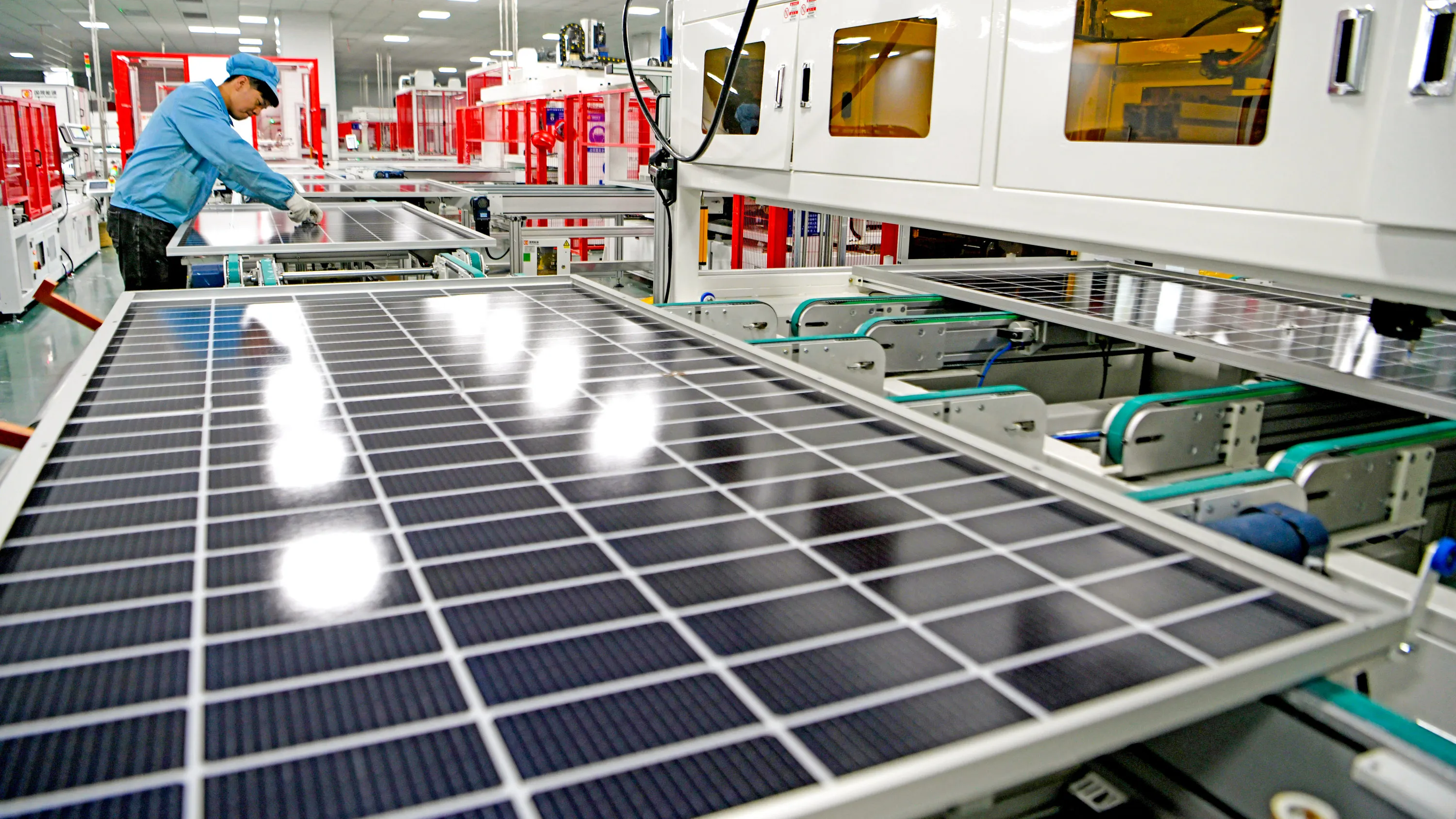
But solar panels are genuinely interesting objects. They start as sand, go through one of the more precise manufacturing processes in modern industry, and end up quietly turning sunlight into electricity for years with almost no moving parts. And the process of getting them onto a roof — from first conversation to the moment the system turns on — involves more steps than most people expect, most of them happening in the background.
This is a plain-language walkthrough of both sides: how a solar panel is actually built, and what the installation process looks like from start to finish.
Part One: How Solar Panels Are Made
It Starts With Sand
The main ingredient in a solar panel is silicon — the second most abundant element on Earth, found in ordinary beach sand. That abundance is part of what makes solar such a durable long-term technology. There's no shortage of the raw material.
But the silicon in sand isn't usable as-is. Sand is silicon dioxide — silicon bonded to oxygen — and it's full of impurities. Before it can become a solar panel, it has to go through a long purification process that would be unrecognizable to anyone who's ever walked on a beach.
The first step is heating silica sand in an electric arc furnace with carbon, which strips away the oxygen and produces metallurgical-grade silicon. This is roughly 99% pure — which sounds impressive until you understand that for solar panels, 99% isn't nearly good enough. Even trace impurities interfere with how electrons move through the material. So manufacturers refine it further, through a series of chemical processes, until they reach polysilicon with a purity level exceeding 99.9999%. That extra chain of nines makes an enormous difference in how efficiently the finished panel converts sunlight into electricity.
Think of it like refining crude oil into jet fuel. Same base material. Completely different product by the time it's ready to use.
From Liquid Silicon to Wafers
Once polysilicon is pure enough, it gets melted down and grown into ingots — large solid blocks of silicon crystal that look something like a thick metallic loaf.
There are two main ways to do this, and the method determines what kind of solar panel you end up with.
The first method, called the Czochralski process, produces monocrystalline silicon. A small seed crystal is touched to the surface of the molten silicon and then very slowly pulled upward while rotating. The silicon solidifies around the seed in a single continuous crystal, atom by atom, producing a uniform cylindrical ingot. The slow, controlled growth is what gives monocrystalline panels their consistent dark appearance and higher efficiency — the crystal structure is perfectly aligned throughout.
The second method produces polycrystalline silicon. Molten silicon is poured into a rectangular mold and allowed to cool naturally. As it cools, multiple crystals form in different orientations, creating the slightly speckled blue appearance you see on older panels. The process is simpler and less expensive, but the irregular crystal structure means electrons encounter more resistance moving through the material — which is why polycrystalline panels are slightly less efficient than monocrystalline.
Once the ingot is formed, it gets sliced into wafers using wire saws — thin, precisely cut discs typically less than a millimeter thick. Think of it like slicing a loaf of bread: each slice is one future solar cell. The cutting is done with remarkable precision because the wafers are fragile and expensive, and any cracking or inconsistency at this stage means waste.
Turning a Wafer Into a Cell
A silicon wafer fresh off the saw is interesting chemistry, but it doesn't do anything useful yet. Pure silicon is a poor conductor of electricity. To make it work as a solar cell, manufacturers have to engineer an internal electric field into it — and they do that through a process called doping.
Doping means intentionally introducing tiny amounts of other elements into the silicon to change its electrical properties. Boron is added to create a positive layer (called p-type silicon). Phosphorus is added to create a negative layer (called n-type silicon). When these two layers are joined, the boundary between them — called the p-n junction — creates a built-in electric field.
Here's why that matters: when sunlight hits the cell, it knocks electrons loose from their atoms. The electric field at the junction acts like a one-way gate, pushing those loose electrons in a specific direction. That directed movement of electrons is electrical current. That's the photovoltaic effect — and it's the entire basis of how solar panels work.
After doping, two more things happen before the cell is finished. First, an anti-reflective coating is applied to the surface. Without it, shiny silicon reflects away up to 35% of the sunlight that hits it — which would be a significant waste of the energy you're trying to capture. The coating is also what gives solar cells their characteristic dark blue or black appearance. Second, thin silver contacts are screen-printed onto the surface of the cell. Silver is among the most electrically conductive materials available, and these contacts are what capture the electrons set in motion by sunlight and route them out of the cell as usable current.
At this point, the wafer has become a functioning solar cell. Sunlight goes in, electricity comes out.
Assembling the Module
Individual solar cells are small — roughly the size of a playing card — and a single cell doesn't produce much power on its own. A finished solar panel is many cells wired together into a single unit, which is why panels have that characteristic grid pattern.
The cells are connected using thin copper ribbons coated in solder, in a process called tabbing and stringing. The ribbon connects the front of one cell to the back of the next, linking them in a series circuit the way batteries are connected end-to-end. A standard commercial solar panel contains 72 cells; residential panels typically have 60.
Once the cells are strung together, the module gets assembled in layers. Tempered glass goes on the front — tough enough to survive hail, debris, and decades of weather. An encapsulant layer (a clear polymer material) goes on both sides of the cell layer, bonding everything together and keeping moisture out. A protective backsheet closes the rear. An aluminum frame goes around the perimeter for structural rigidity and to make mounting possible. Finally, a junction box is attached to the back of the panel — this is the small weatherproof enclosure where the panel's electrical output connects to the wiring of the rest of the system.
The whole stack gets laminated under heat and pressure, fusing the layers into a single sealed unit. By weight, the finished panel is roughly 76% glass, 10% plastic polymer, 8% aluminum, 5% silicon, 1% copper, and a small fraction of silver. It's mostly glass and frame. The part that does the actual work — the silicon — is a relatively small portion of the total material.
Where Panels Are Made
China manufactures approximately 75% of all solar modules produced globally. Vietnam, India, Malaysia, Thailand, and the United States account for most of the remainder. The dominance of Chinese manufacturing is a function of the scale of investment in solar production infrastructure over the past two decades — factories that took years and billions of dollars to build and that can produce panels at costs that are difficult to match elsewhere.
For buyers, the practical implication is that most panels installed anywhere in the world — regardless of what name is on the label — were made in Asia. What distinguishes a quality panel from a budget one isn't primarily where it was made but who stands behind it: the manufacturer's track record, their warranty terms, and whether they're likely to still be in business in twenty years to honor those terms.
Part Two: How Solar Is Installed
Step 1 — Site Assessment
Before any design work happens, an installer visits the site. This is a physical inspection, not a sales call — it exists because no two installations are identical, and the system has to be designed around what's actually there.
For a rooftop installation, the assessor is looking at several things: the condition and age of the roof itself, the direction it faces and its angle, how much usable space is available, and what shade falls on the roof from trees, neighboring buildings, or rooftop equipment at different times of day. They're also looking at the building's existing electrical infrastructure — the main panel, service capacity, and how the solar system will connect to it.
The data from this visit is what the system design gets built on. A thorough site assessment leads to a system that performs as projected. A rushed or incomplete one leads to a system that underperforms.
Step 2 — System Design and Proposal
Using the site data, the installer designs the system: how many panels, where they go, what type of inverter, and how the whole thing connects to the building's electrical supply.
The inverter is worth explaining here. Solar panels produce direct current (DC) electricity — the same type of current that comes from a battery. Buildings run on alternating current (AC). The inverter is the device that converts DC to AC, making the solar output usable. It's typically a box about the size of a small suitcase mounted on a wall near the main electrical panel.
On flat commercial roofs, the racking — the mounting structure that holds the panels — is often ballasted, meaning it's weighted down rather than bolted through the roof membrane. This avoids penetrations entirely, which simplifies waterproofing and can make installation faster.
The proposal the installer delivers at the end of this stage lays out the full picture: projected energy output, estimated savings over time, total cost, and available incentives. This is the document you review, ask questions about, and sign before anything moves forward.
Step 3 — Permits and Approvals
This is the step that surprises most people. The physical installation — panels on roof, wires connected — often takes one to three days. The permitting and approvals process that has to happen before and after can take several weeks.
Most solar installations require at least three types of approval. A building permit confirms that the structure can support the additional load. An electrical permit covers the wiring and confirms compliance with the National Electrical Code. And a utility interconnection application notifies the power company that a new generation source is being added to the grid and requests permission to connect.
Local fire departments may also require a site plan showing the panel layout, the location of access pathways across the roof, and where the electrical disconnect is — this is so firefighters know how to safely de-energize the system in an emergency.
Permit timelines vary considerably. Straightforward residential systems in jurisdictions with streamlined processes can get same-day approval. Larger commercial systems, or projects in jurisdictions that require stamped engineering documents can take longer. Delays at this stage are the most common reason a solar project takes longer than expected.
Step 4 — Physical Installation
Once permits are in hand and any necessary roof work is done, the installation crew arrives. For most commercial rooftop systems, the physical work takes one to three days. Business operations typically continue uninterrupted — the crew works on the roof and at the electrical panel, not inside the building.
The sequence goes: racking first, then panels, then wiring.
Racking is the mounting structure that the panels attach to. On a pitched roof, it's bolted directly to the rafters — the structural members beneath the roofing material — with flashing and sealant applied at every penetration point to prevent leaks. On a flat roof with a ballasted system, it sits on top of the membrane weighted down by concrete blocks or similar ballast, with no penetrations at all.
Once the racking is in place, panels are attached to the rails and wired together. The wiring runs from the array down to the inverter, which gets mounted on a wall — typically near the main electrical panel. The inverter output connects to the building's electrical system, and at that point the hardware is complete.
Step 5 — Inspection and Interconnection
A completed installation isn't an operating one yet. Before the system can be turned on, a local inspector visits to verify that everything was built according to the permitted plans and complies with applicable codes. This inspection is non-negotiable — the system stays off until it passes.
Once the inspection is signed off, the installer submits the final paperwork to the utility. The utility then installs a bi-directional meter — a meter that tracks electricity flowing in both directions, so that any excess power the solar system sends back to the grid can be properly credited to the account.
After that comes Permission to Operate, or PTO — the utility's formal sign-off that the system is cleared to generate. The installer flips the switch, the inverter comes to life, and the system starts producing electricity.
What This All Adds Up To
Solar panels are made from one of the most common materials on the planet, through a manufacturing process precise enough to demand near-perfect purity, assembled into modules designed to last twenty-five years outdoors with essentially no maintenance. The installation process is methodical — assessment, design, permits, hardware, inspection — and most of the timeline is administrative rather than physical.
None of this requires an engineering degree to understand. But knowing roughly how it works makes the technology less mysterious, the process less opaque, and the questions easier to ask when the time comes.
Sources
Solar panel manufacturing process: U.S. Department of Energy, Solar Photovoltaic Manufacturing Basics — energy.gov/eere/solar/solar-photovoltaic-manufacturing-basics
Panel composition by weight; silver's role in conductivity: Union of Concerned Scientists — blog.ucs.org/charlie-hoffs/how-are-solar-panels-made
China's share of global manufacturing; cell count per panel: SolarReviews — solarreviews.com/blog/how-are-solar-panels-made
Polysilicon purity requirements: Alternate Energy Hawaii — alternateenergyhawaii.com/blog/how-solar-cells-are-manufactured
Permitting, inspection requirements, soft costs: U.S. Department of Energy — energy.gov/eere/solar/permitting-and-inspection-rooftop-solar
Commercial site assessment and NEC/IBC compliance: Revel Energy — revel-energy.com/commercial-solar-requirements-compliance-installation-standards
Structural dead load requirements: SolSmart — solsmart.org/resource/solar-pv-construction-codes-permitting-inspection
Bi-directional meter and interconnection: Cedar Creek Energy — cedarcreekenergy.com/the-installation-process-for-commercial-solar-projects-what-to-expect
Racking, flashing, and installation sequence: Enphase — enphase.com/learn/home-energy/permit-install/solar-installation-process
Let's Chat
Start your next project with Newport Renewables.
OUR SERVICES
Work with Newport Renewables
We do two things, and we do them at full scale: commercial solar across Rhode Island and ground-up custom homes built to perform. Here's where you fit.
Commercial solar for your property or business?
We design and install solar for commercial buildings, warehouses, and income properties across Rhode Island — sized to your actual load, your roof or land, and the incentives available right now. The goal isn't just panels on a roof; it's a system that pays for itself and keeps producing for decades.
→ See how commercial solar works
Building a new custom home?
We design and build custom homes with integrated zero-energy systems from the ground up. When every component — orientation, envelope, electrical capacity, HVAC, solar, storage — is planned together instead of bolted on later, you get a home that's built for long-term performance and value.
→ Learn about our zero-energy home builds
316 Columbia St • Wakefield, RI 02879 | 401.619.5906




Copyright © 2024 Newport Renewables. All Rights Reserved.
316 Columbia St • Wakefield, RI 02879 | 401.619.5906
Copyright © 2024 Newport Renewables. All Rights Reserved.
How Solar Panels Are Made and Installed: A Simple Guide
Most people don't think much about what's behind the light switch. You flip it, the light comes on, and that's enough. Solar is the same way — panels go on a roof somewhere, electricity comes out, and the details stay out of sight.
But solar panels are genuinely interesting objects. They start as sand, go through one of the more precise manufacturing processes in modern industry, and end up quietly turning sunlight into electricity for years with almost no moving parts. And the process of getting them onto a roof — from first conversation to the moment the system turns on — involves more steps than most people expect, most of them happening in the background.
This is a plain-language walkthrough of both sides: how a solar panel is actually built, and what the installation process looks like from start to finish.
Part One: How Solar Panels Are Made
It Starts With Sand
The main ingredient in a solar panel is silicon — the second most abundant element on Earth, found in ordinary beach sand. That abundance is part of what makes solar such a durable long-term technology. There's no shortage of the raw material.
But the silicon in sand isn't usable as-is. Sand is silicon dioxide — silicon bonded to oxygen — and it's full of impurities. Before it can become a solar panel, it has to go through a long purification process that would be unrecognizable to anyone who's ever walked on a beach.
The first step is heating silica sand in an electric arc furnace with carbon, which strips away the oxygen and produces metallurgical-grade silicon. This is roughly 99% pure — which sounds impressive until you understand that for solar panels, 99% isn't nearly good enough. Even trace impurities interfere with how electrons move through the material. So manufacturers refine it further, through a series of chemical processes, until they reach polysilicon with a purity level exceeding 99.9999%. That extra chain of nines makes an enormous difference in how efficiently the finished panel converts sunlight into electricity.
Think of it like refining crude oil into jet fuel. Same base material. Completely different product by the time it's ready to use.
From Liquid Silicon to Wafers
Once polysilicon is pure enough, it gets melted down and grown into ingots — large solid blocks of silicon crystal that look something like a thick metallic loaf.
There are two main ways to do this, and the method determines what kind of solar panel you end up with.
The first method, called the Czochralski process, produces monocrystalline silicon. A small seed crystal is touched to the surface of the molten silicon and then very slowly pulled upward while rotating. The silicon solidifies around the seed in a single continuous crystal, atom by atom, producing a uniform cylindrical ingot. The slow, controlled growth is what gives monocrystalline panels their consistent dark appearance and higher efficiency — the crystal structure is perfectly aligned throughout.
The second method produces polycrystalline silicon. Molten silicon is poured into a rectangular mold and allowed to cool naturally. As it cools, multiple crystals form in different orientations, creating the slightly speckled blue appearance you see on older panels. The process is simpler and less expensive, but the irregular crystal structure means electrons encounter more resistance moving through the material — which is why polycrystalline panels are slightly less efficient than monocrystalline.
Once the ingot is formed, it gets sliced into wafers using wire saws — thin, precisely cut discs typically less than a millimeter thick. Think of it like slicing a loaf of bread: each slice is one future solar cell. The cutting is done with remarkable precision because the wafers are fragile and expensive, and any cracking or inconsistency at this stage means waste.
Turning a Wafer Into a Cell
A silicon wafer fresh off the saw is interesting chemistry, but it doesn't do anything useful yet. Pure silicon is a poor conductor of electricity. To make it work as a solar cell, manufacturers have to engineer an internal electric field into it — and they do that through a process called doping.
Doping means intentionally introducing tiny amounts of other elements into the silicon to change its electrical properties. Boron is added to create a positive layer (called p-type silicon). Phosphorus is added to create a negative layer (called n-type silicon). When these two layers are joined, the boundary between them — called the p-n junction — creates a built-in electric field.
Here's why that matters: when sunlight hits the cell, it knocks electrons loose from their atoms. The electric field at the junction acts like a one-way gate, pushing those loose electrons in a specific direction. That directed movement of electrons is electrical current. That's the photovoltaic effect — and it's the entire basis of how solar panels work.
After doping, two more things happen before the cell is finished. First, an anti-reflective coating is applied to the surface. Without it, shiny silicon reflects away up to 35% of the sunlight that hits it — which would be a significant waste of the energy you're trying to capture. The coating is also what gives solar cells their characteristic dark blue or black appearance. Second, thin silver contacts are screen-printed onto the surface of the cell. Silver is among the most electrically conductive materials available, and these contacts are what capture the electrons set in motion by sunlight and route them out of the cell as usable current.
At this point, the wafer has become a functioning solar cell. Sunlight goes in, electricity comes out.
Assembling the Module
Individual solar cells are small — roughly the size of a playing card — and a single cell doesn't produce much power on its own. A finished solar panel is many cells wired together into a single unit, which is why panels have that characteristic grid pattern.
The cells are connected using thin copper ribbons coated in solder, in a process called tabbing and stringing. The ribbon connects the front of one cell to the back of the next, linking them in a series circuit the way batteries are connected end-to-end. A standard commercial solar panel contains 72 cells; residential panels typically have 60.
Once the cells are strung together, the module gets assembled in layers. Tempered glass goes on the front — tough enough to survive hail, debris, and decades of weather. An encapsulant layer (a clear polymer material) goes on both sides of the cell layer, bonding everything together and keeping moisture out. A protective backsheet closes the rear. An aluminum frame goes around the perimeter for structural rigidity and to make mounting possible. Finally, a junction box is attached to the back of the panel — this is the small weatherproof enclosure where the panel's electrical output connects to the wiring of the rest of the system.
The whole stack gets laminated under heat and pressure, fusing the layers into a single sealed unit. By weight, the finished panel is roughly 76% glass, 10% plastic polymer, 8% aluminum, 5% silicon, 1% copper, and a small fraction of silver. It's mostly glass and frame. The part that does the actual work — the silicon — is a relatively small portion of the total material.
Where Panels Are Made
China manufactures approximately 75% of all solar modules produced globally. Vietnam, India, Malaysia, Thailand, and the United States account for most of the remainder. The dominance of Chinese manufacturing is a function of the scale of investment in solar production infrastructure over the past two decades — factories that took years and billions of dollars to build and that can produce panels at costs that are difficult to match elsewhere.
For buyers, the practical implication is that most panels installed anywhere in the world — regardless of what name is on the label — were made in Asia. What distinguishes a quality panel from a budget one isn't primarily where it was made but who stands behind it: the manufacturer's track record, their warranty terms, and whether they're likely to still be in business in twenty years to honor those terms.
Part Two: How Solar Is Installed
Step 1 — Site Assessment
Before any design work happens, an installer visits the site. This is a physical inspection, not a sales call — it exists because no two installations are identical, and the system has to be designed around what's actually there.
For a rooftop installation, the assessor is looking at several things: the condition and age of the roof itself, the direction it faces and its angle, how much usable space is available, and what shade falls on the roof from trees, neighboring buildings, or rooftop equipment at different times of day. They're also looking at the building's existing electrical infrastructure — the main panel, service capacity, and how the solar system will connect to it.
The data from this visit is what the system design gets built on. A thorough site assessment leads to a system that performs as projected. A rushed or incomplete one leads to a system that underperforms.
Step 2 — System Design and Proposal
Using the site data, the installer designs the system: how many panels, where they go, what type of inverter, and how the whole thing connects to the building's electrical supply.
The inverter is worth explaining here. Solar panels produce direct current (DC) electricity — the same type of current that comes from a battery. Buildings run on alternating current (AC). The inverter is the device that converts DC to AC, making the solar output usable. It's typically a box about the size of a small suitcase mounted on a wall near the main electrical panel.
On flat commercial roofs, the racking — the mounting structure that holds the panels — is often ballasted, meaning it's weighted down rather than bolted through the roof membrane. This avoids penetrations entirely, which simplifies waterproofing and can make installation faster.
The proposal the installer delivers at the end of this stage lays out the full picture: projected energy output, estimated savings over time, total cost, and available incentives. This is the document you review, ask questions about, and sign before anything moves forward.
Step 3 — Permits and Approvals
This is the step that surprises most people. The physical installation — panels on roof, wires connected — often takes one to three days. The permitting and approvals process that has to happen before and after can take several weeks.
Most solar installations require at least three types of approval. A building permit confirms that the structure can support the additional load. An electrical permit covers the wiring and confirms compliance with the National Electrical Code. And a utility interconnection application notifies the power company that a new generation source is being added to the grid and requests permission to connect.
Local fire departments may also require a site plan showing the panel layout, the location of access pathways across the roof, and where the electrical disconnect is — this is so firefighters know how to safely de-energize the system in an emergency.
Permit timelines vary considerably. Straightforward residential systems in jurisdictions with streamlined processes can get same-day approval. Larger commercial systems, or projects in jurisdictions that require stamped engineering documents can take longer. Delays at this stage are the most common reason a solar project takes longer than expected.
Step 4 — Physical Installation
Once permits are in hand and any necessary roof work is done, the installation crew arrives. For most commercial rooftop systems, the physical work takes one to three days. Business operations typically continue uninterrupted — the crew works on the roof and at the electrical panel, not inside the building.
The sequence goes: racking first, then panels, then wiring.
Racking is the mounting structure that the panels attach to. On a pitched roof, it's bolted directly to the rafters — the structural members beneath the roofing material — with flashing and sealant applied at every penetration point to prevent leaks. On a flat roof with a ballasted system, it sits on top of the membrane weighted down by concrete blocks or similar ballast, with no penetrations at all.
Once the racking is in place, panels are attached to the rails and wired together. The wiring runs from the array down to the inverter, which gets mounted on a wall — typically near the main electrical panel. The inverter output connects to the building's electrical system, and at that point the hardware is complete.
Step 5 — Inspection and Interconnection
A completed installation isn't an operating one yet. Before the system can be turned on, a local inspector visits to verify that everything was built according to the permitted plans and complies with applicable codes. This inspection is non-negotiable — the system stays off until it passes.
Once the inspection is signed off, the installer submits the final paperwork to the utility. The utility then installs a bi-directional meter — a meter that tracks electricity flowing in both directions, so that any excess power the solar system sends back to the grid can be properly credited to the account.
After that comes Permission to Operate, or PTO — the utility's formal sign-off that the system is cleared to generate. The installer flips the switch, the inverter comes to life, and the system starts producing electricity.
What This All Adds Up To
Solar panels are made from one of the most common materials on the planet, through a manufacturing process precise enough to demand near-perfect purity, assembled into modules designed to last twenty-five years outdoors with essentially no maintenance. The installation process is methodical — assessment, design, permits, hardware, inspection — and most of the timeline is administrative rather than physical.
None of this requires an engineering degree to understand. But knowing roughly how it works makes the technology less mysterious, the process less opaque, and the questions easier to ask when the time comes.
Sources
Solar panel manufacturing process: U.S. Department of Energy, Solar Photovoltaic Manufacturing Basics — energy.gov/eere/solar/solar-photovoltaic-manufacturing-basics
Panel composition by weight; silver's role in conductivity: Union of Concerned Scientists — blog.ucs.org/charlie-hoffs/how-are-solar-panels-made
China's share of global manufacturing; cell count per panel: SolarReviews — solarreviews.com/blog/how-are-solar-panels-made
Polysilicon purity requirements: Alternate Energy Hawaii — alternateenergyhawaii.com/blog/how-solar-cells-are-manufactured
Permitting, inspection requirements, soft costs: U.S. Department of Energy — energy.gov/eere/solar/permitting-and-inspection-rooftop-solar
Commercial site assessment and NEC/IBC compliance: Revel Energy — revel-energy.com/commercial-solar-requirements-compliance-installation-standards
Structural dead load requirements: SolSmart — solsmart.org/resource/solar-pv-construction-codes-permitting-inspection
Bi-directional meter and interconnection: Cedar Creek Energy — cedarcreekenergy.com/the-installation-process-for-commercial-solar-projects-what-to-expect
Racking, flashing, and installation sequence: Enphase — enphase.com/learn/home-energy/permit-install/solar-installation-process
OUR SERVICES
Work with Newport Renewables
We do two things, and we do them at full scale: commercial solar across Rhode Island and ground-up custom homes built to perform. Here's where you fit.
Commercial solar for your property or business?
We design and install solar for commercial buildings, warehouses, and income properties across Rhode Island — sized to your actual load, your roof or land, and the incentives available right now. The goal isn't just panels on a roof; it's a system that pays for itself and keeps producing for decades.
→ See how commercial solar works
Building a new custom home?
We design and build custom homes with integrated zero-energy systems from the ground up. When every component — orientation, envelope, electrical capacity, HVAC, solar, storage — is planned together instead of bolted on later, you get a home that's built for long-term performance and value.
→ Learn about our zero-energy home builds
316 Columbia St • Wakefield, RI 02879 | 401.619.5906
Copyright © 2024 Newport Renewables. All Rights Reserved.

How Solar Panels Are Made and Installed: A Simple Guide
Most people don't think much about what's behind the light switch. You flip it, the light comes on, and that's enough. Solar is the same way — panels go on a roof somewhere, electricity comes out, and the details stay out of sight.
But solar panels are genuinely interesting objects. They start as sand, go through one of the more precise manufacturing processes in modern industry, and end up quietly turning sunlight into electricity for years with almost no moving parts. And the process of getting them onto a roof — from first conversation to the moment the system turns on — involves more steps than most people expect, most of them happening in the background.
This is a plain-language walkthrough of both sides: how a solar panel is actually built, and what the installation process looks like from start to finish.
Part One: How Solar Panels Are Made
It Starts With Sand
The main ingredient in a solar panel is silicon — the second most abundant element on Earth, found in ordinary beach sand. That abundance is part of what makes solar such a durable long-term technology. There's no shortage of the raw material.
But the silicon in sand isn't usable as-is. Sand is silicon dioxide — silicon bonded to oxygen — and it's full of impurities. Before it can become a solar panel, it has to go through a long purification process that would be unrecognizable to anyone who's ever walked on a beach.
The first step is heating silica sand in an electric arc furnace with carbon, which strips away the oxygen and produces metallurgical-grade silicon. This is roughly 99% pure — which sounds impressive until you understand that for solar panels, 99% isn't nearly good enough. Even trace impurities interfere with how electrons move through the material. So manufacturers refine it further, through a series of chemical processes, until they reach polysilicon with a purity level exceeding 99.9999%. That extra chain of nines makes an enormous difference in how efficiently the finished panel converts sunlight into electricity.
Think of it like refining crude oil into jet fuel. Same base material. Completely different product by the time it's ready to use.
From Liquid Silicon to Wafers
Once polysilicon is pure enough, it gets melted down and grown into ingots — large solid blocks of silicon crystal that look something like a thick metallic loaf.
There are two main ways to do this, and the method determines what kind of solar panel you end up with.
The first method, called the Czochralski process, produces monocrystalline silicon. A small seed crystal is touched to the surface of the molten silicon and then very slowly pulled upward while rotating. The silicon solidifies around the seed in a single continuous crystal, atom by atom, producing a uniform cylindrical ingot. The slow, controlled growth is what gives monocrystalline panels their consistent dark appearance and higher efficiency — the crystal structure is perfectly aligned throughout.
The second method produces polycrystalline silicon. Molten silicon is poured into a rectangular mold and allowed to cool naturally. As it cools, multiple crystals form in different orientations, creating the slightly speckled blue appearance you see on older panels. The process is simpler and less expensive, but the irregular crystal structure means electrons encounter more resistance moving through the material — which is why polycrystalline panels are slightly less efficient than monocrystalline.
Once the ingot is formed, it gets sliced into wafers using wire saws — thin, precisely cut discs typically less than a millimeter thick. Think of it like slicing a loaf of bread: each slice is one future solar cell. The cutting is done with remarkable precision because the wafers are fragile and expensive, and any cracking or inconsistency at this stage means waste.
Turning a Wafer Into a Cell
A silicon wafer fresh off the saw is interesting chemistry, but it doesn't do anything useful yet. Pure silicon is a poor conductor of electricity. To make it work as a solar cell, manufacturers have to engineer an internal electric field into it — and they do that through a process called doping.
Doping means intentionally introducing tiny amounts of other elements into the silicon to change its electrical properties. Boron is added to create a positive layer (called p-type silicon). Phosphorus is added to create a negative layer (called n-type silicon). When these two layers are joined, the boundary between them — called the p-n junction — creates a built-in electric field.
Here's why that matters: when sunlight hits the cell, it knocks electrons loose from their atoms. The electric field at the junction acts like a one-way gate, pushing those loose electrons in a specific direction. That directed movement of electrons is electrical current. That's the photovoltaic effect — and it's the entire basis of how solar panels work.
After doping, two more things happen before the cell is finished. First, an anti-reflective coating is applied to the surface. Without it, shiny silicon reflects away up to 35% of the sunlight that hits it — which would be a significant waste of the energy you're trying to capture. The coating is also what gives solar cells their characteristic dark blue or black appearance. Second, thin silver contacts are screen-printed onto the surface of the cell. Silver is among the most electrically conductive materials available, and these contacts are what capture the electrons set in motion by sunlight and route them out of the cell as usable current.
At this point, the wafer has become a functioning solar cell. Sunlight goes in, electricity comes out.
Assembling the Module
Individual solar cells are small — roughly the size of a playing card — and a single cell doesn't produce much power on its own. A finished solar panel is many cells wired together into a single unit, which is why panels have that characteristic grid pattern.
The cells are connected using thin copper ribbons coated in solder, in a process called tabbing and stringing. The ribbon connects the front of one cell to the back of the next, linking them in a series circuit the way batteries are connected end-to-end. A standard commercial solar panel contains 72 cells; residential panels typically have 60.
Once the cells are strung together, the module gets assembled in layers. Tempered glass goes on the front — tough enough to survive hail, debris, and decades of weather. An encapsulant layer (a clear polymer material) goes on both sides of the cell layer, bonding everything together and keeping moisture out. A protective backsheet closes the rear. An aluminum frame goes around the perimeter for structural rigidity and to make mounting possible. Finally, a junction box is attached to the back of the panel — this is the small weatherproof enclosure where the panel's electrical output connects to the wiring of the rest of the system.
The whole stack gets laminated under heat and pressure, fusing the layers into a single sealed unit. By weight, the finished panel is roughly 76% glass, 10% plastic polymer, 8% aluminum, 5% silicon, 1% copper, and a small fraction of silver. It's mostly glass and frame. The part that does the actual work — the silicon — is a relatively small portion of the total material.
Where Panels Are Made
China manufactures approximately 75% of all solar modules produced globally. Vietnam, India, Malaysia, Thailand, and the United States account for most of the remainder. The dominance of Chinese manufacturing is a function of the scale of investment in solar production infrastructure over the past two decades — factories that took years and billions of dollars to build and that can produce panels at costs that are difficult to match elsewhere.
For buyers, the practical implication is that most panels installed anywhere in the world — regardless of what name is on the label — were made in Asia. What distinguishes a quality panel from a budget one isn't primarily where it was made but who stands behind it: the manufacturer's track record, their warranty terms, and whether they're likely to still be in business in twenty years to honor those terms.
Part Two: How Solar Is Installed
Step 1 — Site Assessment
Before any design work happens, an installer visits the site. This is a physical inspection, not a sales call — it exists because no two installations are identical, and the system has to be designed around what's actually there.
For a rooftop installation, the assessor is looking at several things: the condition and age of the roof itself, the direction it faces and its angle, how much usable space is available, and what shade falls on the roof from trees, neighboring buildings, or rooftop equipment at different times of day. They're also looking at the building's existing electrical infrastructure — the main panel, service capacity, and how the solar system will connect to it.
The data from this visit is what the system design gets built on. A thorough site assessment leads to a system that performs as projected. A rushed or incomplete one leads to a system that underperforms.
Step 2 — System Design and Proposal
Using the site data, the installer designs the system: how many panels, where they go, what type of inverter, and how the whole thing connects to the building's electrical supply.
The inverter is worth explaining here. Solar panels produce direct current (DC) electricity — the same type of current that comes from a battery. Buildings run on alternating current (AC). The inverter is the device that converts DC to AC, making the solar output usable. It's typically a box about the size of a small suitcase mounted on a wall near the main electrical panel.
On flat commercial roofs, the racking — the mounting structure that holds the panels — is often ballasted, meaning it's weighted down rather than bolted through the roof membrane. This avoids penetrations entirely, which simplifies waterproofing and can make installation faster.
The proposal the installer delivers at the end of this stage lays out the full picture: projected energy output, estimated savings over time, total cost, and available incentives. This is the document you review, ask questions about, and sign before anything moves forward.
Step 3 — Permits and Approvals
This is the step that surprises most people. The physical installation — panels on roof, wires connected — often takes one to three days. The permitting and approvals process that has to happen before and after can take several weeks.
Most solar installations require at least three types of approval. A building permit confirms that the structure can support the additional load. An electrical permit covers the wiring and confirms compliance with the National Electrical Code. And a utility interconnection application notifies the power company that a new generation source is being added to the grid and requests permission to connect.
Local fire departments may also require a site plan showing the panel layout, the location of access pathways across the roof, and where the electrical disconnect is — this is so firefighters know how to safely de-energize the system in an emergency.
Permit timelines vary considerably. Straightforward residential systems in jurisdictions with streamlined processes can get same-day approval. Larger commercial systems, or projects in jurisdictions that require stamped engineering documents can take longer. Delays at this stage are the most common reason a solar project takes longer than expected.
Step 4 — Physical Installation
Once permits are in hand and any necessary roof work is done, the installation crew arrives. For most commercial rooftop systems, the physical work takes one to three days. Business operations typically continue uninterrupted — the crew works on the roof and at the electrical panel, not inside the building.
The sequence goes: racking first, then panels, then wiring.
Racking is the mounting structure that the panels attach to. On a pitched roof, it's bolted directly to the rafters — the structural members beneath the roofing material — with flashing and sealant applied at every penetration point to prevent leaks. On a flat roof with a ballasted system, it sits on top of the membrane weighted down by concrete blocks or similar ballast, with no penetrations at all.
Once the racking is in place, panels are attached to the rails and wired together. The wiring runs from the array down to the inverter, which gets mounted on a wall — typically near the main electrical panel. The inverter output connects to the building's electrical system, and at that point the hardware is complete.
Step 5 — Inspection and Interconnection
A completed installation isn't an operating one yet. Before the system can be turned on, a local inspector visits to verify that everything was built according to the permitted plans and complies with applicable codes. This inspection is non-negotiable — the system stays off until it passes.
Once the inspection is signed off, the installer submits the final paperwork to the utility. The utility then installs a bi-directional meter — a meter that tracks electricity flowing in both directions, so that any excess power the solar system sends back to the grid can be properly credited to the account.
After that comes Permission to Operate, or PTO — the utility's formal sign-off that the system is cleared to generate. The installer flips the switch, the inverter comes to life, and the system starts producing electricity.
What This All Adds Up To
Solar panels are made from one of the most common materials on the planet, through a manufacturing process precise enough to demand near-perfect purity, assembled into modules designed to last twenty-five years outdoors with essentially no maintenance. The installation process is methodical — assessment, design, permits, hardware, inspection — and most of the timeline is administrative rather than physical.
None of this requires an engineering degree to understand. But knowing roughly how it works makes the technology less mysterious, the process less opaque, and the questions easier to ask when the time comes.
Sources
Solar panel manufacturing process: U.S. Department of Energy, Solar Photovoltaic Manufacturing Basics — energy.gov/eere/solar/solar-photovoltaic-manufacturing-basics
Panel composition by weight; silver's role in conductivity: Union of Concerned Scientists — blog.ucs.org/charlie-hoffs/how-are-solar-panels-made
China's share of global manufacturing; cell count per panel: SolarReviews — solarreviews.com/blog/how-are-solar-panels-made
Polysilicon purity requirements: Alternate Energy Hawaii — alternateenergyhawaii.com/blog/how-solar-cells-are-manufactured
Permitting, inspection requirements, soft costs: U.S. Department of Energy — energy.gov/eere/solar/permitting-and-inspection-rooftop-solar
Commercial site assessment and NEC/IBC compliance: Revel Energy — revel-energy.com/commercial-solar-requirements-compliance-installation-standards
Structural dead load requirements: SolSmart — solsmart.org/resource/solar-pv-construction-codes-permitting-inspection
Bi-directional meter and interconnection: Cedar Creek Energy — cedarcreekenergy.com/the-installation-process-for-commercial-solar-projects-what-to-expect
Racking, flashing, and installation sequence: Enphase — enphase.com/learn/home-energy/permit-install/solar-installation-process
OUR SERVICES
Work with Newport Renewables
We do two things, and we do them at full scale: commercial solar across Rhode Island and ground-up custom homes built to perform. Here's where you fit.
Commercial solar for your property or business?
We design and install solar for commercial buildings, warehouses, and income properties across Rhode Island — sized to your actual load, your roof or land, and the incentives available right now. The goal isn't just panels on a roof; it's a system that pays for itself and keeps producing for decades.
→ See how commercial solar works
Building a new custom home?
We design and build custom homes with integrated zero-energy systems from the ground up. When every component — orientation, envelope, electrical capacity, HVAC, solar, storage — is planned together instead of bolted on later, you get a home that's built for long-term performance and value.
→ Learn about our zero-energy home builds
Let's Chat
Start your next project with Newport Renewables.
316 Columbia St • Wakefield, RI 02879 | 401.619.5906
Copyright © 2024 Newport Renewables. All Rights Reserved.
316 Columbia St • Wakefield, RI 02879 | 401.619.5906
Copyright © 2024 Newport Renewables. All Rights Reserved.