Does Commercial Solar Void Your Roof Warranty?
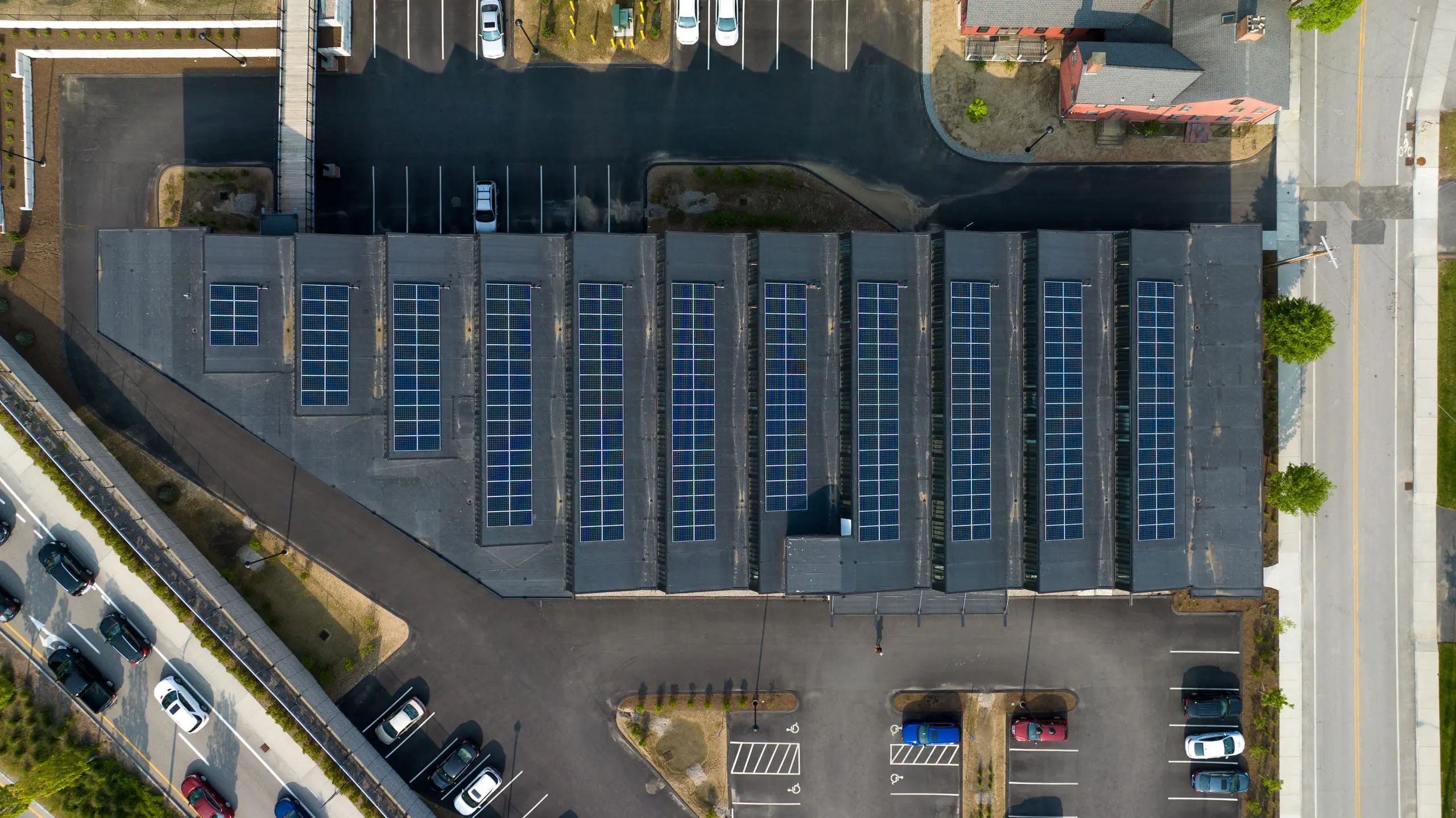
A rooftop solar proposal can sit untouched for months over one question. The numbers work. The roof has the space. Then someone in the room — the CFO, the facilities director, or the roofing contractor who installed the membrane six years ago — asks what happens to the roof warranty. Nobody has a confident answer, so the project stalls.
The caution is rational. A commercial membrane roof is a six-figure asset, and warranty coverage on it is one of the few things standing between a building owner and an unplanned capital expense. Trading that away for an energy project would be a bad deal.
But the trade isn't the one most owners think they're making. Installing solar does not automatically void a commercial roof warranty. It can void one, and there are four specific ways that happens — all of them procedural, all of them preventable. There's also a set of exclusions and owner obligations in the fine print that almost nobody reads until they file a claim.
This guide covers the principles behind those requirements and gives you questions to put to your own documents, so you can tell whether the proposal on your desk is safe or exposed.
The short answer
No. Rooftop solar does not automatically void a commercial roof warranty.
Major membrane manufacturers publish formal processes for installing PV over a warranted roof and continuing coverage afterward. The details differ, but the shape is consistent across the industry: a form the building owner signs before work begins, a defined inspection sequence, a fee, and a restriction on who is allowed to touch the membrane. Follow the process and coverage continues. Skip it and coverage is suspended, narrowed, or terminated.
That's the reassuring part. The part that matters more is what your coverage looked like before solar ever entered the conversation.
You have more than one warranty
Building owners tend to speak about "the roof warranty" as a single document. On a commercial low-slope roof there are usually three, and they fail independently.
Manufacturer material warranty. Covers defects in the membrane and manufacturer-supplied components. The narrowest of the three.
Manufacturer system or NDL warranty. The valuable one. NDL stands for No Dollar Limit — the manufacturer covers labor and materials to repair covered leaks without a cap tied to the original contract value. This is also the warranty carrying the conditions, and the one solar work actually puts at risk.
Contractor workmanship warranty. Issued by the roofing contractor, covering their installation. Typically shorter than the manufacturer coverage, and typically silent about what a third party does to the roof later.
When someone tells you solar "won't affect the warranty," ask which one. The material warranty is largely unaffected. The NDL warranty is the one with requirements attached.
There's a fourth document people forget: the solar installer's own workmanship warranty. It covers their work, not your roof, and its term is usually far shorter than either the roof warranty or the array's service life. Read where it ends.
Question to ask yourself: Can you put your hands on all of these today, with warranty numbers and expiration dates? If not, that's the first task — not a solar quote.
What your warranty never covered in the first place
This is where reassurance articles stop short.
A roof system warranty covers the roof system. It does not cover the solar array, and across the industry it does not cover damage the solar array causes.
Manufacturer compliance forms commonly require the building owner to sign an acknowledgment to exactly that effect — that the guarantee doesn't extend to leaks, damage, appearance changes, or performance loss arising from the installation, operation, or presence of a photovoltaic system, and that the manufacturer isn't responsible for claims attributable to that system.
Read that sequence again. The owner signs a document agreeing that PV-related damage isn't covered, and signing it is the condition for keeping the guarantee active.
So the real question isn't whether solar voids your warranty. It's this: once panels are on the roof, which failures are still covered, which never were, and who absorbs the cost of finding out?
Why manufacturers treat rooftop PV as a roof alteration
Membrane manufacturers warrant a sealed assembly they specified. A PV installation changes several variables that assembly was designed around:
New penetrations, or new concentrated point loads and abrasion contact
Foot traffic during installation and for the operating life of the system
Racking, conduit, and equipment that restrict drainage and trap debris
Sections of membrane and field seams that become hard to reach for inspection and repair
Warranty documents therefore classify a PV installation as an alteration to the roofing system — the same category as a new HVAC curb, a satellite mount, or signage anchors. That classification is what triggers the notification, approval, and inspection requirements.
It also produces a labor restriction that catches most owners off guard. System warranties typically require that any alteration — including flashings, terminations, slip sheets, walkway pads, and sacrificial sheets — be performed by a contractor the manufacturer has certified for that membrane. Some go further and direct the work back to the original installing contractor when the roof is relatively new.
A solar crew is not a certified roofing applicator. When a solar crew cuts, flashes, or welds anything on a warranted membrane, coverage is already in question — regardless of how well they did the work.
Question to ask yourself: Does your solar proposal name a certified roofing contractor for the membrane scope? If the same crew is doing panels and flashings, you have a problem.
The four conditions that actually void coverage
1. You didn't notify the manufacturer or get written approval first
Every version of this process is front-loaded. Approval comes before the work, not after.
Common requirements include a signed owner form submitted in advance, a roof plan showing the full extent of the array including maintenance paths and access points, and racking and flashing details showing how the mounting system meets the membrane. Some manufacturers require review and approval of those documents before installation may begin at all. Others go further, suspending the guarantee outright for the duration of the PV work and restoring it only after inspection, payment, and a signed owner acknowledgment — with the right reserved to discontinue coverage entirely if the submitted information is unsatisfactory.
A missed notification is invisible on install day. It surfaces the first time you file a claim, years later, when an inspector asks for the approval file and there isn't one.
Question to ask yourself: Has anyone contacted your membrane manufacturer's warranty department yet? If the answer is "we'll handle that after," the sequence is already wrong.
2. The roof doesn't have enough life left
Manufacturers frame this as a design question rather than a warranty technicality, and the guidance is consistent: before installing PV over an existing roof, compare the roof's remaining warranted life against the expected service life of the array, which commonly exceeds twenty years. Where the array will outlast the roof, recovering or replacing the roof first is the recommended path. On new construction, the recommendation is to specify a membrane and warranty term matched to the solar asset — a thirty-year array wants a thirty-year roof under it.
The mismatch is a financial problem before it's a warranty problem. Re-roofing under an existing array means detaching, storing, and reinstalling the system, plus the production you lose while it's offline. On a commercial array that's a multi-week sequence, not a weekend.
The practical rule: if the roof has fewer years left than the array, decide now whether you're re-roofing first or paying to remove the array later. There is no third option.
Question to ask yourself: How many years of warranted life remain on your roof, and is that number larger than the array's expected life? If not, price the re-roof now and compare.
3. The attachment method or detailing wasn't approved
Manufacturers are specific about how racking connects to the building, and the principles hold across brands.
Anchoring should tie into a structural component of the building. Attachment methods relying on adhesion or heat-welding directly to the membrane — using the roof surface itself to resist uplift — are generally not accepted, on the reasoning that they can cause premature failure of the roof assembly. Where the membrane must be penetrated, round pipe or square tube supports are preferred because they accept pre-molded flashing accessories, and the flashing must follow the manufacturer's published detail and be performed by a certified applicator.
There's also an accessibility requirement that trips up dense layouts: penetrations and anchors generally must remain visible and reachable for the manufacturer's field inspection. An array laid out so tightly that the anchors can't be inspected is an array that can't be accepted into the warranty.
Question to ask yourself: Does the proposal show racking anchored to structure, with a named flashing detail and a certified applicator performing it? "We use a non-penetrating adhesive mount" is not automatically the safe answer.
4. Nobody documented the roof before and after
Inspections aren't optional, and they aren't free.
The pattern across the industry: a pre-installation inspection where the roof is new or the warranty was recently issued, a post-installation inspection in essentially all cases, prepayment of the inspection fee before scheduling, and repair of any identified damage before coverage continues. Fee structures vary — some manufacturers charge a flat fee per inspection, others charge by the square foot of warranted roof area with a stated minimum. Reinspections generally carry the fee again.
Note what those fees buy. They buy a documented, third-party record of the roof's condition immediately before and immediately after the array went up. Without that record, every leak for the rest of the warranty term becomes an argument about whether solar caused it — and the owner loses that argument by default.
Question to ask yourself: Who is paying the manufacturer's inspection fees, and is that written into the solar contract? If it isn't in the scope, it will land on you.
All four conditions are process failures. None of them is a solar failure.
What the paperwork does, whatever it's called
Names differ by manufacturer — letter of compliance, registration form, overburden waiver, continuance letter. The function is the same, in three parts.
Before installation: an owner-signed form submitted to the manufacturer, accompanied by a roof plan and racking and flashing details. This is the approval step.
During and after: inspection by a manufacturer field representative, payment of fees, and repair of anything flagged.
After acceptance: a written document confirming coverage continues — issued as a continuance letter, an addendum to the original guarantee, or a formal reinstatement of active status.
Two details are worth flagging. First, that closing document frequently contains additional or modified warranty terms, which means your coverage after solar is not identical to your coverage before it. Read it rather than filing it. Second, the same document that preserves your coverage is usually where you sign away claims related to the PV system. It protects and it surrenders, in the same signature.
Question to ask yourself: After installation, did you receive written confirmation of continued coverage, and is it stored with your original warranty? If your only proof is an installer's verbal assurance, you don't have coverage confirmed — you have a hope.
The cost that surprises owners: you can win a claim and still write a check
This provision is nearly universal and almost never raised during a sales process.
If panels must be removed to investigate or repair a covered problem with the roof beneath them, the cost of that removal and reinstallation falls to the building owner. So does any increase in repair cost caused by limited access. So does the lost generation while the array is down. Some warranties go further, requiring the owner to render the system electrically inoperable before any investigation begins and to keep it that way until work is complete — with the manufacturer explicitly not responsible for the resulting loss of income or building use.
Put concretely: you can hold a valid NDL warranty, have a genuine covered membrane defect, and still pay to de-energize the array, remove it, store it, reinstall it, and absorb every kilowatt-hour you didn't generate in the meantime.
That isn't a reason to skip solar. It's a reason to design the array so the roof underneath stays serviceable. Manufacturer guidance points the same direction: provide sufficient clearance beneath rack-supported systems for membrane access, position arrays so field seams and penetrations remain reachable for inspection and repair, and where that isn't possible, have concealed seams overlaid by a certified applicator before the array goes up.
Question to ask yourself: Where are the field seams, drains, and existing penetrations relative to the proposed array layout? If your installer can't answer, they designed for production and nothing else.
Penetrating vs. ballasted: a trade, not an upgrade
The common assumption is that ballasted racking is the warranty-safe choice because it doesn't cut the membrane. That's half right.
Penetrating (structurally anchored) | Ballasted | |
|---|---|---|
Membrane openings | New penetration at each attachment | None |
Primary manufacturer concern | Flashing detail and who performs it | Abrasion, drainage, and added dead load |
Added dead load | Minimal | Substantial — concrete ballast |
Required protection | Approved flashing detail by a certified applicator | Slip sheets or protection pads at every contact point |
Structural review | Required | Required, and usually more consequential |
Ballasted systems trade waterproofing risk for structural risk, and manufacturers impose conditions in exchange. Expect a required protection course — walkway pads, slip sheets, or sacrificial membrane — at every point where racking contacts the roof, sized to prevent contact for the life of the roof and often required to extend past the base mount on all sides. Expect slope limits. And expect that components supplied by the racking manufacturer, and how they interact with the roof, fall outside the membrane warranty entirely.
There's also a failure mode that rarely appears in solar marketing. Mechanically attached and induction-welded roof systems can billow under high wind or building pressure differences. That movement can shift a ballasted array and abrade the membrane where racking edges and ballast trays rub against it. If your membrane is mechanically attached rather than fully adhered, "non-penetrating" does not mean "no membrane risk."
Ballast weight is also not a fixed figure. It rises with wind exposure, array tilt, and height above the roof, and it concentrates at corners and perimeters where uplift pressures are highest. Manufacturer guidance is explicit that a structural analysis by a registered Professional Engineer should be completed before design proceeds past the preliminary stage — covering modules, racking, conduit, equipment, wind uplift, and snow loading, with stamped drawings and calculations.
Neither mounting method is safer in the abstract. The right answer comes out of a structural review of your specific building.
Question to ask yourself: Has a licensed engineer stamped calculations for your building, or is the installer relying on a racking vendor's generic layout tool?
Site conditions that change the answer
Two buildings with identical roofs can get different answers to the same warranty question, because the site is part of the design.
Wind exposure. The International Building Code references ASCE 7 for structural loads, and ASCE 7 assigns each site an exposure category based on the roughness of the terrain upwind. Open water, flat unobstructed ground, and dense built-up areas produce materially different design pressures. Exposure is a property of the site, not the building — two properties on the same street can fall into different categories depending on what sits upwind of each. For a ballasted array, that difference is measured in tons of concrete.
Snow. Where snow is a design factor, the array changes how it accumulates. Panels create obstructions that drive drifting, and the load has to be evaluated in combination with the array's own dead weight, not separately.
Corrosion environment. Manufacturer design guidance calls for corrosion-resistant racking components selected according to the environmental corrosion category of the project location, and for freeze-thaw resistant ballast where freeze-thaw cycling occurs. Coastal, marine, and heavy-industrial sites are more aggressive environments than inland ones, and the failure shows up as pitting and coating breakdown at bolted joints — the most structurally critical points on the array.
Membrane type. Single-ply membranes such as TPO and EPDM dominate the low-slope commercial market, and they are not interchangeable from a detailing standpoint. The membrane you have determines which process applies, which flashing details are approved, and which contractors are certified to execute them.
Code edition. Which edition of ASCE 7 applies depends on which building code edition your jurisdiction has adopted, and adoption lags publication by years. An engineer designing to a newer edition than your building official has adopted will have drawings returned. Confirm the adopted edition with your local building department before design starts.
Question to ask yourself: Does your proposal reflect your site — exposure, climate, corrosion environment — or does it look like it could have been produced for any building anywhere?
Warning signs in a solar proposal
You don't need to be a roofing expert to spot the proposals that will cost you. These are the tells:
No mention of your roof warranty at all. The single most common omission, and the most expensive.
No named roofing contractor. If the scope doesn't identify who performs membrane work and what certification they hold, nobody has thought about it.
The mounting method was chosen before anyone looked at the structure. Racking selected at the proposal stage and "engineered later" is backwards.
No pre-installation roof inspection in the scope. Without a baseline, you inherit every future dispute.
Inspection fees unassigned. Manufacturer fees exist. Silence means they're yours.
No plan for future roof access. Ask what happens when the roof needs repair in year twelve. A blank look is your answer.
Deflection instead of documentation. "We do this all the time" and "it's never been an issue" are not the same as a manufacturer approval letter.
Any one of these is worth a conversation. Three or more, and the proposal wasn't built with your roof in mind.
Pre-installation checklist for building owners
Run this before you sign a solar contract, not after.
Locate every warranty document — material, system/NDL, and contractor workmanship — with warranty numbers and expiration dates.
Identify the membrane manufacturer and type. Everything downstream depends on it.
Compare remaining warranted roof life to the array's expected life. If the roof loses that race, decide now whether you re-roof first.
Request the manufacturer's PV requirements in writing and confirm which form applies to your guarantee.
Confirm who is certified to perform flashing and membrane work under your specific warranty, and name that contractor in the scope of work.
Commission a structural review by a licensed engineer before choosing between ballasted and penetrating racking — not after.
Confirm the design standard matches the code edition your jurisdiction has adopted, and that the engineer assessed your site's exposure rather than accepting a default.
Require pre- and post-installation inspections with photo documentation, and settle in writing who pays the manufacturer's fees.
Review the array layout against the roof plan. Field seams, drains, and existing penetrations should stay accessible.
Read the removal-cost provision and price a future detach-and-reset into your financial model. It's your obligation, not the manufacturer's.
Get written confirmation of continued coverage after installation and store it with the original warranty.
Hold a pre-job conference with the owner, roofing contractor, solar installer, and electrical contractor before mobilization, covering schedule, staging areas, damage reporting, and change orders.
Frequently asked questions
Does solar void my roof warranty if the roof is already fifteen years old? Not by itself. But manufacturer guidance consistently recommends comparing remaining warranted life against a PV service life exceeding twenty years, and replacing the roof first when the array will outlast it. An aging membrane will likely need replacement inside the array's life, which means paying to remove and reinstall the system.
Can I install solar on a roof still under an NDL warranty? Yes, through the manufacturer's published process. Expect written approval before installation, certified contractors for any membrane work, at least one paid inspection, and a signed owner acknowledgment.
Who's responsible if a leak happens after solar is installed? It depends on the cause, which is exactly why pre- and post-installation documentation matters. Warranties exclude damage caused by the PV system's installation, operation, or presence. Without a documented baseline, establishing cause is difficult and expensive.
Do ballasted systems avoid warranty issues entirely? No. They avoid penetrations, but manufacturers still require protection courses at every contact point, impose slope limits, and require notification, inspection, and structural review. Ballast also adds significant dead load.
Should I re-roof before installing commercial solar? If the roof has fewer years of service life than the array, usually yes. Doing both at once avoids a future detach-and-reset and lets you specify a membrane and warranty term matched to the solar asset.
What if solar was already installed and nobody filed anything? Contact your membrane manufacturer's warranty department and ask what's required to restore or confirm coverage. Some situations can be resolved with an inspection and repairs; some can't. Either way, finding out now is better than finding out during a claim.
Does my property insurance cover what the warranty doesn't? Different instrument, different purpose. A warranty addresses defects and workmanship; property insurance addresses covered perils. Neither is a substitute for the other, and adding a rooftop asset is worth a conversation with your carrier.
Does the solar installer's workmanship warranty protect my roof? Only to the extent it says so, and only for its term. Read what it covers, how long it lasts, and what happens if the company isn't around when you need it.
Before you sign anything
Most rooftop solar warranty problems are decided before installation begins — in whether the manufacturer was notified, whether a certified contractor was named for the membrane work, whether an engineer sized the loads correctly, and whether anyone documented the roof's condition.
If you're evaluating a rooftop array, the useful first step isn't a system quote. It's a clear read on what your roof and your warranty actually require: membrane type and age, warranty holder and terms, structural capacity, and site conditions. That assessment determines which mounting method is even available to you — and it should happen before you commit to any installer.
Bring your warranty documents and your roof's age, and we'll walk you through what your building needs and what any proposal you're holding should already account for.
This article describes requirements that are common across the commercial roofing industry. It is general information, not legal advice or an interpretation of any particular warranty. Terms vary by manufacturer, product, and individual guarantee document. Review your own warranty and confirm requirements directly with your membrane manufacturer before beginning any rooftop work.
Let's Chat
Start your next project with Newport Renewables.
OUR SERVICES
Work with Newport Renewables
We do two things, and we do them at full scale: commercial solar across Rhode Island and ground-up custom homes built to perform. Here's where you fit.
Commercial solar for your property or business?
We design and install solar for commercial buildings, warehouses, and income properties across Rhode Island — sized to your actual load, your roof or land, and the incentives available right now. The goal isn't just panels on a roof; it's a system that pays for itself and keeps producing for decades.
→ See how commercial solar works
Building a new custom home?
We design and build custom homes with integrated zero-energy systems from the ground up. When every component — orientation, envelope, electrical capacity, HVAC, solar, storage — is planned together instead of bolted on later, you get a home that's built for long-term performance and value.
→ Learn about our zero-energy home builds
316 Columbia St • Wakefield, RI 02879 | 401.619.5906




Copyright © 2024 Newport Renewables. All Rights Reserved.
316 Columbia St • Wakefield, RI 02879 | 401.619.5906
Copyright © 2024 Newport Renewables. All Rights Reserved.
Does Commercial Solar Void Your Roof Warranty?
A rooftop solar proposal can sit untouched for months over one question. The numbers work. The roof has the space. Then someone in the room — the CFO, the facilities director, or the roofing contractor who installed the membrane six years ago — asks what happens to the roof warranty. Nobody has a confident answer, so the project stalls.
The caution is rational. A commercial membrane roof is a six-figure asset, and warranty coverage on it is one of the few things standing between a building owner and an unplanned capital expense. Trading that away for an energy project would be a bad deal.
But the trade isn't the one most owners think they're making. Installing solar does not automatically void a commercial roof warranty. It can void one, and there are four specific ways that happens — all of them procedural, all of them preventable. There's also a set of exclusions and owner obligations in the fine print that almost nobody reads until they file a claim.
This guide covers the principles behind those requirements and gives you questions to put to your own documents, so you can tell whether the proposal on your desk is safe or exposed.
The short answer
No. Rooftop solar does not automatically void a commercial roof warranty.
Major membrane manufacturers publish formal processes for installing PV over a warranted roof and continuing coverage afterward. The details differ, but the shape is consistent across the industry: a form the building owner signs before work begins, a defined inspection sequence, a fee, and a restriction on who is allowed to touch the membrane. Follow the process and coverage continues. Skip it and coverage is suspended, narrowed, or terminated.
That's the reassuring part. The part that matters more is what your coverage looked like before solar ever entered the conversation.
You have more than one warranty
Building owners tend to speak about "the roof warranty" as a single document. On a commercial low-slope roof there are usually three, and they fail independently.
Manufacturer material warranty. Covers defects in the membrane and manufacturer-supplied components. The narrowest of the three.
Manufacturer system or NDL warranty. The valuable one. NDL stands for No Dollar Limit — the manufacturer covers labor and materials to repair covered leaks without a cap tied to the original contract value. This is also the warranty carrying the conditions, and the one solar work actually puts at risk.
Contractor workmanship warranty. Issued by the roofing contractor, covering their installation. Typically shorter than the manufacturer coverage, and typically silent about what a third party does to the roof later.
When someone tells you solar "won't affect the warranty," ask which one. The material warranty is largely unaffected. The NDL warranty is the one with requirements attached.
There's a fourth document people forget: the solar installer's own workmanship warranty. It covers their work, not your roof, and its term is usually far shorter than either the roof warranty or the array's service life. Read where it ends.
Question to ask yourself: Can you put your hands on all of these today, with warranty numbers and expiration dates? If not, that's the first task — not a solar quote.
What your warranty never covered in the first place
This is where reassurance articles stop short.
A roof system warranty covers the roof system. It does not cover the solar array, and across the industry it does not cover damage the solar array causes.
Manufacturer compliance forms commonly require the building owner to sign an acknowledgment to exactly that effect — that the guarantee doesn't extend to leaks, damage, appearance changes, or performance loss arising from the installation, operation, or presence of a photovoltaic system, and that the manufacturer isn't responsible for claims attributable to that system.
Read that sequence again. The owner signs a document agreeing that PV-related damage isn't covered, and signing it is the condition for keeping the guarantee active.
So the real question isn't whether solar voids your warranty. It's this: once panels are on the roof, which failures are still covered, which never were, and who absorbs the cost of finding out?
Why manufacturers treat rooftop PV as a roof alteration
Membrane manufacturers warrant a sealed assembly they specified. A PV installation changes several variables that assembly was designed around:
New penetrations, or new concentrated point loads and abrasion contact
Foot traffic during installation and for the operating life of the system
Racking, conduit, and equipment that restrict drainage and trap debris
Sections of membrane and field seams that become hard to reach for inspection and repair
Warranty documents therefore classify a PV installation as an alteration to the roofing system — the same category as a new HVAC curb, a satellite mount, or signage anchors. That classification is what triggers the notification, approval, and inspection requirements.
It also produces a labor restriction that catches most owners off guard. System warranties typically require that any alteration — including flashings, terminations, slip sheets, walkway pads, and sacrificial sheets — be performed by a contractor the manufacturer has certified for that membrane. Some go further and direct the work back to the original installing contractor when the roof is relatively new.
A solar crew is not a certified roofing applicator. When a solar crew cuts, flashes, or welds anything on a warranted membrane, coverage is already in question — regardless of how well they did the work.
Question to ask yourself: Does your solar proposal name a certified roofing contractor for the membrane scope? If the same crew is doing panels and flashings, you have a problem.
The four conditions that actually void coverage
1. You didn't notify the manufacturer or get written approval first
Every version of this process is front-loaded. Approval comes before the work, not after.
Common requirements include a signed owner form submitted in advance, a roof plan showing the full extent of the array including maintenance paths and access points, and racking and flashing details showing how the mounting system meets the membrane. Some manufacturers require review and approval of those documents before installation may begin at all. Others go further, suspending the guarantee outright for the duration of the PV work and restoring it only after inspection, payment, and a signed owner acknowledgment — with the right reserved to discontinue coverage entirely if the submitted information is unsatisfactory.
A missed notification is invisible on install day. It surfaces the first time you file a claim, years later, when an inspector asks for the approval file and there isn't one.
Question to ask yourself: Has anyone contacted your membrane manufacturer's warranty department yet? If the answer is "we'll handle that after," the sequence is already wrong.
2. The roof doesn't have enough life left
Manufacturers frame this as a design question rather than a warranty technicality, and the guidance is consistent: before installing PV over an existing roof, compare the roof's remaining warranted life against the expected service life of the array, which commonly exceeds twenty years. Where the array will outlast the roof, recovering or replacing the roof first is the recommended path. On new construction, the recommendation is to specify a membrane and warranty term matched to the solar asset — a thirty-year array wants a thirty-year roof under it.
The mismatch is a financial problem before it's a warranty problem. Re-roofing under an existing array means detaching, storing, and reinstalling the system, plus the production you lose while it's offline. On a commercial array that's a multi-week sequence, not a weekend.
The practical rule: if the roof has fewer years left than the array, decide now whether you're re-roofing first or paying to remove the array later. There is no third option.
Question to ask yourself: How many years of warranted life remain on your roof, and is that number larger than the array's expected life? If not, price the re-roof now and compare.
3. The attachment method or detailing wasn't approved
Manufacturers are specific about how racking connects to the building, and the principles hold across brands.
Anchoring should tie into a structural component of the building. Attachment methods relying on adhesion or heat-welding directly to the membrane — using the roof surface itself to resist uplift — are generally not accepted, on the reasoning that they can cause premature failure of the roof assembly. Where the membrane must be penetrated, round pipe or square tube supports are preferred because they accept pre-molded flashing accessories, and the flashing must follow the manufacturer's published detail and be performed by a certified applicator.
There's also an accessibility requirement that trips up dense layouts: penetrations and anchors generally must remain visible and reachable for the manufacturer's field inspection. An array laid out so tightly that the anchors can't be inspected is an array that can't be accepted into the warranty.
Question to ask yourself: Does the proposal show racking anchored to structure, with a named flashing detail and a certified applicator performing it? "We use a non-penetrating adhesive mount" is not automatically the safe answer.
4. Nobody documented the roof before and after
Inspections aren't optional, and they aren't free.
The pattern across the industry: a pre-installation inspection where the roof is new or the warranty was recently issued, a post-installation inspection in essentially all cases, prepayment of the inspection fee before scheduling, and repair of any identified damage before coverage continues. Fee structures vary — some manufacturers charge a flat fee per inspection, others charge by the square foot of warranted roof area with a stated minimum. Reinspections generally carry the fee again.
Note what those fees buy. They buy a documented, third-party record of the roof's condition immediately before and immediately after the array went up. Without that record, every leak for the rest of the warranty term becomes an argument about whether solar caused it — and the owner loses that argument by default.
Question to ask yourself: Who is paying the manufacturer's inspection fees, and is that written into the solar contract? If it isn't in the scope, it will land on you.
All four conditions are process failures. None of them is a solar failure.
What the paperwork does, whatever it's called
Names differ by manufacturer — letter of compliance, registration form, overburden waiver, continuance letter. The function is the same, in three parts.
Before installation: an owner-signed form submitted to the manufacturer, accompanied by a roof plan and racking and flashing details. This is the approval step.
During and after: inspection by a manufacturer field representative, payment of fees, and repair of anything flagged.
After acceptance: a written document confirming coverage continues — issued as a continuance letter, an addendum to the original guarantee, or a formal reinstatement of active status.
Two details are worth flagging. First, that closing document frequently contains additional or modified warranty terms, which means your coverage after solar is not identical to your coverage before it. Read it rather than filing it. Second, the same document that preserves your coverage is usually where you sign away claims related to the PV system. It protects and it surrenders, in the same signature.
Question to ask yourself: After installation, did you receive written confirmation of continued coverage, and is it stored with your original warranty? If your only proof is an installer's verbal assurance, you don't have coverage confirmed — you have a hope.
The cost that surprises owners: you can win a claim and still write a check
This provision is nearly universal and almost never raised during a sales process.
If panels must be removed to investigate or repair a covered problem with the roof beneath them, the cost of that removal and reinstallation falls to the building owner. So does any increase in repair cost caused by limited access. So does the lost generation while the array is down. Some warranties go further, requiring the owner to render the system electrically inoperable before any investigation begins and to keep it that way until work is complete — with the manufacturer explicitly not responsible for the resulting loss of income or building use.
Put concretely: you can hold a valid NDL warranty, have a genuine covered membrane defect, and still pay to de-energize the array, remove it, store it, reinstall it, and absorb every kilowatt-hour you didn't generate in the meantime.
That isn't a reason to skip solar. It's a reason to design the array so the roof underneath stays serviceable. Manufacturer guidance points the same direction: provide sufficient clearance beneath rack-supported systems for membrane access, position arrays so field seams and penetrations remain reachable for inspection and repair, and where that isn't possible, have concealed seams overlaid by a certified applicator before the array goes up.
Question to ask yourself: Where are the field seams, drains, and existing penetrations relative to the proposed array layout? If your installer can't answer, they designed for production and nothing else.
Penetrating vs. ballasted: a trade, not an upgrade
The common assumption is that ballasted racking is the warranty-safe choice because it doesn't cut the membrane. That's half right.
Penetrating (structurally anchored) | Ballasted | |
|---|---|---|
Membrane openings | New penetration at each attachment | None |
Primary manufacturer concern | Flashing detail and who performs it | Abrasion, drainage, and added dead load |
Added dead load | Minimal | Substantial — concrete ballast |
Required protection | Approved flashing detail by a certified applicator | Slip sheets or protection pads at every contact point |
Structural review | Required | Required, and usually more consequential |
Ballasted systems trade waterproofing risk for structural risk, and manufacturers impose conditions in exchange. Expect a required protection course — walkway pads, slip sheets, or sacrificial membrane — at every point where racking contacts the roof, sized to prevent contact for the life of the roof and often required to extend past the base mount on all sides. Expect slope limits. And expect that components supplied by the racking manufacturer, and how they interact with the roof, fall outside the membrane warranty entirely.
There's also a failure mode that rarely appears in solar marketing. Mechanically attached and induction-welded roof systems can billow under high wind or building pressure differences. That movement can shift a ballasted array and abrade the membrane where racking edges and ballast trays rub against it. If your membrane is mechanically attached rather than fully adhered, "non-penetrating" does not mean "no membrane risk."
Ballast weight is also not a fixed figure. It rises with wind exposure, array tilt, and height above the roof, and it concentrates at corners and perimeters where uplift pressures are highest. Manufacturer guidance is explicit that a structural analysis by a registered Professional Engineer should be completed before design proceeds past the preliminary stage — covering modules, racking, conduit, equipment, wind uplift, and snow loading, with stamped drawings and calculations.
Neither mounting method is safer in the abstract. The right answer comes out of a structural review of your specific building.
Question to ask yourself: Has a licensed engineer stamped calculations for your building, or is the installer relying on a racking vendor's generic layout tool?
Site conditions that change the answer
Two buildings with identical roofs can get different answers to the same warranty question, because the site is part of the design.
Wind exposure. The International Building Code references ASCE 7 for structural loads, and ASCE 7 assigns each site an exposure category based on the roughness of the terrain upwind. Open water, flat unobstructed ground, and dense built-up areas produce materially different design pressures. Exposure is a property of the site, not the building — two properties on the same street can fall into different categories depending on what sits upwind of each. For a ballasted array, that difference is measured in tons of concrete.
Snow. Where snow is a design factor, the array changes how it accumulates. Panels create obstructions that drive drifting, and the load has to be evaluated in combination with the array's own dead weight, not separately.
Corrosion environment. Manufacturer design guidance calls for corrosion-resistant racking components selected according to the environmental corrosion category of the project location, and for freeze-thaw resistant ballast where freeze-thaw cycling occurs. Coastal, marine, and heavy-industrial sites are more aggressive environments than inland ones, and the failure shows up as pitting and coating breakdown at bolted joints — the most structurally critical points on the array.
Membrane type. Single-ply membranes such as TPO and EPDM dominate the low-slope commercial market, and they are not interchangeable from a detailing standpoint. The membrane you have determines which process applies, which flashing details are approved, and which contractors are certified to execute them.
Code edition. Which edition of ASCE 7 applies depends on which building code edition your jurisdiction has adopted, and adoption lags publication by years. An engineer designing to a newer edition than your building official has adopted will have drawings returned. Confirm the adopted edition with your local building department before design starts.
Question to ask yourself: Does your proposal reflect your site — exposure, climate, corrosion environment — or does it look like it could have been produced for any building anywhere?
Warning signs in a solar proposal
You don't need to be a roofing expert to spot the proposals that will cost you. These are the tells:
No mention of your roof warranty at all. The single most common omission, and the most expensive.
No named roofing contractor. If the scope doesn't identify who performs membrane work and what certification they hold, nobody has thought about it.
The mounting method was chosen before anyone looked at the structure. Racking selected at the proposal stage and "engineered later" is backwards.
No pre-installation roof inspection in the scope. Without a baseline, you inherit every future dispute.
Inspection fees unassigned. Manufacturer fees exist. Silence means they're yours.
No plan for future roof access. Ask what happens when the roof needs repair in year twelve. A blank look is your answer.
Deflection instead of documentation. "We do this all the time" and "it's never been an issue" are not the same as a manufacturer approval letter.
Any one of these is worth a conversation. Three or more, and the proposal wasn't built with your roof in mind.
Pre-installation checklist for building owners
Run this before you sign a solar contract, not after.
Locate every warranty document — material, system/NDL, and contractor workmanship — with warranty numbers and expiration dates.
Identify the membrane manufacturer and type. Everything downstream depends on it.
Compare remaining warranted roof life to the array's expected life. If the roof loses that race, decide now whether you re-roof first.
Request the manufacturer's PV requirements in writing and confirm which form applies to your guarantee.
Confirm who is certified to perform flashing and membrane work under your specific warranty, and name that contractor in the scope of work.
Commission a structural review by a licensed engineer before choosing between ballasted and penetrating racking — not after.
Confirm the design standard matches the code edition your jurisdiction has adopted, and that the engineer assessed your site's exposure rather than accepting a default.
Require pre- and post-installation inspections with photo documentation, and settle in writing who pays the manufacturer's fees.
Review the array layout against the roof plan. Field seams, drains, and existing penetrations should stay accessible.
Read the removal-cost provision and price a future detach-and-reset into your financial model. It's your obligation, not the manufacturer's.
Get written confirmation of continued coverage after installation and store it with the original warranty.
Hold a pre-job conference with the owner, roofing contractor, solar installer, and electrical contractor before mobilization, covering schedule, staging areas, damage reporting, and change orders.
Frequently asked questions
Does solar void my roof warranty if the roof is already fifteen years old? Not by itself. But manufacturer guidance consistently recommends comparing remaining warranted life against a PV service life exceeding twenty years, and replacing the roof first when the array will outlast it. An aging membrane will likely need replacement inside the array's life, which means paying to remove and reinstall the system.
Can I install solar on a roof still under an NDL warranty? Yes, through the manufacturer's published process. Expect written approval before installation, certified contractors for any membrane work, at least one paid inspection, and a signed owner acknowledgment.
Who's responsible if a leak happens after solar is installed? It depends on the cause, which is exactly why pre- and post-installation documentation matters. Warranties exclude damage caused by the PV system's installation, operation, or presence. Without a documented baseline, establishing cause is difficult and expensive.
Do ballasted systems avoid warranty issues entirely? No. They avoid penetrations, but manufacturers still require protection courses at every contact point, impose slope limits, and require notification, inspection, and structural review. Ballast also adds significant dead load.
Should I re-roof before installing commercial solar? If the roof has fewer years of service life than the array, usually yes. Doing both at once avoids a future detach-and-reset and lets you specify a membrane and warranty term matched to the solar asset.
What if solar was already installed and nobody filed anything? Contact your membrane manufacturer's warranty department and ask what's required to restore or confirm coverage. Some situations can be resolved with an inspection and repairs; some can't. Either way, finding out now is better than finding out during a claim.
Does my property insurance cover what the warranty doesn't? Different instrument, different purpose. A warranty addresses defects and workmanship; property insurance addresses covered perils. Neither is a substitute for the other, and adding a rooftop asset is worth a conversation with your carrier.
Does the solar installer's workmanship warranty protect my roof? Only to the extent it says so, and only for its term. Read what it covers, how long it lasts, and what happens if the company isn't around when you need it.
Before you sign anything
Most rooftop solar warranty problems are decided before installation begins — in whether the manufacturer was notified, whether a certified contractor was named for the membrane work, whether an engineer sized the loads correctly, and whether anyone documented the roof's condition.
If you're evaluating a rooftop array, the useful first step isn't a system quote. It's a clear read on what your roof and your warranty actually require: membrane type and age, warranty holder and terms, structural capacity, and site conditions. That assessment determines which mounting method is even available to you — and it should happen before you commit to any installer.
Bring your warranty documents and your roof's age, and we'll walk you through what your building needs and what any proposal you're holding should already account for.
This article describes requirements that are common across the commercial roofing industry. It is general information, not legal advice or an interpretation of any particular warranty. Terms vary by manufacturer, product, and individual guarantee document. Review your own warranty and confirm requirements directly with your membrane manufacturer before beginning any rooftop work.
OUR SERVICES
Work with Newport Renewables
We do two things, and we do them at full scale: commercial solar across Rhode Island and ground-up custom homes built to perform. Here's where you fit.
Commercial solar for your property or business?
We design and install solar for commercial buildings, warehouses, and income properties across Rhode Island — sized to your actual load, your roof or land, and the incentives available right now. The goal isn't just panels on a roof; it's a system that pays for itself and keeps producing for decades.
→ See how commercial solar works
Building a new custom home?
We design and build custom homes with integrated zero-energy systems from the ground up. When every component — orientation, envelope, electrical capacity, HVAC, solar, storage — is planned together instead of bolted on later, you get a home that's built for long-term performance and value.
→ Learn about our zero-energy home builds
316 Columbia St • Wakefield, RI 02879 | 401.619.5906
Copyright © 2024 Newport Renewables. All Rights Reserved.

Does Commercial Solar Void Your Roof Warranty?
A rooftop solar proposal can sit untouched for months over one question. The numbers work. The roof has the space. Then someone in the room — the CFO, the facilities director, or the roofing contractor who installed the membrane six years ago — asks what happens to the roof warranty. Nobody has a confident answer, so the project stalls.
The caution is rational. A commercial membrane roof is a six-figure asset, and warranty coverage on it is one of the few things standing between a building owner and an unplanned capital expense. Trading that away for an energy project would be a bad deal.
But the trade isn't the one most owners think they're making. Installing solar does not automatically void a commercial roof warranty. It can void one, and there are four specific ways that happens — all of them procedural, all of them preventable. There's also a set of exclusions and owner obligations in the fine print that almost nobody reads until they file a claim.
This guide covers the principles behind those requirements and gives you questions to put to your own documents, so you can tell whether the proposal on your desk is safe or exposed.
The short answer
No. Rooftop solar does not automatically void a commercial roof warranty.
Major membrane manufacturers publish formal processes for installing PV over a warranted roof and continuing coverage afterward. The details differ, but the shape is consistent across the industry: a form the building owner signs before work begins, a defined inspection sequence, a fee, and a restriction on who is allowed to touch the membrane. Follow the process and coverage continues. Skip it and coverage is suspended, narrowed, or terminated.
That's the reassuring part. The part that matters more is what your coverage looked like before solar ever entered the conversation.
You have more than one warranty
Building owners tend to speak about "the roof warranty" as a single document. On a commercial low-slope roof there are usually three, and they fail independently.
Manufacturer material warranty. Covers defects in the membrane and manufacturer-supplied components. The narrowest of the three.
Manufacturer system or NDL warranty. The valuable one. NDL stands for No Dollar Limit — the manufacturer covers labor and materials to repair covered leaks without a cap tied to the original contract value. This is also the warranty carrying the conditions, and the one solar work actually puts at risk.
Contractor workmanship warranty. Issued by the roofing contractor, covering their installation. Typically shorter than the manufacturer coverage, and typically silent about what a third party does to the roof later.
When someone tells you solar "won't affect the warranty," ask which one. The material warranty is largely unaffected. The NDL warranty is the one with requirements attached.
There's a fourth document people forget: the solar installer's own workmanship warranty. It covers their work, not your roof, and its term is usually far shorter than either the roof warranty or the array's service life. Read where it ends.
Question to ask yourself: Can you put your hands on all of these today, with warranty numbers and expiration dates? If not, that's the first task — not a solar quote.
What your warranty never covered in the first place
This is where reassurance articles stop short.
A roof system warranty covers the roof system. It does not cover the solar array, and across the industry it does not cover damage the solar array causes.
Manufacturer compliance forms commonly require the building owner to sign an acknowledgment to exactly that effect — that the guarantee doesn't extend to leaks, damage, appearance changes, or performance loss arising from the installation, operation, or presence of a photovoltaic system, and that the manufacturer isn't responsible for claims attributable to that system.
Read that sequence again. The owner signs a document agreeing that PV-related damage isn't covered, and signing it is the condition for keeping the guarantee active.
So the real question isn't whether solar voids your warranty. It's this: once panels are on the roof, which failures are still covered, which never were, and who absorbs the cost of finding out?
Why manufacturers treat rooftop PV as a roof alteration
Membrane manufacturers warrant a sealed assembly they specified. A PV installation changes several variables that assembly was designed around:
New penetrations, or new concentrated point loads and abrasion contact
Foot traffic during installation and for the operating life of the system
Racking, conduit, and equipment that restrict drainage and trap debris
Sections of membrane and field seams that become hard to reach for inspection and repair
Warranty documents therefore classify a PV installation as an alteration to the roofing system — the same category as a new HVAC curb, a satellite mount, or signage anchors. That classification is what triggers the notification, approval, and inspection requirements.
It also produces a labor restriction that catches most owners off guard. System warranties typically require that any alteration — including flashings, terminations, slip sheets, walkway pads, and sacrificial sheets — be performed by a contractor the manufacturer has certified for that membrane. Some go further and direct the work back to the original installing contractor when the roof is relatively new.
A solar crew is not a certified roofing applicator. When a solar crew cuts, flashes, or welds anything on a warranted membrane, coverage is already in question — regardless of how well they did the work.
Question to ask yourself: Does your solar proposal name a certified roofing contractor for the membrane scope? If the same crew is doing panels and flashings, you have a problem.
The four conditions that actually void coverage
1. You didn't notify the manufacturer or get written approval first
Every version of this process is front-loaded. Approval comes before the work, not after.
Common requirements include a signed owner form submitted in advance, a roof plan showing the full extent of the array including maintenance paths and access points, and racking and flashing details showing how the mounting system meets the membrane. Some manufacturers require review and approval of those documents before installation may begin at all. Others go further, suspending the guarantee outright for the duration of the PV work and restoring it only after inspection, payment, and a signed owner acknowledgment — with the right reserved to discontinue coverage entirely if the submitted information is unsatisfactory.
A missed notification is invisible on install day. It surfaces the first time you file a claim, years later, when an inspector asks for the approval file and there isn't one.
Question to ask yourself: Has anyone contacted your membrane manufacturer's warranty department yet? If the answer is "we'll handle that after," the sequence is already wrong.
2. The roof doesn't have enough life left
Manufacturers frame this as a design question rather than a warranty technicality, and the guidance is consistent: before installing PV over an existing roof, compare the roof's remaining warranted life against the expected service life of the array, which commonly exceeds twenty years. Where the array will outlast the roof, recovering or replacing the roof first is the recommended path. On new construction, the recommendation is to specify a membrane and warranty term matched to the solar asset — a thirty-year array wants a thirty-year roof under it.
The mismatch is a financial problem before it's a warranty problem. Re-roofing under an existing array means detaching, storing, and reinstalling the system, plus the production you lose while it's offline. On a commercial array that's a multi-week sequence, not a weekend.
The practical rule: if the roof has fewer years left than the array, decide now whether you're re-roofing first or paying to remove the array later. There is no third option.
Question to ask yourself: How many years of warranted life remain on your roof, and is that number larger than the array's expected life? If not, price the re-roof now and compare.
3. The attachment method or detailing wasn't approved
Manufacturers are specific about how racking connects to the building, and the principles hold across brands.
Anchoring should tie into a structural component of the building. Attachment methods relying on adhesion or heat-welding directly to the membrane — using the roof surface itself to resist uplift — are generally not accepted, on the reasoning that they can cause premature failure of the roof assembly. Where the membrane must be penetrated, round pipe or square tube supports are preferred because they accept pre-molded flashing accessories, and the flashing must follow the manufacturer's published detail and be performed by a certified applicator.
There's also an accessibility requirement that trips up dense layouts: penetrations and anchors generally must remain visible and reachable for the manufacturer's field inspection. An array laid out so tightly that the anchors can't be inspected is an array that can't be accepted into the warranty.
Question to ask yourself: Does the proposal show racking anchored to structure, with a named flashing detail and a certified applicator performing it? "We use a non-penetrating adhesive mount" is not automatically the safe answer.
4. Nobody documented the roof before and after
Inspections aren't optional, and they aren't free.
The pattern across the industry: a pre-installation inspection where the roof is new or the warranty was recently issued, a post-installation inspection in essentially all cases, prepayment of the inspection fee before scheduling, and repair of any identified damage before coverage continues. Fee structures vary — some manufacturers charge a flat fee per inspection, others charge by the square foot of warranted roof area with a stated minimum. Reinspections generally carry the fee again.
Note what those fees buy. They buy a documented, third-party record of the roof's condition immediately before and immediately after the array went up. Without that record, every leak for the rest of the warranty term becomes an argument about whether solar caused it — and the owner loses that argument by default.
Question to ask yourself: Who is paying the manufacturer's inspection fees, and is that written into the solar contract? If it isn't in the scope, it will land on you.
All four conditions are process failures. None of them is a solar failure.
What the paperwork does, whatever it's called
Names differ by manufacturer — letter of compliance, registration form, overburden waiver, continuance letter. The function is the same, in three parts.
Before installation: an owner-signed form submitted to the manufacturer, accompanied by a roof plan and racking and flashing details. This is the approval step.
During and after: inspection by a manufacturer field representative, payment of fees, and repair of anything flagged.
After acceptance: a written document confirming coverage continues — issued as a continuance letter, an addendum to the original guarantee, or a formal reinstatement of active status.
Two details are worth flagging. First, that closing document frequently contains additional or modified warranty terms, which means your coverage after solar is not identical to your coverage before it. Read it rather than filing it. Second, the same document that preserves your coverage is usually where you sign away claims related to the PV system. It protects and it surrenders, in the same signature.
Question to ask yourself: After installation, did you receive written confirmation of continued coverage, and is it stored with your original warranty? If your only proof is an installer's verbal assurance, you don't have coverage confirmed — you have a hope.
The cost that surprises owners: you can win a claim and still write a check
This provision is nearly universal and almost never raised during a sales process.
If panels must be removed to investigate or repair a covered problem with the roof beneath them, the cost of that removal and reinstallation falls to the building owner. So does any increase in repair cost caused by limited access. So does the lost generation while the array is down. Some warranties go further, requiring the owner to render the system electrically inoperable before any investigation begins and to keep it that way until work is complete — with the manufacturer explicitly not responsible for the resulting loss of income or building use.
Put concretely: you can hold a valid NDL warranty, have a genuine covered membrane defect, and still pay to de-energize the array, remove it, store it, reinstall it, and absorb every kilowatt-hour you didn't generate in the meantime.
That isn't a reason to skip solar. It's a reason to design the array so the roof underneath stays serviceable. Manufacturer guidance points the same direction: provide sufficient clearance beneath rack-supported systems for membrane access, position arrays so field seams and penetrations remain reachable for inspection and repair, and where that isn't possible, have concealed seams overlaid by a certified applicator before the array goes up.
Question to ask yourself: Where are the field seams, drains, and existing penetrations relative to the proposed array layout? If your installer can't answer, they designed for production and nothing else.
Penetrating vs. ballasted: a trade, not an upgrade
The common assumption is that ballasted racking is the warranty-safe choice because it doesn't cut the membrane. That's half right.
Penetrating (structurally anchored) | Ballasted | |
|---|---|---|
Membrane openings | New penetration at each attachment | None |
Primary manufacturer concern | Flashing detail and who performs it | Abrasion, drainage, and added dead load |
Added dead load | Minimal | Substantial — concrete ballast |
Required protection | Approved flashing detail by a certified applicator | Slip sheets or protection pads at every contact point |
Structural review | Required | Required, and usually more consequential |
Ballasted systems trade waterproofing risk for structural risk, and manufacturers impose conditions in exchange. Expect a required protection course — walkway pads, slip sheets, or sacrificial membrane — at every point where racking contacts the roof, sized to prevent contact for the life of the roof and often required to extend past the base mount on all sides. Expect slope limits. And expect that components supplied by the racking manufacturer, and how they interact with the roof, fall outside the membrane warranty entirely.
There's also a failure mode that rarely appears in solar marketing. Mechanically attached and induction-welded roof systems can billow under high wind or building pressure differences. That movement can shift a ballasted array and abrade the membrane where racking edges and ballast trays rub against it. If your membrane is mechanically attached rather than fully adhered, "non-penetrating" does not mean "no membrane risk."
Ballast weight is also not a fixed figure. It rises with wind exposure, array tilt, and height above the roof, and it concentrates at corners and perimeters where uplift pressures are highest. Manufacturer guidance is explicit that a structural analysis by a registered Professional Engineer should be completed before design proceeds past the preliminary stage — covering modules, racking, conduit, equipment, wind uplift, and snow loading, with stamped drawings and calculations.
Neither mounting method is safer in the abstract. The right answer comes out of a structural review of your specific building.
Question to ask yourself: Has a licensed engineer stamped calculations for your building, or is the installer relying on a racking vendor's generic layout tool?
Site conditions that change the answer
Two buildings with identical roofs can get different answers to the same warranty question, because the site is part of the design.
Wind exposure. The International Building Code references ASCE 7 for structural loads, and ASCE 7 assigns each site an exposure category based on the roughness of the terrain upwind. Open water, flat unobstructed ground, and dense built-up areas produce materially different design pressures. Exposure is a property of the site, not the building — two properties on the same street can fall into different categories depending on what sits upwind of each. For a ballasted array, that difference is measured in tons of concrete.
Snow. Where snow is a design factor, the array changes how it accumulates. Panels create obstructions that drive drifting, and the load has to be evaluated in combination with the array's own dead weight, not separately.
Corrosion environment. Manufacturer design guidance calls for corrosion-resistant racking components selected according to the environmental corrosion category of the project location, and for freeze-thaw resistant ballast where freeze-thaw cycling occurs. Coastal, marine, and heavy-industrial sites are more aggressive environments than inland ones, and the failure shows up as pitting and coating breakdown at bolted joints — the most structurally critical points on the array.
Membrane type. Single-ply membranes such as TPO and EPDM dominate the low-slope commercial market, and they are not interchangeable from a detailing standpoint. The membrane you have determines which process applies, which flashing details are approved, and which contractors are certified to execute them.
Code edition. Which edition of ASCE 7 applies depends on which building code edition your jurisdiction has adopted, and adoption lags publication by years. An engineer designing to a newer edition than your building official has adopted will have drawings returned. Confirm the adopted edition with your local building department before design starts.
Question to ask yourself: Does your proposal reflect your site — exposure, climate, corrosion environment — or does it look like it could have been produced for any building anywhere?
Warning signs in a solar proposal
You don't need to be a roofing expert to spot the proposals that will cost you. These are the tells:
No mention of your roof warranty at all. The single most common omission, and the most expensive.
No named roofing contractor. If the scope doesn't identify who performs membrane work and what certification they hold, nobody has thought about it.
The mounting method was chosen before anyone looked at the structure. Racking selected at the proposal stage and "engineered later" is backwards.
No pre-installation roof inspection in the scope. Without a baseline, you inherit every future dispute.
Inspection fees unassigned. Manufacturer fees exist. Silence means they're yours.
No plan for future roof access. Ask what happens when the roof needs repair in year twelve. A blank look is your answer.
Deflection instead of documentation. "We do this all the time" and "it's never been an issue" are not the same as a manufacturer approval letter.
Any one of these is worth a conversation. Three or more, and the proposal wasn't built with your roof in mind.
Pre-installation checklist for building owners
Run this before you sign a solar contract, not after.
Locate every warranty document — material, system/NDL, and contractor workmanship — with warranty numbers and expiration dates.
Identify the membrane manufacturer and type. Everything downstream depends on it.
Compare remaining warranted roof life to the array's expected life. If the roof loses that race, decide now whether you re-roof first.
Request the manufacturer's PV requirements in writing and confirm which form applies to your guarantee.
Confirm who is certified to perform flashing and membrane work under your specific warranty, and name that contractor in the scope of work.
Commission a structural review by a licensed engineer before choosing between ballasted and penetrating racking — not after.
Confirm the design standard matches the code edition your jurisdiction has adopted, and that the engineer assessed your site's exposure rather than accepting a default.
Require pre- and post-installation inspections with photo documentation, and settle in writing who pays the manufacturer's fees.
Review the array layout against the roof plan. Field seams, drains, and existing penetrations should stay accessible.
Read the removal-cost provision and price a future detach-and-reset into your financial model. It's your obligation, not the manufacturer's.
Get written confirmation of continued coverage after installation and store it with the original warranty.
Hold a pre-job conference with the owner, roofing contractor, solar installer, and electrical contractor before mobilization, covering schedule, staging areas, damage reporting, and change orders.
Frequently asked questions
Does solar void my roof warranty if the roof is already fifteen years old? Not by itself. But manufacturer guidance consistently recommends comparing remaining warranted life against a PV service life exceeding twenty years, and replacing the roof first when the array will outlast it. An aging membrane will likely need replacement inside the array's life, which means paying to remove and reinstall the system.
Can I install solar on a roof still under an NDL warranty? Yes, through the manufacturer's published process. Expect written approval before installation, certified contractors for any membrane work, at least one paid inspection, and a signed owner acknowledgment.
Who's responsible if a leak happens after solar is installed? It depends on the cause, which is exactly why pre- and post-installation documentation matters. Warranties exclude damage caused by the PV system's installation, operation, or presence. Without a documented baseline, establishing cause is difficult and expensive.
Do ballasted systems avoid warranty issues entirely? No. They avoid penetrations, but manufacturers still require protection courses at every contact point, impose slope limits, and require notification, inspection, and structural review. Ballast also adds significant dead load.
Should I re-roof before installing commercial solar? If the roof has fewer years of service life than the array, usually yes. Doing both at once avoids a future detach-and-reset and lets you specify a membrane and warranty term matched to the solar asset.
What if solar was already installed and nobody filed anything? Contact your membrane manufacturer's warranty department and ask what's required to restore or confirm coverage. Some situations can be resolved with an inspection and repairs; some can't. Either way, finding out now is better than finding out during a claim.
Does my property insurance cover what the warranty doesn't? Different instrument, different purpose. A warranty addresses defects and workmanship; property insurance addresses covered perils. Neither is a substitute for the other, and adding a rooftop asset is worth a conversation with your carrier.
Does the solar installer's workmanship warranty protect my roof? Only to the extent it says so, and only for its term. Read what it covers, how long it lasts, and what happens if the company isn't around when you need it.
Before you sign anything
Most rooftop solar warranty problems are decided before installation begins — in whether the manufacturer was notified, whether a certified contractor was named for the membrane work, whether an engineer sized the loads correctly, and whether anyone documented the roof's condition.
If you're evaluating a rooftop array, the useful first step isn't a system quote. It's a clear read on what your roof and your warranty actually require: membrane type and age, warranty holder and terms, structural capacity, and site conditions. That assessment determines which mounting method is even available to you — and it should happen before you commit to any installer.
Bring your warranty documents and your roof's age, and we'll walk you through what your building needs and what any proposal you're holding should already account for.
This article describes requirements that are common across the commercial roofing industry. It is general information, not legal advice or an interpretation of any particular warranty. Terms vary by manufacturer, product, and individual guarantee document. Review your own warranty and confirm requirements directly with your membrane manufacturer before beginning any rooftop work.
OUR SERVICES
Work with Newport Renewables
We do two things, and we do them at full scale: commercial solar across Rhode Island and ground-up custom homes built to perform. Here's where you fit.
Commercial solar for your property or business?
We design and install solar for commercial buildings, warehouses, and income properties across Rhode Island — sized to your actual load, your roof or land, and the incentives available right now. The goal isn't just panels on a roof; it's a system that pays for itself and keeps producing for decades.
→ See how commercial solar works
Building a new custom home?
We design and build custom homes with integrated zero-energy systems from the ground up. When every component — orientation, envelope, electrical capacity, HVAC, solar, storage — is planned together instead of bolted on later, you get a home that's built for long-term performance and value.
→ Learn about our zero-energy home builds
Let's Chat
Start your next project with Newport Renewables.
316 Columbia St • Wakefield, RI 02879 | 401.619.5906
Copyright © 2024 Newport Renewables. All Rights Reserved.
316 Columbia St • Wakefield, RI 02879 | 401.619.5906
Copyright © 2024 Newport Renewables. All Rights Reserved.