Coastal Kitchen Ideas for a Light, Relaxed Home
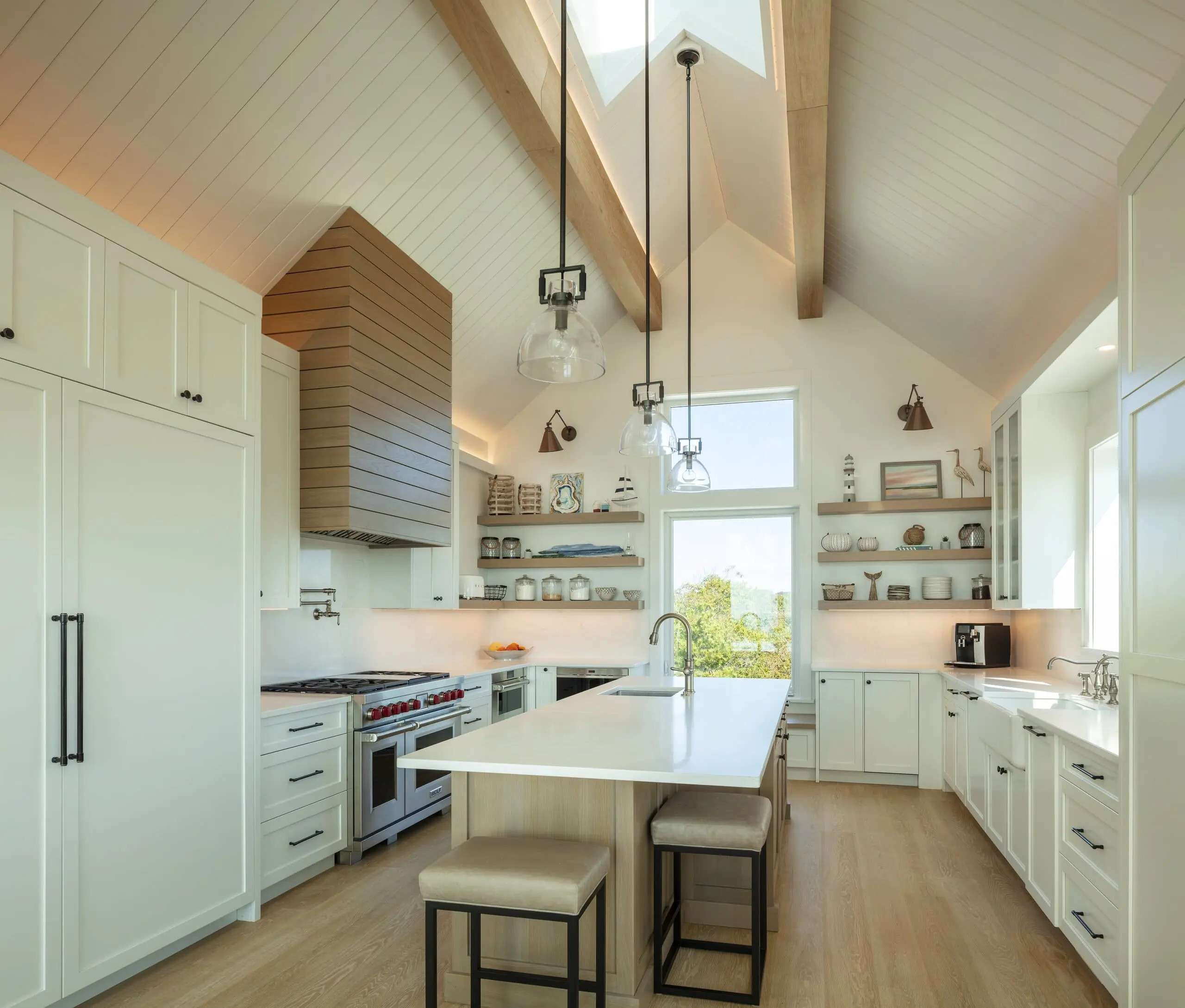
The best coastal kitchen ideas are not about filling a room with beach-themed details. They are about creating a space that feels bright, open, natural, and easy to live in.
In a well-designed coastal home, the kitchen should feel connected to the landscape and to the way people actually gather. Daylight moves through the room. Views are given space. Natural materials soften the architecture. The layout feels casual without feeling unfinished.
That approach works whether the home sits directly on the water, overlooks a wooded lot, or simply draws inspiration from the ease of coastal living.
Below are twelve coastal kitchen ideas that can help create that feeling in a new build or renovation.

1. Bring More Natural Light Into the Room
Natural light does more to create a coastal feeling than almost any decorative choice.
Large windows, glazed doors, and open sight lines can make a kitchen feel calmer and more spacious throughout the day. When planning the room, think about how daylight enters and how far it can travel. A window placed only for symmetry may not have the same impact as one positioned to pull light across the counters and into the surrounding living spaces.
Reducing upper cabinetry near a key window can also give the room more breathing space. In an open-plan home, the kitchen can borrow light from adjacent dining and living areas rather than relying only on its own windows.
The goal is not simply to make the kitchen brighter. It is to make the light feel like part of the architecture.
2. Frame a View From the Sink
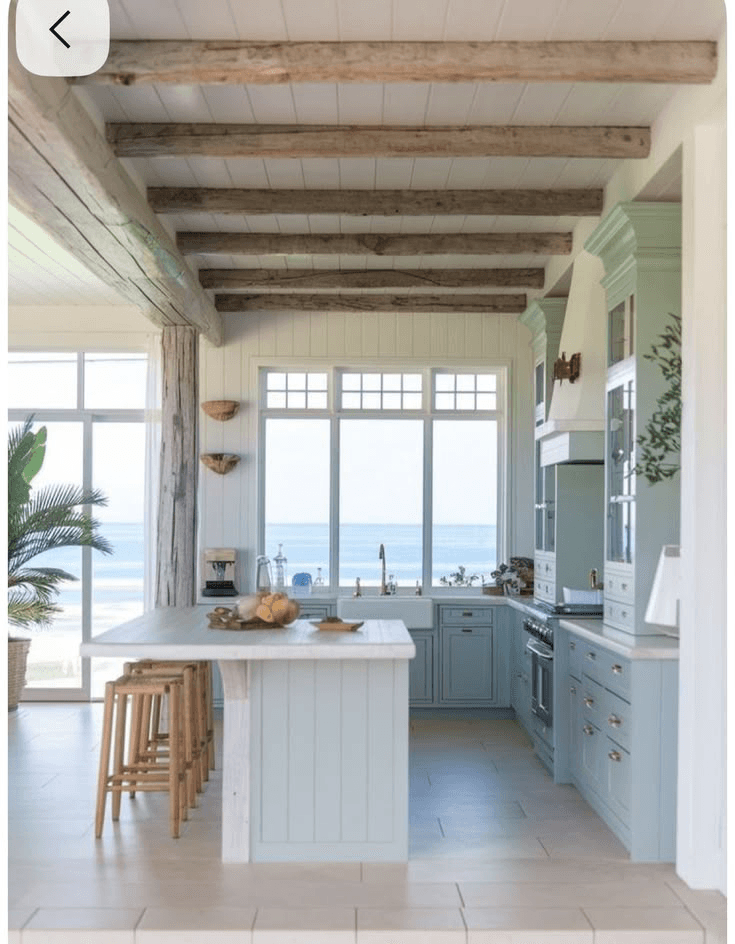
A sink window is a classic coastal kitchen feature because it turns an everyday work area into a connection with the outdoors.
That view does not need to be the ocean. It could face a garden, a wooded edge, a stone wall, an outdoor dining area, or a part of the yard where children play. What matters is that the window is positioned intentionally.
In a new home, the sink location can be planned around the strongest view on the property. During a renovation, enlarging or repositioning an existing window may completely change how the kitchen feels.
A carefully framed view gives the room a focal point without adding decoration.
3. Create an Island That Feels Welcoming
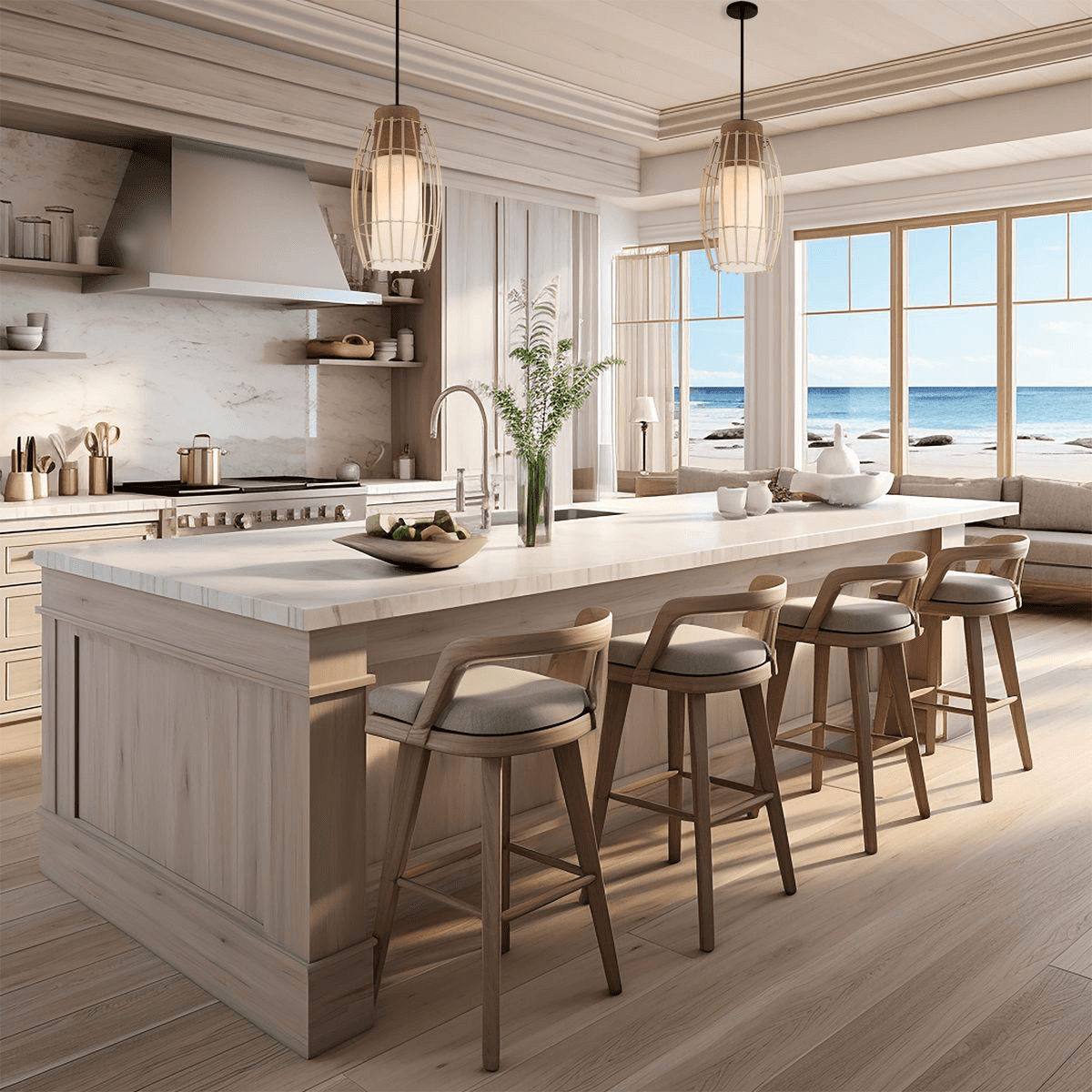
The island is often the center of a coastal kitchen, but it should feel like more than a large block of cabinetry.
A good island gives people somewhere to gather without getting in the way of cooking. It may include seating on two sides, an open end that feels more like a table, or enough space around it for people to move comfortably during a busy morning or a large dinner.
Its proportions matter as much as its size. An oversized island can make a kitchen feel crowded, while a smaller, well-positioned island can create a more natural flow.
Think of the island as a social space first. It should make it easy for someone to sit down, have a conversation, help prepare food, or stay connected to the room without interrupting the person cooking.
4. Use Natural Wood to Add Warmth
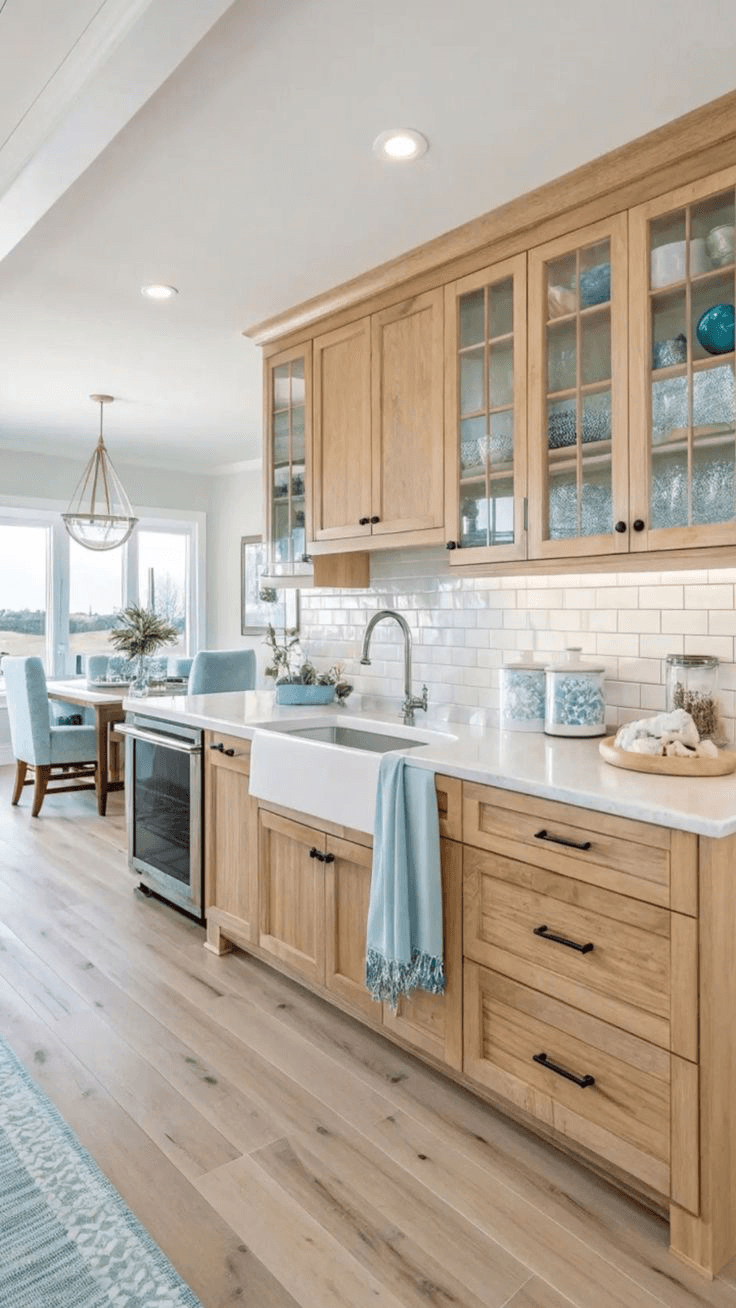
Coastal kitchens often include a lot of light surfaces and open space. Natural wood keeps that brightness from feeling cold or overly polished.
Wood can appear in many forms: open shelving, a ceiling detail, stools, cabinetry accents, a dining table, or a simple section of millwork. It does not need to dominate the room to have an effect.
A small amount of visible grain can make a new kitchen feel more settled and comfortable. It also creates a connection to the natural setting outside the house.
The most successful rooms usually balance clean architectural lines with a few warmer, more tactile elements.
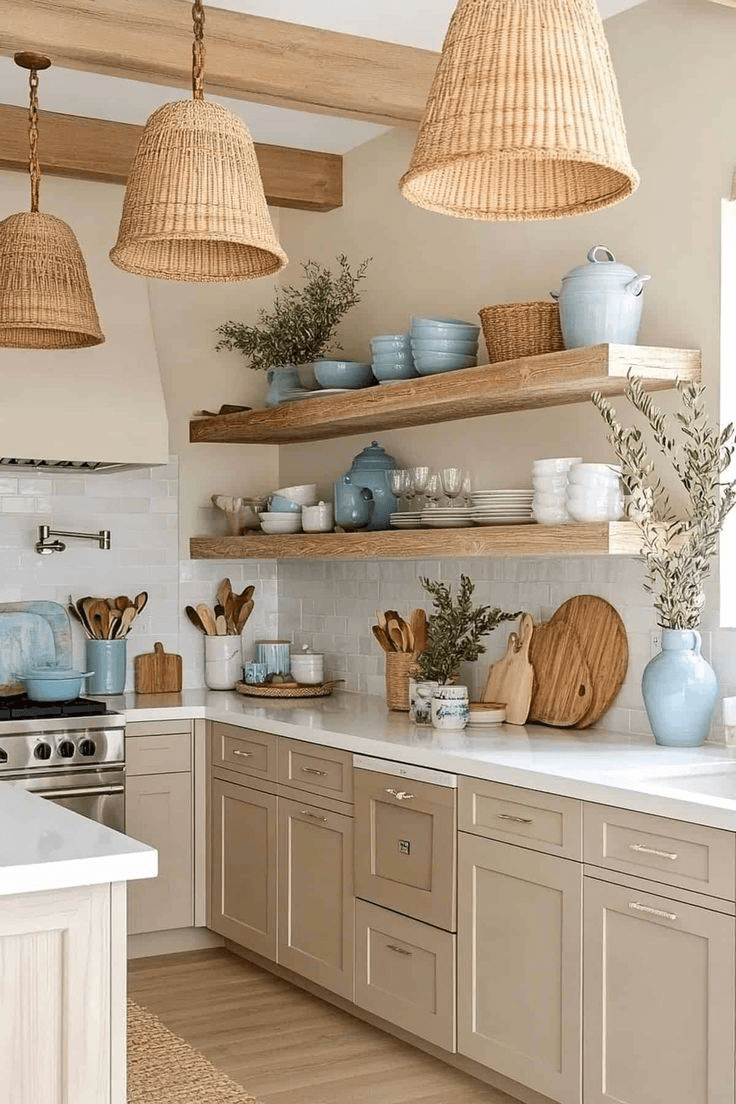
5. Add Open Shelving for an Easy, Collected Look
Open shelving brings a casual, lived-in quality to a coastal kitchen.
A few shelves can hold the dishes, glassware, serving pieces, cookbooks, and objects the household uses most often. They make the kitchen feel personal without requiring a lot of decorative styling.
The key is restraint. Open shelving is often most effective when it replaces only a small section of upper cabinetry rather than an entire wall. That gives the room a lighter appearance while preserving plenty of concealed storage.
Use the shelves for objects that look good together naturally because they belong to everyday life. A stack of bowls, a row of glasses, and a few pieces of pottery will usually feel more authentic than a heavily styled display.

6. Make the Windows Feel Generous
Generous windows help a coastal kitchen feel connected to the setting, even when the view is modest.
A single wide window can create a strong horizontal view. A group of taller windows can bring in more sky and make the room feel more vertical. Corner windows can open up two sides of the kitchen, while glazed doors can connect the space directly to a porch, patio, or deck.
Window placement should respond to the room as a whole. Think about what someone will see while standing at the island, sitting at the table, or entering the kitchen from another part of the house.
The most successful windows do more than provide light. They create a sense that the kitchen belongs to the landscape around it.
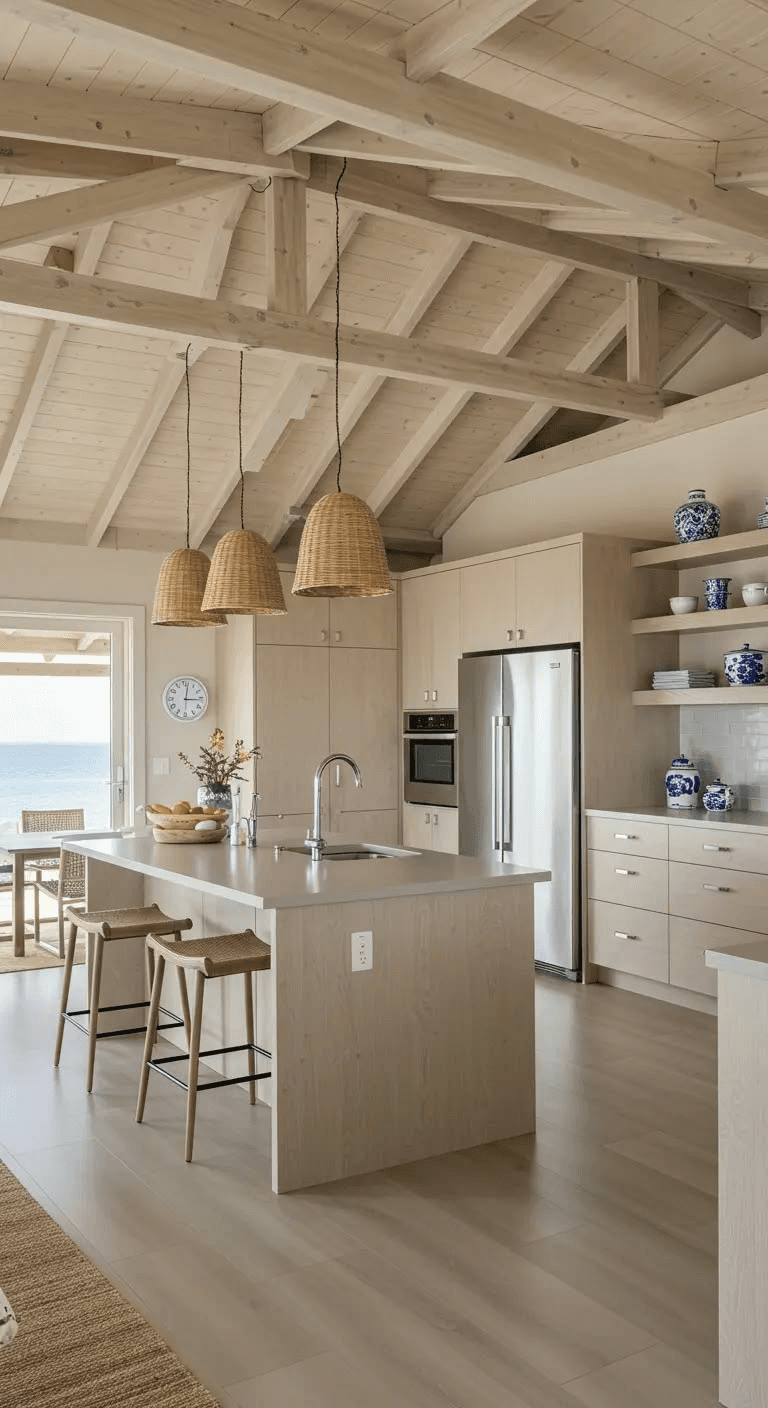
7. Add Character to the Ceiling
The ceiling is an opportunity to bring subtle architectural character into a coastal kitchen.
Paneled ceilings, v-groove boards, simple beams, or restrained wood detailing can give the room texture without making it feel busy. These elements are especially effective in kitchens with high ceilings or open plans, where the ceiling helps define the space.
A ceiling treatment can also make a new home feel more rooted in New England building traditions. It adds depth and craftsmanship in a way that feels structural rather than decorative.
The detail does not need to be elaborate. Even a simple change in texture overhead can make the entire kitchen feel more considered.
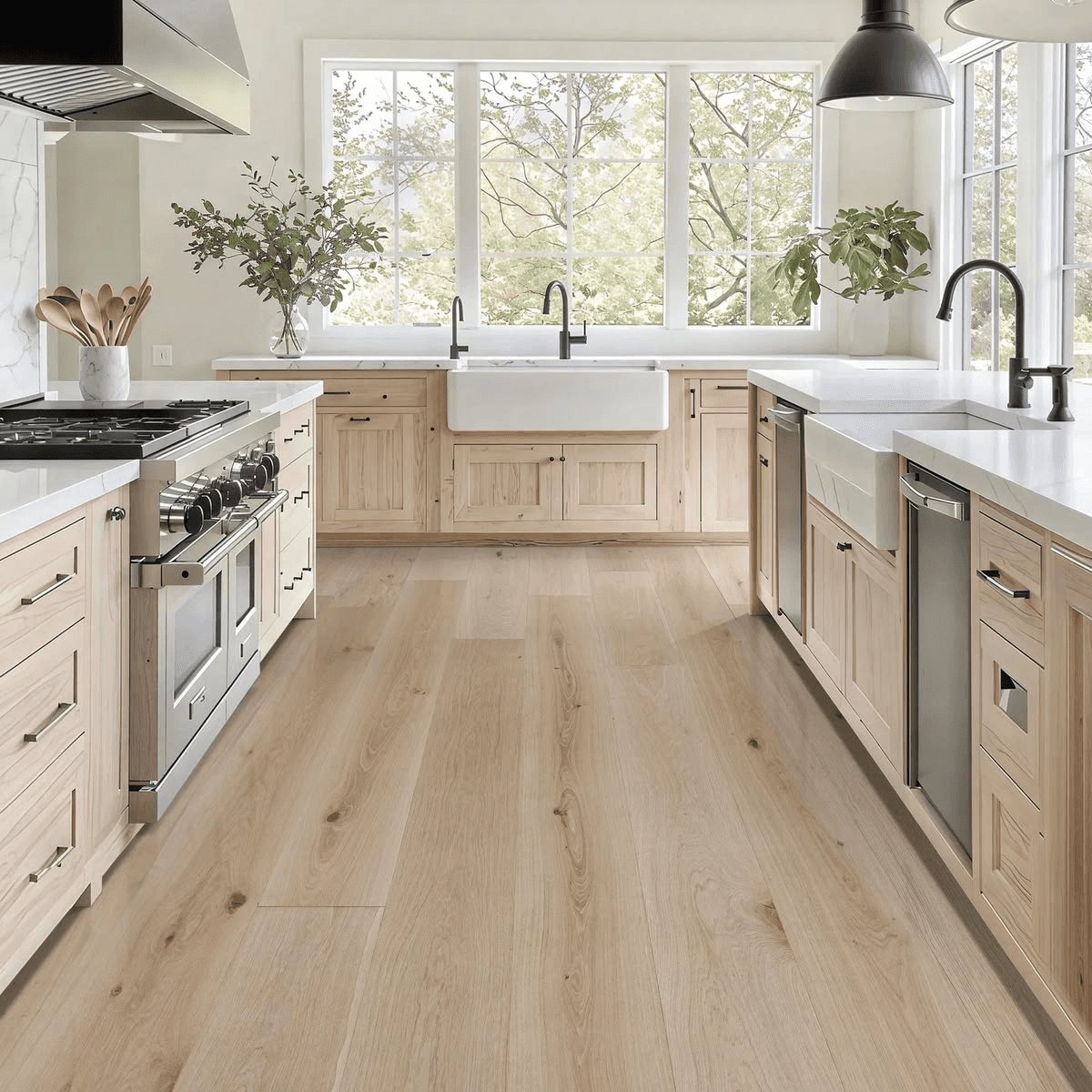
8. Use Flooring to Connect the Kitchen to the Rest of the Home
Continuous flooring can make a kitchen, dining area, and living space feel larger and more connected.
Instead of treating the kitchen as a separate zone, carrying the same floor through the main living areas creates a calmer visual flow. This is particularly effective in coastal homes, where open layouts and long sight lines are often part of the design.
The floor should support the character of the house rather than compete with it. Natural texture, subtle variation, and quieter patterns tend to create a more relaxed foundation.
Think about how the flooring will feel from room to room and how it will respond to daily life. The best choice is one that supports both the architecture and the way the household uses the home.
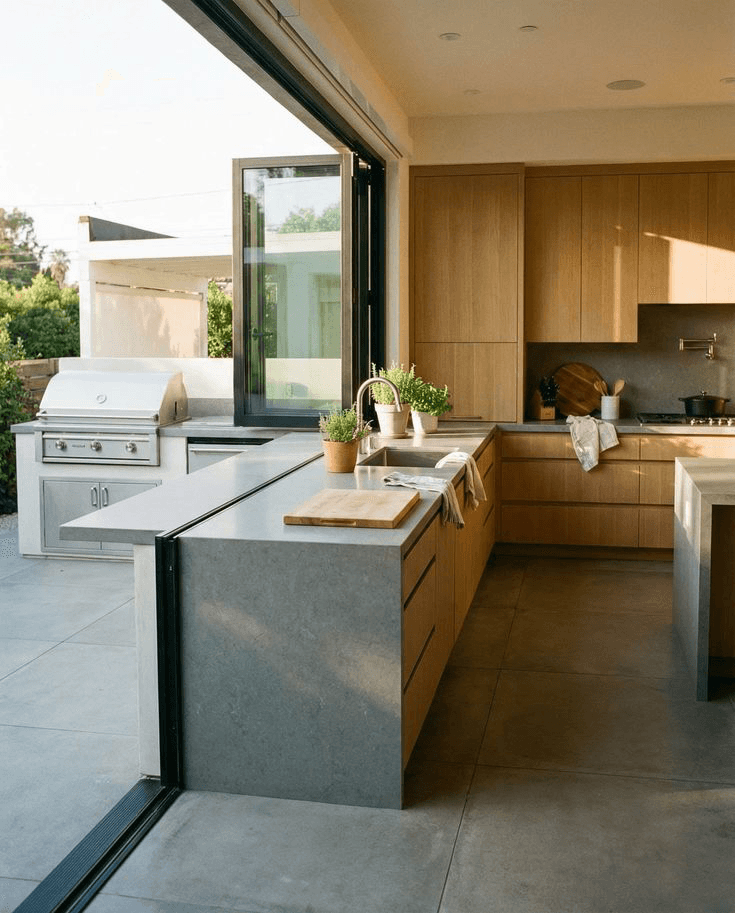
9. Create an Easy Connection to Outdoor Living
A coastal kitchen should feel closely connected to outdoor living.
That might mean placing the kitchen near a deck, porch, patio, or grilling area. Wide doors can make the transition feel seamless, while a pass-through window or nearby serving counter can make outdoor meals easier.
The layout should support how people move between the kitchen and the yard. Consider the path from the refrigerator to the grill, from the sink to the outdoor table, and from the entry to the pantry.
These practical relationships have a major effect on how relaxed the home feels during warmer months. When the route outside is direct and natural, the kitchen becomes part of a larger living space rather than a room separated from it.
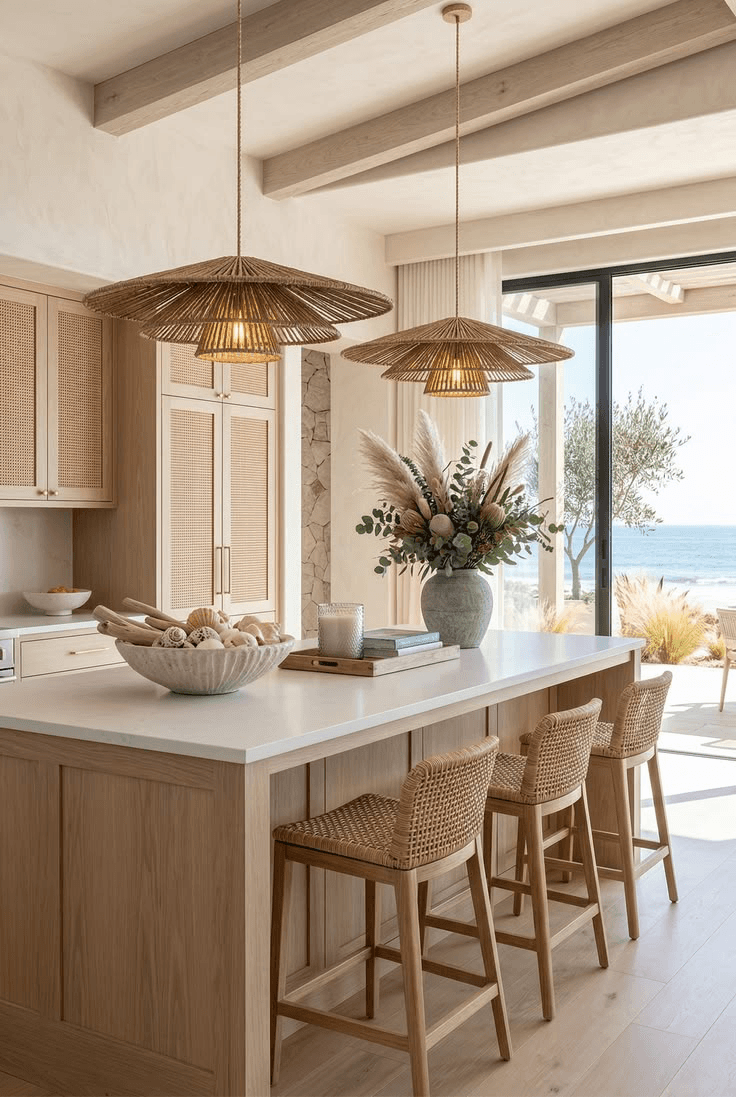
10. Layer the Lighting for a Softer Atmosphere
A coastal kitchen should feel bright during the day and warm in the evening.
That usually requires several types of lighting rather than one dominant ceiling fixture. Pendants can define the island. Undercabinet lighting can illuminate work surfaces. Recessed or surface-mounted fixtures can provide general light, while wall lights can add a softer architectural layer.
Each source should have a clear role. Good lighting makes food preparation easier, but it also changes the mood of the room after sunset.
Dimmers are especially valuable in open-plan homes. They allow the kitchen to remain softly lit while people gather in the dining or living area, rather than making the whole space feel like a workspace.
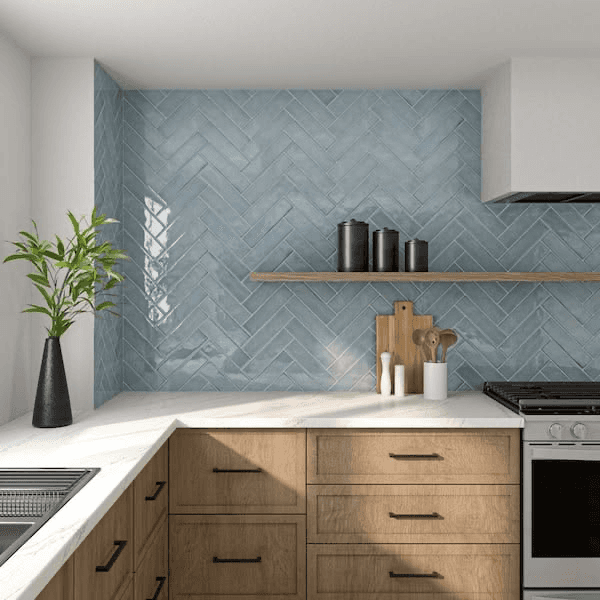
11. Use Texture Instead of Coastal Themes
A kitchen can feel coastal without relying on anchors, shells, rope, or obvious nautical references.
Texture is usually more effective. Wood grain, handmade-looking tile, woven seating, natural stone, simple ceramics, and painted paneling all add depth while keeping the room understated.
These materials suggest the coast through their character rather than through decoration. They make the room feel tactile, comfortable, and connected to natural surroundings.
The goal is to create a kitchen that belongs in a coastal home without looking like it was designed around a theme.
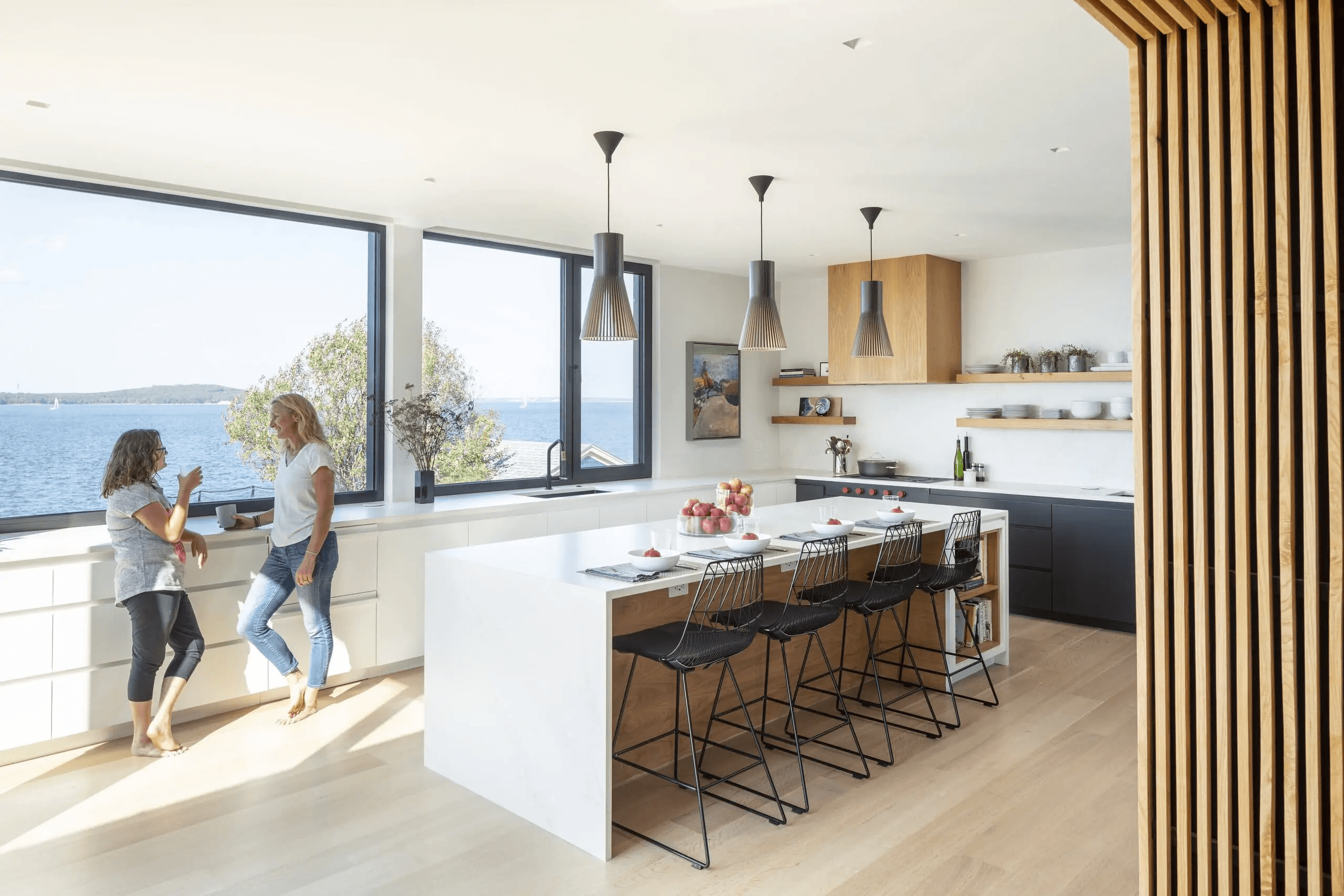
12. Design the Kitchen for Casual Gathering
The most memorable coastal kitchens are places where people naturally want to spend time.
That may mean adding a breakfast nook, a window seat, comfortable island seating, or a dining table close to the kitchen. It may mean creating a place where children can do homework while dinner is prepared or where guests can sit without standing in the work zone.
Casual gathering spaces make the kitchen feel generous even when the room itself is not especially large.
When planning the layout, think beyond cooking. Consider where someone will sit with coffee in the morning, where guests will gather during a party, and where the household will spend time on an ordinary evening.
A kitchen feels coastal when it supports an easy, unhurried way of living.
A Practical Note for Coastal Homes
Design should lead the conversation, but coastal conditions still deserve consideration when products are selected.
Sunlight, seasonal humidity, sandy foot traffic, ventilation, and exposure to salt air can all affect how a kitchen ages. The impact will vary from one property to another, so there is no single material list that works for every home near the water.
Once the overall design direction is established, review the final products with the architect, builder, and suppliers. The goal is not to limit the design. It is to make sure the selected materials suit the home, the site, and the level of maintenance the homeowner is comfortable with.
Frequently Asked Questions
What makes a kitchen feel coastal?
A coastal kitchen usually feels light, open, natural, and relaxed. Daylight, views, warm texture, comfortable gathering spaces, and a connection to the outdoors are more important than any single color or material.
Does a coastal kitchen have to be white?
No. A coastal feeling comes from the balance of light, proportion, texture, and openness. A kitchen can feel coastal with a wide range of tones as long as the room remains connected to its surroundings and does not feel visually heavy.
How can I make a small kitchen feel more coastal?
Bring in as much natural light as possible, reduce visual clutter, maintain clear sight lines, and use a limited number of materials. A small section of open shelving, continuous flooring, and a well-framed window can also make the room feel more open.
What features add the most character to a coastal kitchen?
Windows, ceiling details, open shelving, natural wood, layered lighting, and a strong connection to outdoor spaces can all add character without making the kitchen feel themed.
How do I avoid making a coastal kitchen look too nautical?
Focus on natural texture and architectural details rather than decorative symbols. Wood, stone, paneling, simple tile, woven elements, and views of the outdoors can create a coastal atmosphere without relying on obvious beach décor.
What should I consider when building a kitchen near the coast?
Start with the layout, daylight, views, and how the kitchen connects to the rest of the home. Once the design is established, review the selected products for the property’s sunlight, humidity, exposure, ventilation, and maintenance needs.
Designing a Coastal Kitchen Around the Way You Live
A well-designed coastal kitchen should feel inviting in every season. It does not need to follow a fixed palette or use a prescribed list of materials.
The strongest designs come from the house itself: the direction of the light, the best views, the relationship to outdoor spaces, and the way the homeowners want to gather.
Thinking through a coastal kitchen for a new build or renovation on the Rhode Island coast? We design custom, zero-energy homes around the property, the architecture, and the way each household wants to live. Explore more of our approach to home design, or reach out to talk through your project.
Newport Renewables
316 Columbia St, Wakefield, RI 02879
401.619.5906
Let's Chat
Start your next project with Newport Renewables.
OUR SERVICES
Work with Newport Renewables
We do two things, and we do them at full scale: commercial solar across Rhode Island and ground-up custom homes built to perform. Here's where you fit.
Commercial solar for your property or business?
We design and install solar for commercial buildings, warehouses, and income properties across Rhode Island — sized to your actual load, your roof or land, and the incentives available right now. The goal isn't just panels on a roof; it's a system that pays for itself and keeps producing for decades.
→ See how commercial solar works
Building a new custom home?
We design and build custom homes with integrated zero-energy systems from the ground up. When every component — orientation, envelope, electrical capacity, HVAC, solar, storage — is planned together instead of bolted on later, you get a home that's built for long-term performance and value.
→ Learn about our zero-energy home builds
316 Columbia St • Wakefield, RI 02879 | 401.619.5906




Copyright © 2024 Newport Renewables. All Rights Reserved.
316 Columbia St • Wakefield, RI 02879 | 401.619.5906
Copyright © 2024 Newport Renewables. All Rights Reserved.
Coastal Kitchen Ideas for a Light, Relaxed Home
The best coastal kitchen ideas are not about filling a room with beach-themed details. They are about creating a space that feels bright, open, natural, and easy to live in.
In a well-designed coastal home, the kitchen should feel connected to the landscape and to the way people actually gather. Daylight moves through the room. Views are given space. Natural materials soften the architecture. The layout feels casual without feeling unfinished.
That approach works whether the home sits directly on the water, overlooks a wooded lot, or simply draws inspiration from the ease of coastal living.
Below are twelve coastal kitchen ideas that can help create that feeling in a new build or renovation.
1. Bring More Natural Light Into the Room
Natural light does more to create a coastal feeling than almost any decorative choice.
Large windows, glazed doors, and open sight lines can make a kitchen feel calmer and more spacious throughout the day. When planning the room, think about how daylight enters and how far it can travel. A window placed only for symmetry may not have the same impact as one positioned to pull light across the counters and into the surrounding living spaces.
Reducing upper cabinetry near a key window can also give the room more breathing space. In an open-plan home, the kitchen can borrow light from adjacent dining and living areas rather than relying only on its own windows.
The goal is not simply to make the kitchen brighter. It is to make the light feel like part of the architecture.
2. Frame a View From the Sink
A sink window is a classic coastal kitchen feature because it turns an everyday work area into a connection with the outdoors.
That view does not need to be the ocean. It could face a garden, a wooded edge, a stone wall, an outdoor dining area, or a part of the yard where children play. What matters is that the window is positioned intentionally.
In a new home, the sink location can be planned around the strongest view on the property. During a renovation, enlarging or repositioning an existing window may completely change how the kitchen feels.
A carefully framed view gives the room a focal point without adding decoration.
3. Create an Island That Feels Welcoming
The island is often the center of a coastal kitchen, but it should feel like more than a large block of cabinetry.
A good island gives people somewhere to gather without getting in the way of cooking. It may include seating on two sides, an open end that feels more like a table, or enough space around it for people to move comfortably during a busy morning or a large dinner.
Its proportions matter as much as its size. An oversized island can make a kitchen feel crowded, while a smaller, well-positioned island can create a more natural flow.
Think of the island as a social space first. It should make it easy for someone to sit down, have a conversation, help prepare food, or stay connected to the room without interrupting the person cooking.
4. Use Natural Wood to Add Warmth
Coastal kitchens often include a lot of light surfaces and open space. Natural wood keeps that brightness from feeling cold or overly polished.
Wood can appear in many forms: open shelving, a ceiling detail, stools, cabinetry accents, a dining table, or a simple section of millwork. It does not need to dominate the room to have an effect.
A small amount of visible grain can make a new kitchen feel more settled and comfortable. It also creates a connection to the natural setting outside the house.
The most successful rooms usually balance clean architectural lines with a few warmer, more tactile elements.
5. Add Open Shelving for an Easy, Collected Look
Open shelving brings a casual, lived-in quality to a coastal kitchen.
A few shelves can hold the dishes, glassware, serving pieces, cookbooks, and objects the household uses most often. They make the kitchen feel personal without requiring a lot of decorative styling.
The key is restraint. Open shelving is often most effective when it replaces only a small section of upper cabinetry rather than an entire wall. That gives the room a lighter appearance while preserving plenty of concealed storage.
Use the shelves for objects that look good together naturally because they belong to everyday life. A stack of bowls, a row of glasses, and a few pieces of pottery will usually feel more authentic than a heavily styled display.
6. Make the Windows Feel Generous
Generous windows help a coastal kitchen feel connected to the setting, even when the view is modest.
A single wide window can create a strong horizontal view. A group of taller windows can bring in more sky and make the room feel more vertical. Corner windows can open up two sides of the kitchen, while glazed doors can connect the space directly to a porch, patio, or deck.
Window placement should respond to the room as a whole. Think about what someone will see while standing at the island, sitting at the table, or entering the kitchen from another part of the house.
The most successful windows do more than provide light. They create a sense that the kitchen belongs to the landscape around it.
7. Add Character to the Ceiling
The ceiling is an opportunity to bring subtle architectural character into a coastal kitchen.
Paneled ceilings, v-groove boards, simple beams, or restrained wood detailing can give the room texture without making it feel busy. These elements are especially effective in kitchens with high ceilings or open plans, where the ceiling helps define the space.
A ceiling treatment can also make a new home feel more rooted in New England building traditions. It adds depth and craftsmanship in a way that feels structural rather than decorative.
The detail does not need to be elaborate. Even a simple change in texture overhead can make the entire kitchen feel more considered.
8. Use Flooring to Connect the Kitchen to the Rest of the Home
Continuous flooring can make a kitchen, dining area, and living space feel larger and more connected.
Instead of treating the kitchen as a separate zone, carrying the same floor through the main living areas creates a calmer visual flow. This is particularly effective in coastal homes, where open layouts and long sight lines are often part of the design.
The floor should support the character of the house rather than compete with it. Natural texture, subtle variation, and quieter patterns tend to create a more relaxed foundation.
Think about how the flooring will feel from room to room and how it will respond to daily life. The best choice is one that supports both the architecture and the way the household uses the home.
9. Create an Easy Connection to Outdoor Living
A coastal kitchen should feel closely connected to outdoor living.
That might mean placing the kitchen near a deck, porch, patio, or grilling area. Wide doors can make the transition feel seamless, while a pass-through window or nearby serving counter can make outdoor meals easier.
The layout should support how people move between the kitchen and the yard. Consider the path from the refrigerator to the grill, from the sink to the outdoor table, and from the entry to the pantry.
These practical relationships have a major effect on how relaxed the home feels during warmer months. When the route outside is direct and natural, the kitchen becomes part of a larger living space rather than a room separated from it.
10. Layer the Lighting for a Softer Atmosphere
A coastal kitchen should feel bright during the day and warm in the evening.
That usually requires several types of lighting rather than one dominant ceiling fixture. Pendants can define the island. Undercabinet lighting can illuminate work surfaces. Recessed or surface-mounted fixtures can provide general light, while wall lights can add a softer architectural layer.
Each source should have a clear role. Good lighting makes food preparation easier, but it also changes the mood of the room after sunset.
Dimmers are especially valuable in open-plan homes. They allow the kitchen to remain softly lit while people gather in the dining or living area, rather than making the whole space feel like a workspace.
11. Use Texture Instead of Coastal Themes
A kitchen can feel coastal without relying on anchors, shells, rope, or obvious nautical references.
Texture is usually more effective. Wood grain, handmade-looking tile, woven seating, natural stone, simple ceramics, and painted paneling all add depth while keeping the room understated.
These materials suggest the coast through their character rather than through decoration. They make the room feel tactile, comfortable, and connected to natural surroundings.
The goal is to create a kitchen that belongs in a coastal home without looking like it was designed around a theme.
12. Design the Kitchen for Casual Gathering
The most memorable coastal kitchens are places where people naturally want to spend time.
That may mean adding a breakfast nook, a window seat, comfortable island seating, or a dining table close to the kitchen. It may mean creating a place where children can do homework while dinner is prepared or where guests can sit without standing in the work zone.
Casual gathering spaces make the kitchen feel generous even when the room itself is not especially large.
When planning the layout, think beyond cooking. Consider where someone will sit with coffee in the morning, where guests will gather during a party, and where the household will spend time on an ordinary evening.
A kitchen feels coastal when it supports an easy, unhurried way of living.
A Practical Note for Coastal Homes
Design should lead the conversation, but coastal conditions still deserve consideration when products are selected.
Sunlight, seasonal humidity, sandy foot traffic, ventilation, and exposure to salt air can all affect how a kitchen ages. The impact will vary from one property to another, so there is no single material list that works for every home near the water.
Once the overall design direction is established, review the final products with the architect, builder, and suppliers. The goal is not to limit the design. It is to make sure the selected materials suit the home, the site, and the level of maintenance the homeowner is comfortable with.
Frequently Asked Questions
What makes a kitchen feel coastal?
A coastal kitchen usually feels light, open, natural, and relaxed. Daylight, views, warm texture, comfortable gathering spaces, and a connection to the outdoors are more important than any single color or material.
Does a coastal kitchen have to be white?
No. A coastal feeling comes from the balance of light, proportion, texture, and openness. A kitchen can feel coastal with a wide range of tones as long as the room remains connected to its surroundings and does not feel visually heavy.
How can I make a small kitchen feel more coastal?
Bring in as much natural light as possible, reduce visual clutter, maintain clear sight lines, and use a limited number of materials. A small section of open shelving, continuous flooring, and a well-framed window can also make the room feel more open.
What features add the most character to a coastal kitchen?
Windows, ceiling details, open shelving, natural wood, layered lighting, and a strong connection to outdoor spaces can all add character without making the kitchen feel themed.
How do I avoid making a coastal kitchen look too nautical?
Focus on natural texture and architectural details rather than decorative symbols. Wood, stone, paneling, simple tile, woven elements, and views of the outdoors can create a coastal atmosphere without relying on obvious beach décor.
What should I consider when building a kitchen near the coast?
Start with the layout, daylight, views, and how the kitchen connects to the rest of the home. Once the design is established, review the selected products for the property’s sunlight, humidity, exposure, ventilation, and maintenance needs.
Designing a Coastal Kitchen Around the Way You Live
A well-designed coastal kitchen should feel inviting in every season. It does not need to follow a fixed palette or use a prescribed list of materials.
The strongest designs come from the house itself: the direction of the light, the best views, the relationship to outdoor spaces, and the way the homeowners want to gather.
Thinking through a coastal kitchen for a new build or renovation on the Rhode Island coast? We design custom, zero-energy homes around the property, the architecture, and the way each household wants to live. Explore more of our approach to home design, or reach out to talk through your project.
Newport Renewables
316 Columbia St, Wakefield, RI 02879
401.619.5906
OUR SERVICES
Work with Newport Renewables
We do two things, and we do them at full scale: commercial solar across Rhode Island and ground-up custom homes built to perform. Here's where you fit.
Commercial solar for your property or business?
We design and install solar for commercial buildings, warehouses, and income properties across Rhode Island — sized to your actual load, your roof or land, and the incentives available right now. The goal isn't just panels on a roof; it's a system that pays for itself and keeps producing for decades.
→ See how commercial solar works
Building a new custom home?
We design and build custom homes with integrated zero-energy systems from the ground up. When every component — orientation, envelope, electrical capacity, HVAC, solar, storage — is planned together instead of bolted on later, you get a home that's built for long-term performance and value.
→ Learn about our zero-energy home builds
316 Columbia St • Wakefield, RI 02879 | 401.619.5906
Copyright © 2024 Newport Renewables. All Rights Reserved.

Coastal Kitchen Ideas for a Light, Relaxed Home
The best coastal kitchen ideas are not about filling a room with beach-themed details. They are about creating a space that feels bright, open, natural, and easy to live in.
In a well-designed coastal home, the kitchen should feel connected to the landscape and to the way people actually gather. Daylight moves through the room. Views are given space. Natural materials soften the architecture. The layout feels casual without feeling unfinished.
That approach works whether the home sits directly on the water, overlooks a wooded lot, or simply draws inspiration from the ease of coastal living.
Below are twelve coastal kitchen ideas that can help create that feeling in a new build or renovation.
1. Bring More Natural Light Into the Room
Natural light does more to create a coastal feeling than almost any decorative choice.
Large windows, glazed doors, and open sight lines can make a kitchen feel calmer and more spacious throughout the day. When planning the room, think about how daylight enters and how far it can travel. A window placed only for symmetry may not have the same impact as one positioned to pull light across the counters and into the surrounding living spaces.
Reducing upper cabinetry near a key window can also give the room more breathing space. In an open-plan home, the kitchen can borrow light from adjacent dining and living areas rather than relying only on its own windows.
The goal is not simply to make the kitchen brighter. It is to make the light feel like part of the architecture.
2. Frame a View From the Sink
A sink window is a classic coastal kitchen feature because it turns an everyday work area into a connection with the outdoors.
That view does not need to be the ocean. It could face a garden, a wooded edge, a stone wall, an outdoor dining area, or a part of the yard where children play. What matters is that the window is positioned intentionally.
In a new home, the sink location can be planned around the strongest view on the property. During a renovation, enlarging or repositioning an existing window may completely change how the kitchen feels.
A carefully framed view gives the room a focal point without adding decoration.
3. Create an Island That Feels Welcoming
The island is often the center of a coastal kitchen, but it should feel like more than a large block of cabinetry.
A good island gives people somewhere to gather without getting in the way of cooking. It may include seating on two sides, an open end that feels more like a table, or enough space around it for people to move comfortably during a busy morning or a large dinner.
Its proportions matter as much as its size. An oversized island can make a kitchen feel crowded, while a smaller, well-positioned island can create a more natural flow.
Think of the island as a social space first. It should make it easy for someone to sit down, have a conversation, help prepare food, or stay connected to the room without interrupting the person cooking.
4. Use Natural Wood to Add Warmth
Coastal kitchens often include a lot of light surfaces and open space. Natural wood keeps that brightness from feeling cold or overly polished.
Wood can appear in many forms: open shelving, a ceiling detail, stools, cabinetry accents, a dining table, or a simple section of millwork. It does not need to dominate the room to have an effect.
A small amount of visible grain can make a new kitchen feel more settled and comfortable. It also creates a connection to the natural setting outside the house.
The most successful rooms usually balance clean architectural lines with a few warmer, more tactile elements.
5. Add Open Shelving for an Easy, Collected Look
Open shelving brings a casual, lived-in quality to a coastal kitchen.
A few shelves can hold the dishes, glassware, serving pieces, cookbooks, and objects the household uses most often. They make the kitchen feel personal without requiring a lot of decorative styling.
The key is restraint. Open shelving is often most effective when it replaces only a small section of upper cabinetry rather than an entire wall. That gives the room a lighter appearance while preserving plenty of concealed storage.
Use the shelves for objects that look good together naturally because they belong to everyday life. A stack of bowls, a row of glasses, and a few pieces of pottery will usually feel more authentic than a heavily styled display.
6. Make the Windows Feel Generous
Generous windows help a coastal kitchen feel connected to the setting, even when the view is modest.
A single wide window can create a strong horizontal view. A group of taller windows can bring in more sky and make the room feel more vertical. Corner windows can open up two sides of the kitchen, while glazed doors can connect the space directly to a porch, patio, or deck.
Window placement should respond to the room as a whole. Think about what someone will see while standing at the island, sitting at the table, or entering the kitchen from another part of the house.
The most successful windows do more than provide light. They create a sense that the kitchen belongs to the landscape around it.
7. Add Character to the Ceiling
The ceiling is an opportunity to bring subtle architectural character into a coastal kitchen.
Paneled ceilings, v-groove boards, simple beams, or restrained wood detailing can give the room texture without making it feel busy. These elements are especially effective in kitchens with high ceilings or open plans, where the ceiling helps define the space.
A ceiling treatment can also make a new home feel more rooted in New England building traditions. It adds depth and craftsmanship in a way that feels structural rather than decorative.
The detail does not need to be elaborate. Even a simple change in texture overhead can make the entire kitchen feel more considered.
8. Use Flooring to Connect the Kitchen to the Rest of the Home
Continuous flooring can make a kitchen, dining area, and living space feel larger and more connected.
Instead of treating the kitchen as a separate zone, carrying the same floor through the main living areas creates a calmer visual flow. This is particularly effective in coastal homes, where open layouts and long sight lines are often part of the design.
The floor should support the character of the house rather than compete with it. Natural texture, subtle variation, and quieter patterns tend to create a more relaxed foundation.
Think about how the flooring will feel from room to room and how it will respond to daily life. The best choice is one that supports both the architecture and the way the household uses the home.
9. Create an Easy Connection to Outdoor Living
A coastal kitchen should feel closely connected to outdoor living.
That might mean placing the kitchen near a deck, porch, patio, or grilling area. Wide doors can make the transition feel seamless, while a pass-through window or nearby serving counter can make outdoor meals easier.
The layout should support how people move between the kitchen and the yard. Consider the path from the refrigerator to the grill, from the sink to the outdoor table, and from the entry to the pantry.
These practical relationships have a major effect on how relaxed the home feels during warmer months. When the route outside is direct and natural, the kitchen becomes part of a larger living space rather than a room separated from it.
10. Layer the Lighting for a Softer Atmosphere
A coastal kitchen should feel bright during the day and warm in the evening.
That usually requires several types of lighting rather than one dominant ceiling fixture. Pendants can define the island. Undercabinet lighting can illuminate work surfaces. Recessed or surface-mounted fixtures can provide general light, while wall lights can add a softer architectural layer.
Each source should have a clear role. Good lighting makes food preparation easier, but it also changes the mood of the room after sunset.
Dimmers are especially valuable in open-plan homes. They allow the kitchen to remain softly lit while people gather in the dining or living area, rather than making the whole space feel like a workspace.
11. Use Texture Instead of Coastal Themes
A kitchen can feel coastal without relying on anchors, shells, rope, or obvious nautical references.
Texture is usually more effective. Wood grain, handmade-looking tile, woven seating, natural stone, simple ceramics, and painted paneling all add depth while keeping the room understated.
These materials suggest the coast through their character rather than through decoration. They make the room feel tactile, comfortable, and connected to natural surroundings.
The goal is to create a kitchen that belongs in a coastal home without looking like it was designed around a theme.
12. Design the Kitchen for Casual Gathering
The most memorable coastal kitchens are places where people naturally want to spend time.
That may mean adding a breakfast nook, a window seat, comfortable island seating, or a dining table close to the kitchen. It may mean creating a place where children can do homework while dinner is prepared or where guests can sit without standing in the work zone.
Casual gathering spaces make the kitchen feel generous even when the room itself is not especially large.
When planning the layout, think beyond cooking. Consider where someone will sit with coffee in the morning, where guests will gather during a party, and where the household will spend time on an ordinary evening.
A kitchen feels coastal when it supports an easy, unhurried way of living.
A Practical Note for Coastal Homes
Design should lead the conversation, but coastal conditions still deserve consideration when products are selected.
Sunlight, seasonal humidity, sandy foot traffic, ventilation, and exposure to salt air can all affect how a kitchen ages. The impact will vary from one property to another, so there is no single material list that works for every home near the water.
Once the overall design direction is established, review the final products with the architect, builder, and suppliers. The goal is not to limit the design. It is to make sure the selected materials suit the home, the site, and the level of maintenance the homeowner is comfortable with.
Frequently Asked Questions
What makes a kitchen feel coastal?
A coastal kitchen usually feels light, open, natural, and relaxed. Daylight, views, warm texture, comfortable gathering spaces, and a connection to the outdoors are more important than any single color or material.
Does a coastal kitchen have to be white?
No. A coastal feeling comes from the balance of light, proportion, texture, and openness. A kitchen can feel coastal with a wide range of tones as long as the room remains connected to its surroundings and does not feel visually heavy.
How can I make a small kitchen feel more coastal?
Bring in as much natural light as possible, reduce visual clutter, maintain clear sight lines, and use a limited number of materials. A small section of open shelving, continuous flooring, and a well-framed window can also make the room feel more open.
What features add the most character to a coastal kitchen?
Windows, ceiling details, open shelving, natural wood, layered lighting, and a strong connection to outdoor spaces can all add character without making the kitchen feel themed.
How do I avoid making a coastal kitchen look too nautical?
Focus on natural texture and architectural details rather than decorative symbols. Wood, stone, paneling, simple tile, woven elements, and views of the outdoors can create a coastal atmosphere without relying on obvious beach décor.
What should I consider when building a kitchen near the coast?
Start with the layout, daylight, views, and how the kitchen connects to the rest of the home. Once the design is established, review the selected products for the property’s sunlight, humidity, exposure, ventilation, and maintenance needs.
Designing a Coastal Kitchen Around the Way You Live
A well-designed coastal kitchen should feel inviting in every season. It does not need to follow a fixed palette or use a prescribed list of materials.
The strongest designs come from the house itself: the direction of the light, the best views, the relationship to outdoor spaces, and the way the homeowners want to gather.
Thinking through a coastal kitchen for a new build or renovation on the Rhode Island coast? We design custom, zero-energy homes around the property, the architecture, and the way each household wants to live. Explore more of our approach to home design, or reach out to talk through your project.
Newport Renewables
316 Columbia St, Wakefield, RI 02879
401.619.5906
OUR SERVICES
Work with Newport Renewables
We do two things, and we do them at full scale: commercial solar across Rhode Island and ground-up custom homes built to perform. Here's where you fit.
Commercial solar for your property or business?
We design and install solar for commercial buildings, warehouses, and income properties across Rhode Island — sized to your actual load, your roof or land, and the incentives available right now. The goal isn't just panels on a roof; it's a system that pays for itself and keeps producing for decades.
→ See how commercial solar works
Building a new custom home?
We design and build custom homes with integrated zero-energy systems from the ground up. When every component — orientation, envelope, electrical capacity, HVAC, solar, storage — is planned together instead of bolted on later, you get a home that's built for long-term performance and value.
→ Learn about our zero-energy home builds
Let's Chat
Start your next project with Newport Renewables.
316 Columbia St • Wakefield, RI 02879 | 401.619.5906
Copyright © 2024 Newport Renewables. All Rights Reserved.
316 Columbia St • Wakefield, RI 02879 | 401.619.5906
Copyright © 2024 Newport Renewables. All Rights Reserved.