Coastal Backyard Ideas for a Beach House
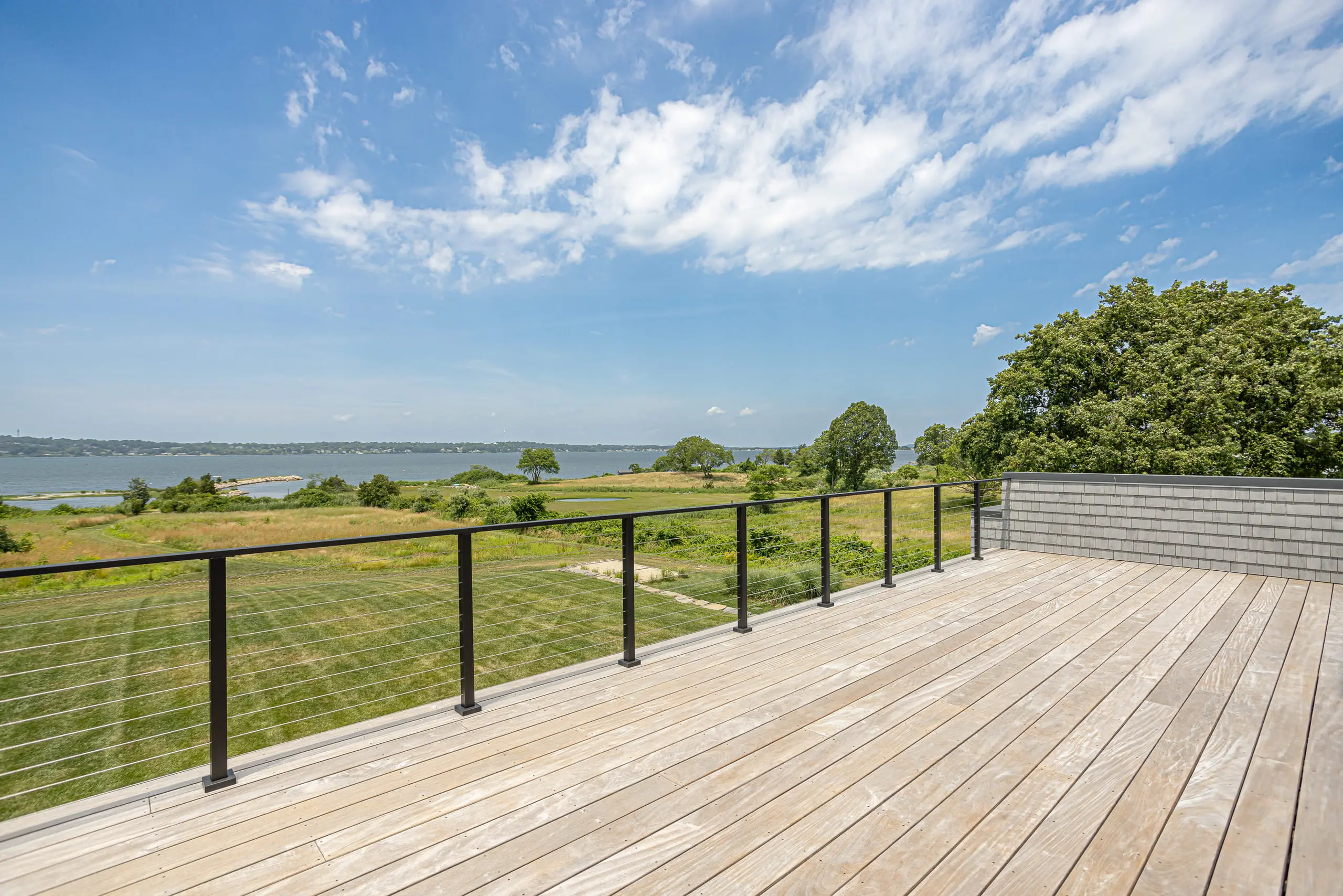
The best coastal backyard ideas are not about filling an outdoor space with beach-themed décor. They are about creating a setting that feels relaxed, open, and connected to the landscape.
A well-designed beach house backyard should make it easy to move between indoors and out. It should offer places to gather, eat, rest, and enjoy the view without feeling overdesigned. The materials, planting, and layout should support the setting rather than compete with it.
That approach works whether the property sits directly on the water, overlooks a marsh, faces a wooded edge, or simply draws inspiration from coastal living.
Below are twelve coastal backyard ideas that can help shape a more inviting outdoor space for a new build or renovation.
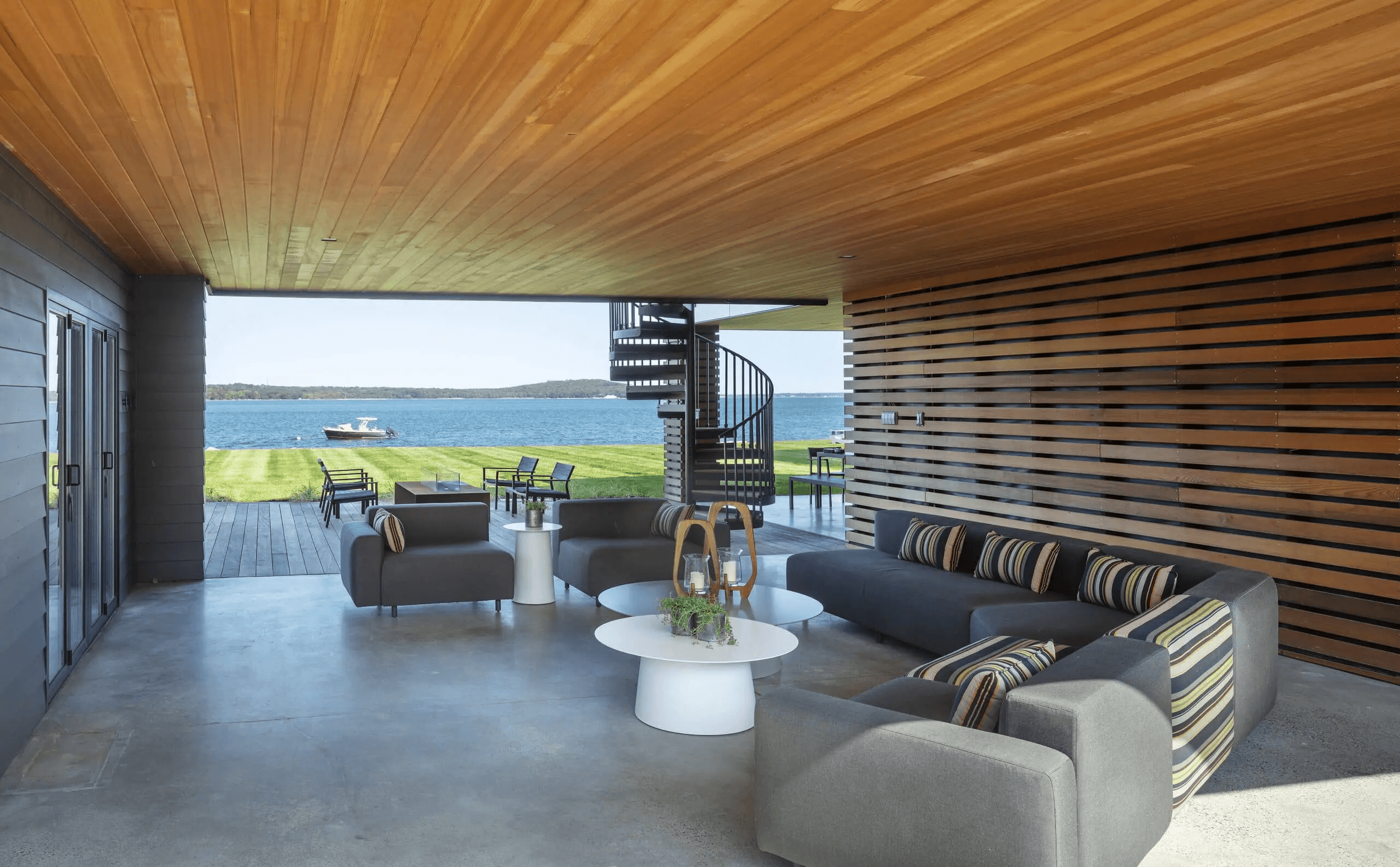
1. Create a Strong Connection Between the House and Yard
A coastal backyard works best when it feels like an extension of the home rather than a separate destination.
Wide doors, covered porches, terraces, and clear paths can make the transition from the interior feel natural. The goal is to avoid a hard break between the house and the landscape.
Think about where people step outside, what they see first, and where they naturally want to go. A direct connection from the kitchen or living area to an outdoor dining space can make the backyard much easier to use.
The more intuitive the movement feels, the more often the space will become part of everyday life.
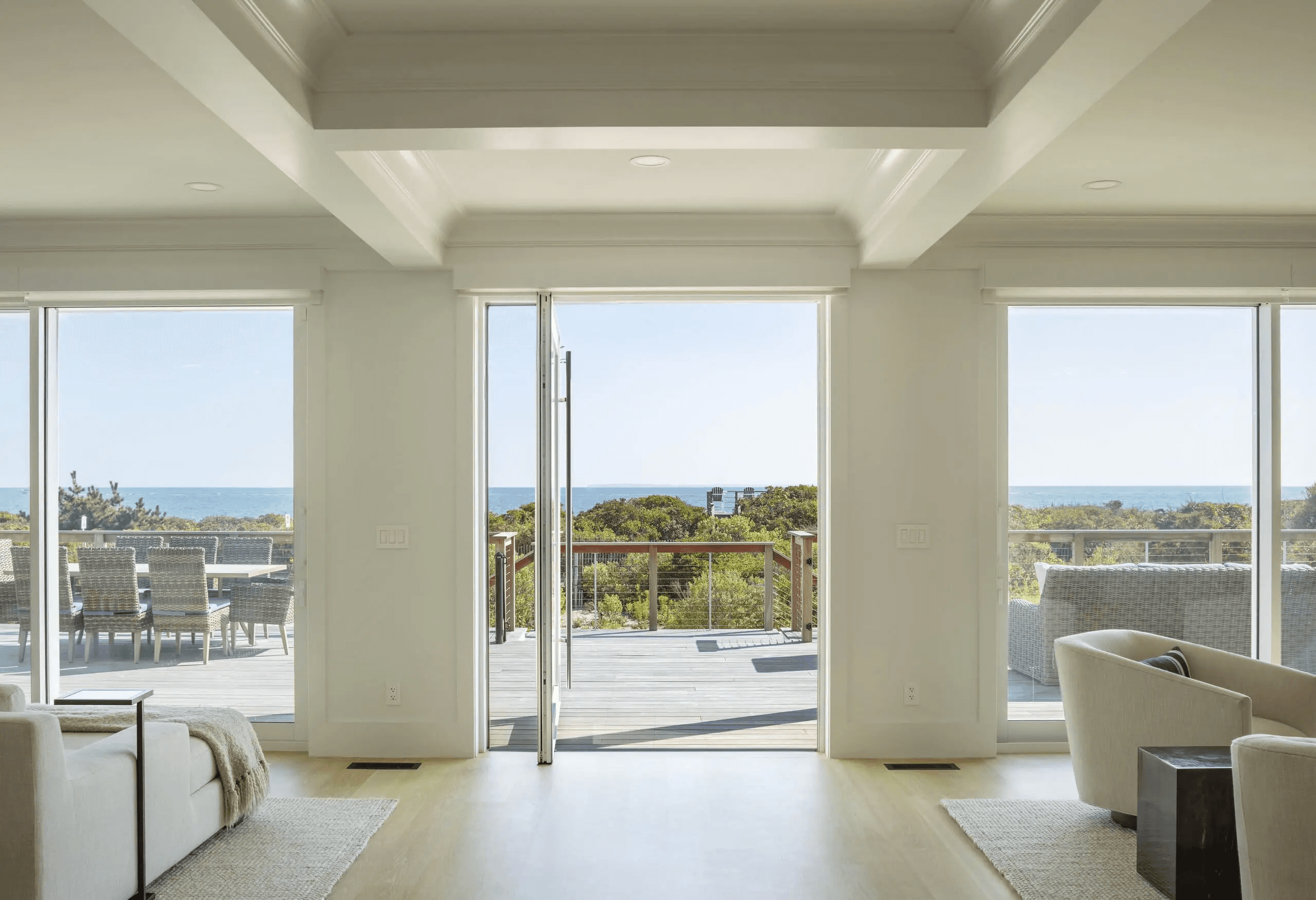
2. Frame the Best View
Every coastal property has a view worth organizing around, even when it is not a direct ocean view.
It might be the horizon, a marsh, a line of trees, a garden, a stone wall, or the changing light across the yard. Seating areas, paths, and outdoor rooms can be positioned to make that view feel intentional.
Avoid placing large features where they interrupt the strongest sight line from the house. A pool, pergola, or planting bed may look attractive on its own but feel misplaced if it blocks the landscape.
A carefully framed view gives the backyard a focal point without adding unnecessary decoration.
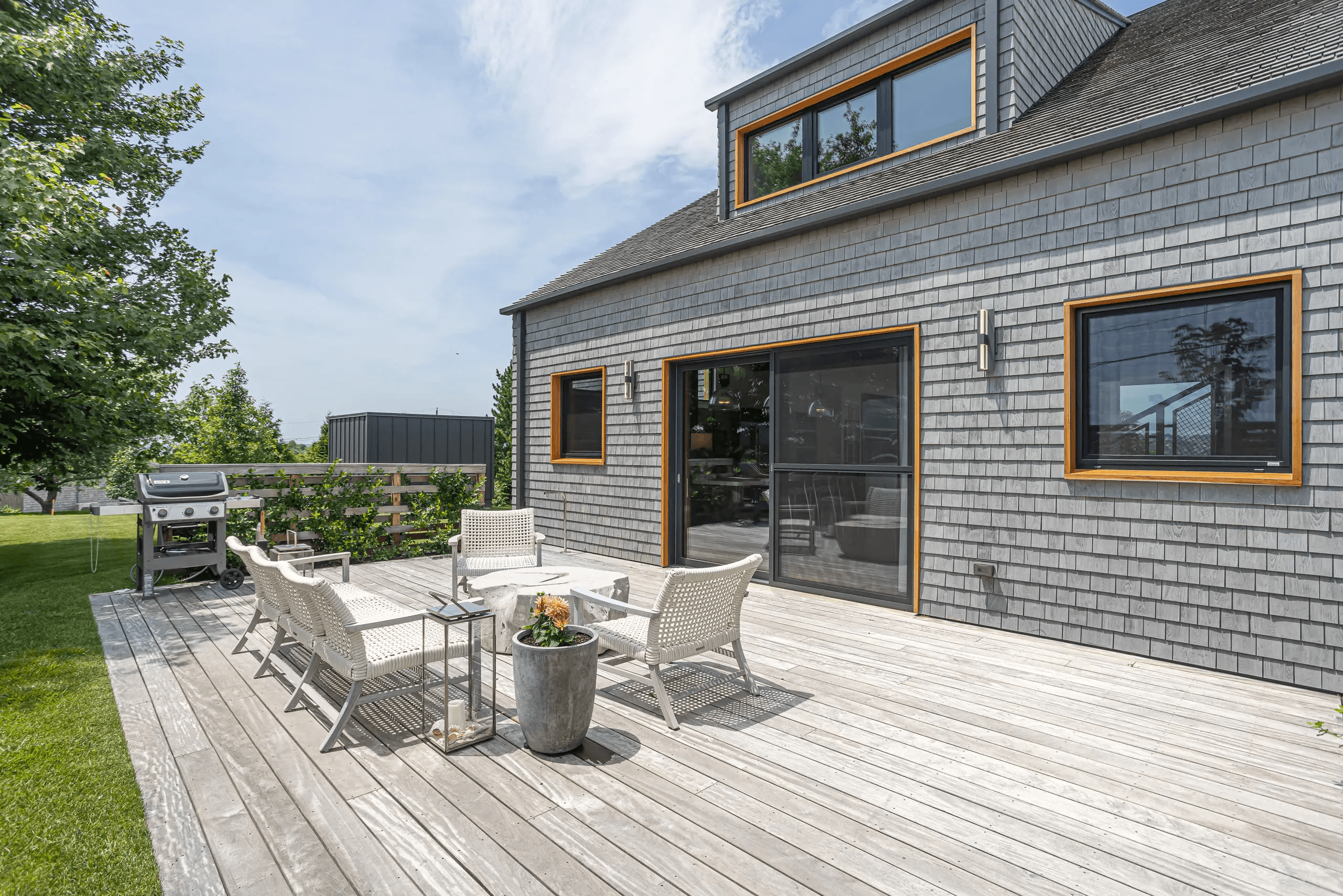
3. Build a Comfortable Outdoor Dining Area
Outdoor dining is often at the center of beach house living.
The space should feel close enough to the kitchen to be practical and open enough to enjoy the surrounding air and light. A table placed beneath a pergola, porch roof, or simple shade structure can make the area more comfortable throughout the day.
Allow enough room around the table for people to move easily, pull out chairs, and carry food without feeling crowded.
The most successful outdoor dining spaces feel casual enough for breakfast and comfortable enough for a long evening meal.
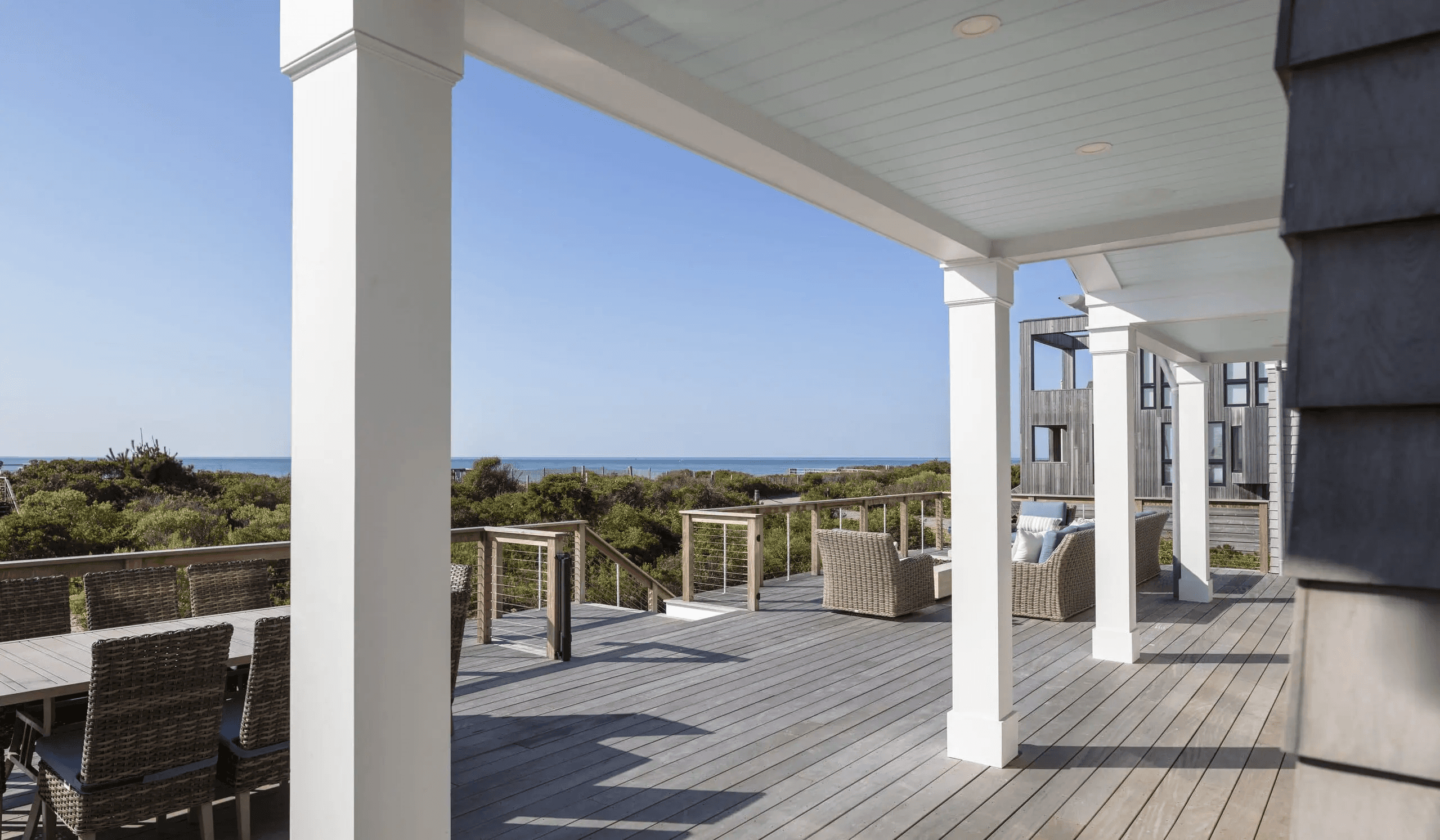
4. Add a Covered Place to Sit
A covered outdoor area gives the backyard more range.
It provides shelter from strong sun, passing rain, and evening moisture while still keeping people connected to the yard. This might take the form of a porch, pavilion, pergola, or a smaller roofed seating area.
A covered space can also make the backyard feel more architectural. It creates a defined outdoor room and gives furniture, lighting, and gathering areas a clear place within the overall layout.
The design does not need to be elaborate. Even a simple overhead structure can make the yard feel more comfortable and complete.
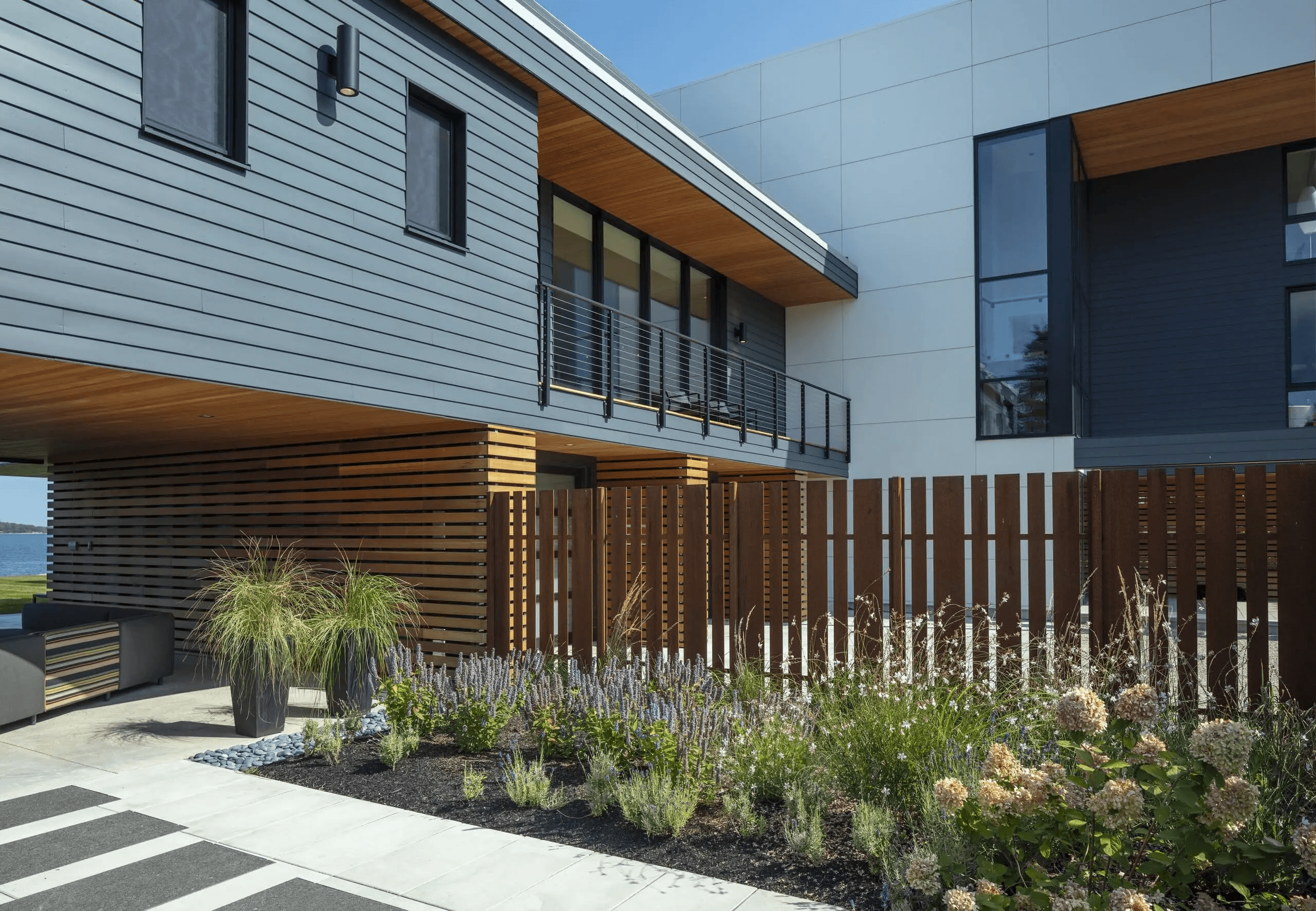
5. Use Planting to Soften the Architecture
Coastal landscapes often feel most natural when planting softens the edges of the house, terrace, and walkways.
Grasses, shrubs, layered planting beds, and low groundcover can help the yard feel settled into its surroundings. The goal is not to create a highly formal garden, but to introduce movement, texture, and seasonal change.
Planting can also guide people through the yard, frame a view, create privacy, or make a large outdoor area feel more intimate.
The strongest landscapes usually feel composed without appearing overly controlled.
6. Create a Fire Feature for Cooler Evenings
A fire feature can extend the use of a coastal backyard well beyond the warmest part of the day.
A fire pit, outdoor fireplace, or simple gathering circle gives people a natural place to sit as the temperature drops. It can become a focal point in a larger yard or help define a more intimate area away from the house.
Position it where people can enjoy the view without blocking important paths or crowding the main dining area.
The best fire spaces feel relaxed and social, with enough room for chairs to shift and groups to gather comfortably.
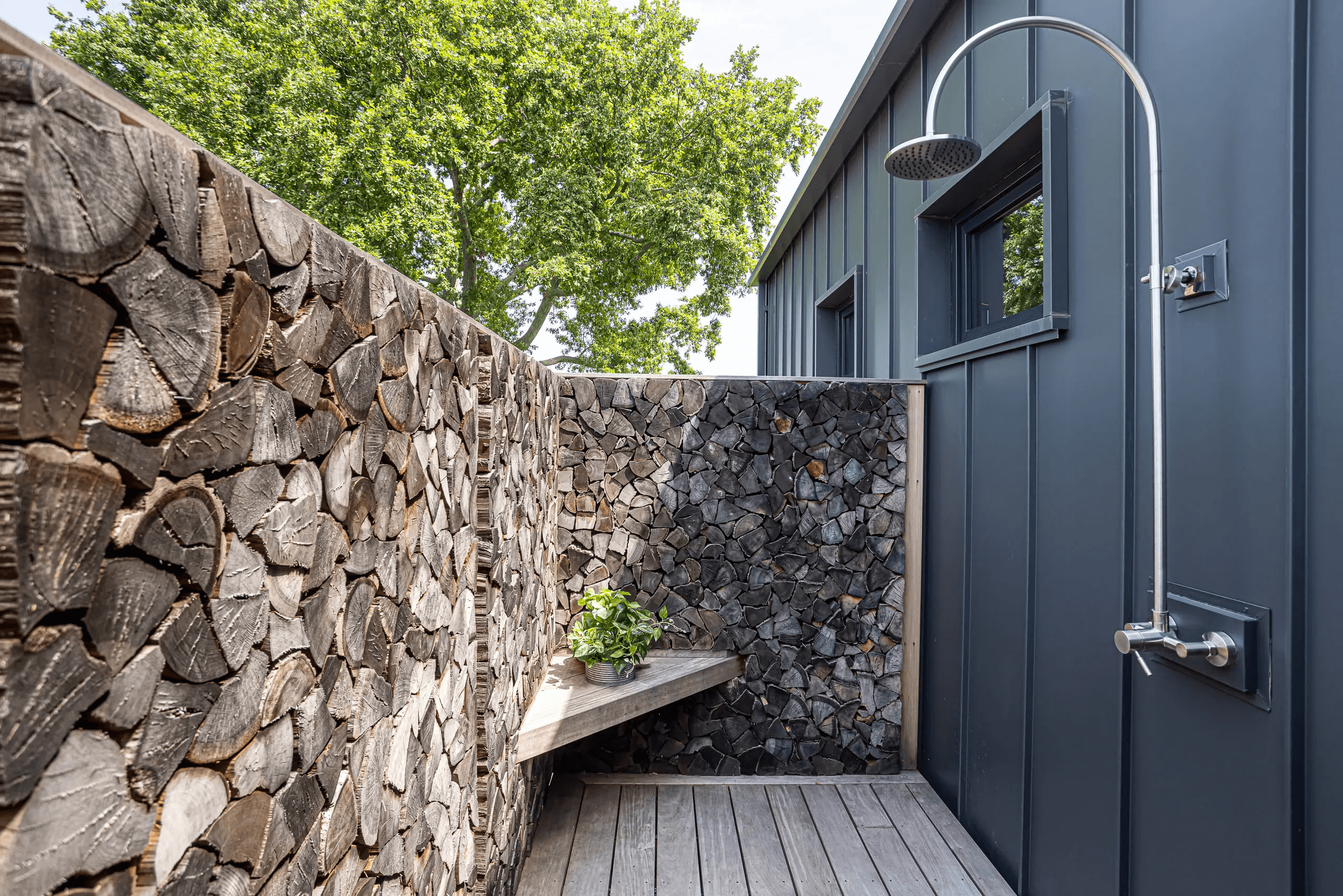
7. Add an Outdoor Shower
An outdoor shower is one of the most useful and memorable features in a beach house backyard.
It can be practical after swimming, gardening, or returning from the beach, but it also adds to the experience of coastal living. A well-placed shower can feel private, simple, and connected to the landscape.
Use walls, screens, planting, or the architecture of the house to create privacy without making the space feel enclosed.
The location should also make sense in relation to the home. A shower near a mudroom, pool area, or secondary entrance is often easier to use than one placed far from the house.
8. Use Paths to Shape the Experience of the Yard
Paths do more than connect one part of the backyard to another. They influence how the space is experienced.
A direct path works well between frequently used areas, such as the house and outdoor dining space. A softer, more gradual route may be better for a garden, fire pit, or viewpoint.
Paths can also create a sense of discovery. A change in direction, a framed opening, or a planting bed that partially screens the destination can make a small yard feel more layered.
The design should feel easy to navigate without making every part of the landscape visible at once.
9. Create Distinct Outdoor Rooms
A coastal backyard can support several different activities without feeling divided.
An outdoor dining area, lounge space, fire circle, garden, and play area can each have their own identity while still belonging to one larger landscape. Changes in level, planting, furniture placement, or overhead structure can define these areas.
The key is to keep the connections between them clear. Outdoor rooms should feel related rather than isolated.
This approach is especially useful on larger properties, where one open lawn can otherwise feel undefined.
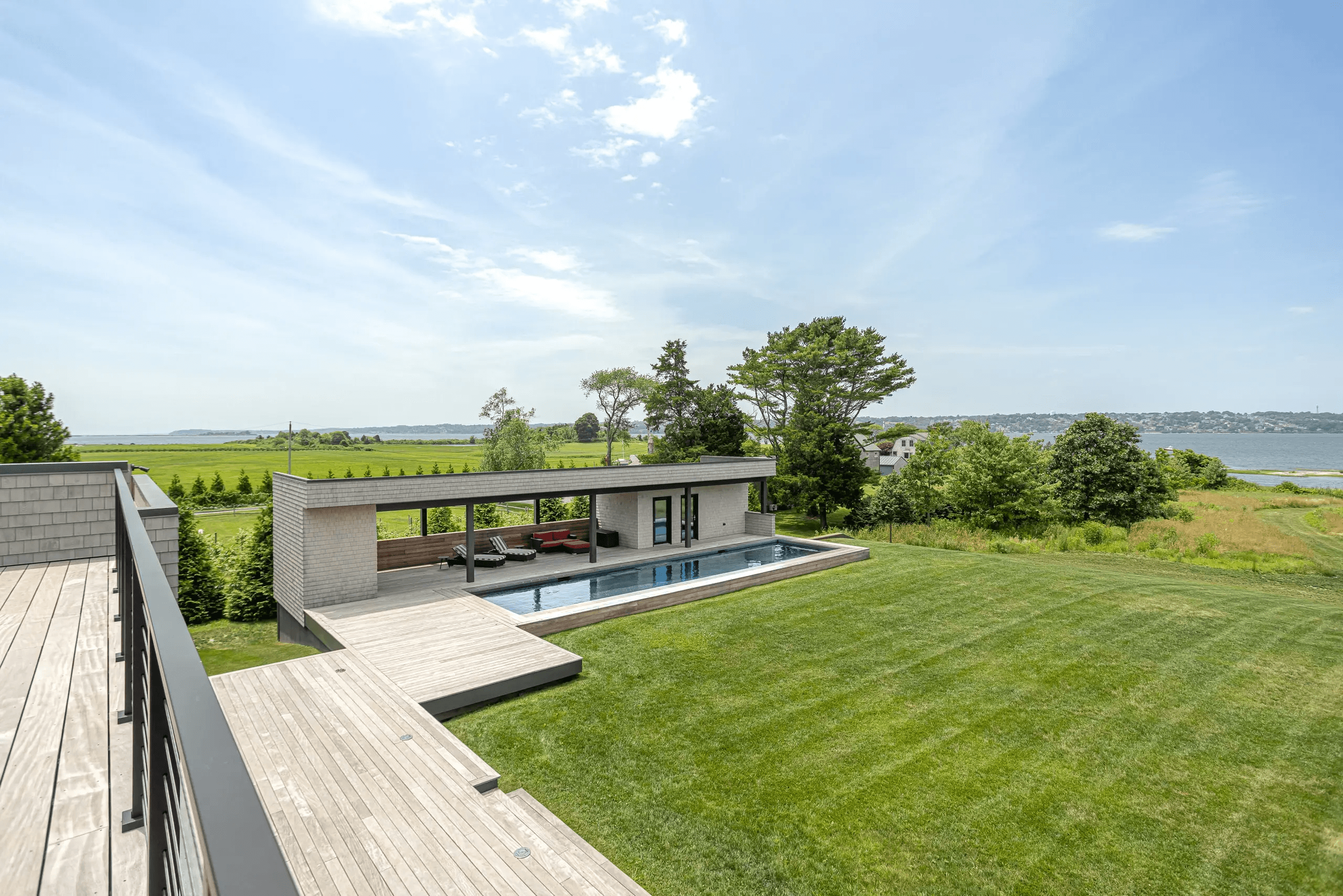
10. Keep the Pool Area Visually Calm
A pool can be a major part of a beach house backyard, but it should not overwhelm the landscape.
Simple lines, generous surrounding space, and a clear relationship to the house can help the pool feel integrated rather than added on. The view from inside matters just as much as the experience from the pool deck.
Consider where lounge seating, umbrellas, and storage will go before finalizing the layout. These everyday elements have a strong effect on whether the area feels calm or cluttered.
A well-planned pool should support the landscape and the architecture rather than become the only thing the backyard is about.
11. Layer Outdoor Lighting
Outdoor lighting should make the backyard easier to use without overpowering the night.
Low path lights, subtle step lighting, wall-mounted fixtures, and warm light around gathering areas can create a softer atmosphere than a few very bright fixtures.
Different areas need different levels of illumination. Dining and cooking spaces require useful light, while a garden path or seating area may need only a small amount.
The goal is to preserve the darkness, views, and evening character of the property while making movement feel comfortable and safe.
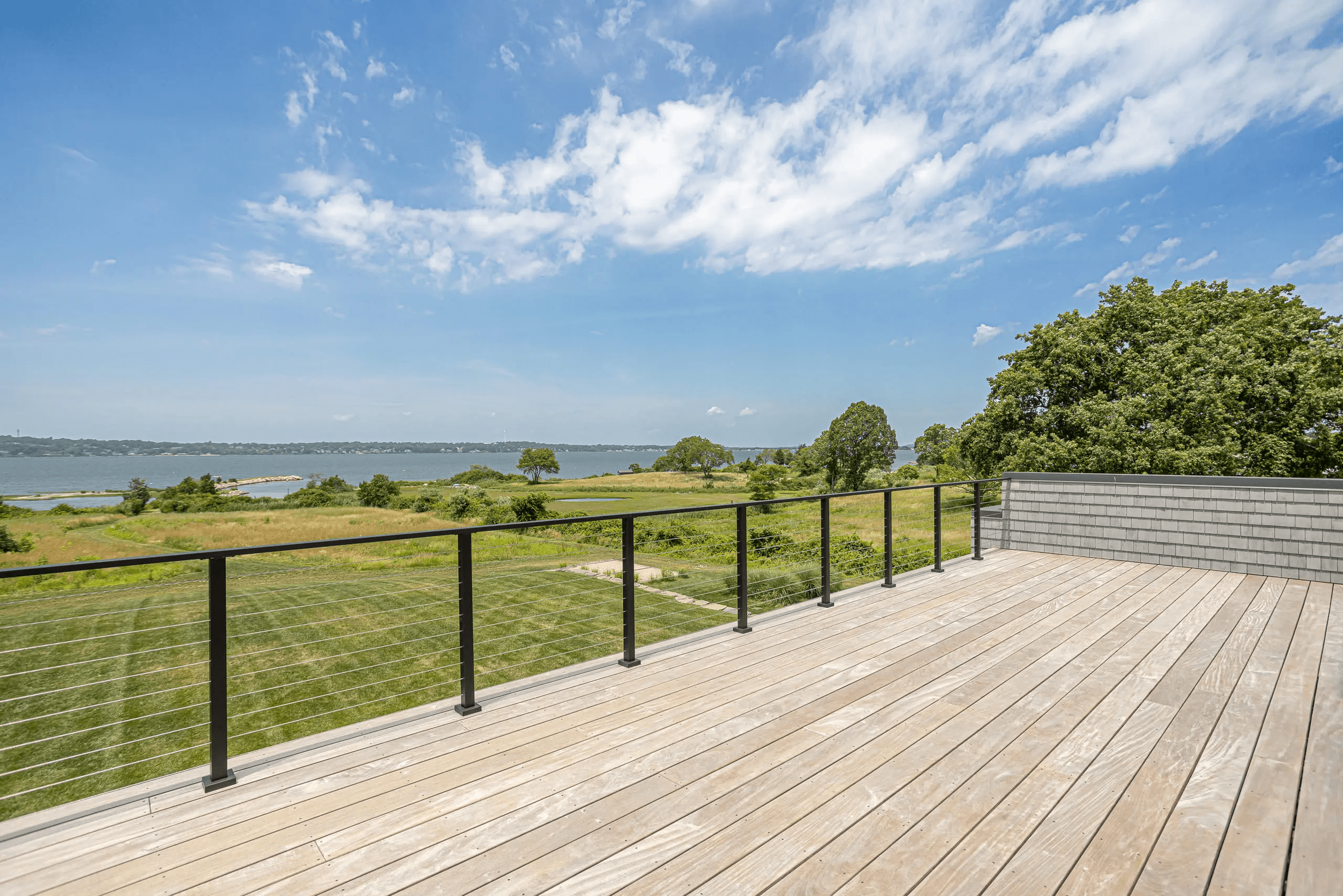
12. Leave Some Parts of the Landscape Simple
Not every part of a coastal backyard needs a feature.
Open lawn, meadow-like planting, a quiet stretch of gravel, or an uninterrupted view can give the rest of the design room to breathe. These simpler areas often make the yard feel larger and more connected to its setting.
Restraint is especially important on coastal properties, where the landscape may already provide strong visual interest.
A backyard can feel finished without being filled.
A Practical Note for Coastal Backyards
The design should lead the conversation, but the conditions of the property still matter.
Wind, salt exposure, sun, drainage, sandy soil, and seasonal weather can all influence how the landscape and outdoor features age. The impact will vary significantly from one site to another.
Once the overall layout and character are established, review planting, furniture, lighting, structures, and other products with the landscape designer, architect, builder, and suppliers.
The goal is not to limit the design. It is to make sure the final choices suit the property and the way the homeowners plan to use the space.
Frequently Asked Questions
What makes a backyard feel coastal?
A coastal backyard usually feels open, relaxed, natural, and connected to the surrounding landscape. Views, informal gathering spaces, layered planting, simple materials, and an easy relationship between the house and yard are more important than beach-themed decorations.
How do I make a beach house backyard feel more private?
Use planting, screens, walls, changes in elevation, and carefully placed outdoor structures to create privacy without closing off the entire yard. The strongest solutions block specific views while preserving light, air, and the best parts of the landscape.
What features are most useful in a coastal backyard?
Outdoor dining, covered seating, an outdoor shower, layered lighting, clear paths, and comfortable gathering areas tend to add the most everyday value. The right combination depends on how the household uses the property.
Does a coastal backyard need a pool?
No. A strong coastal backyard is shaped by its relationship to the house and landscape, not by one required feature. A terrace, porch, garden, fire pit, or open lawn can be just as central to the design.
How can I make a small coastal backyard feel larger?
Keep sight lines open, use a limited number of materials, avoid oversized features, and create clear connections between spaces. A strong view, simple planting, and one well-defined gathering area can make a small yard feel more generous.
How do I avoid making a coastal backyard look too themed?
Focus on the landscape, architecture, and way the space is used rather than adding obvious nautical details. Natural planting, simple structures, comfortable furniture, and restrained lighting will usually create a stronger coastal feeling than decorative symbols.
What should I consider when planning a backyard near the coast?
Start with views, sunlight, wind, drainage, privacy, and movement between the house and yard. Once the design direction is clear, review the final planting and product selections for the property’s specific exposure and maintenance needs.
Designing a Coastal Backyard Around the Way You Live
A well-designed coastal backyard should feel easy to use in every season.
It does not need to follow a fixed formula or include a prescribed list of features. The strongest designs come from the property itself: the direction of the light, the best views, the shape of the land, the relationship to the house, and the way the homeowners want to spend time outside.
Thinking through a coastal backyard for a new build or renovation on the Rhode Island coast? We design custom, zero-energy homes around the property, the architecture, and the way each household wants to live. Explore more of our approach to coastal home design and building, or reach out to talk through your project.
Newport Renewables
316 Columbia St, Wakefield, RI 02879
401.619.5906
Let's Chat
Start your next project with Newport Renewables.
OUR SERVICES
Work with Newport Renewables
We do two things, and we do them at full scale: commercial solar across Rhode Island and ground-up custom homes built to perform. Here's where you fit.
Commercial solar for your property or business?
We design and install solar for commercial buildings, warehouses, and income properties across Rhode Island — sized to your actual load, your roof or land, and the incentives available right now. The goal isn't just panels on a roof; it's a system that pays for itself and keeps producing for decades.
→ See how commercial solar works
Building a new custom home?
We design and build custom homes with integrated zero-energy systems from the ground up. When every component — orientation, envelope, electrical capacity, HVAC, solar, storage — is planned together instead of bolted on later, you get a home that's built for long-term performance and value.
→ Learn about our zero-energy home builds
316 Columbia St • Wakefield, RI 02879 | 401.619.5906




Copyright © 2024 Newport Renewables. All Rights Reserved.
316 Columbia St • Wakefield, RI 02879 | 401.619.5906
Copyright © 2024 Newport Renewables. All Rights Reserved.
Coastal Backyard Ideas for a Beach House
The best coastal backyard ideas are not about filling an outdoor space with beach-themed décor. They are about creating a setting that feels relaxed, open, and connected to the landscape.
A well-designed beach house backyard should make it easy to move between indoors and out. It should offer places to gather, eat, rest, and enjoy the view without feeling overdesigned. The materials, planting, and layout should support the setting rather than compete with it.
That approach works whether the property sits directly on the water, overlooks a marsh, faces a wooded edge, or simply draws inspiration from coastal living.
Below are twelve coastal backyard ideas that can help shape a more inviting outdoor space for a new build or renovation.
1. Create a Strong Connection Between the House and Yard
A coastal backyard works best when it feels like an extension of the home rather than a separate destination.
Wide doors, covered porches, terraces, and clear paths can make the transition from the interior feel natural. The goal is to avoid a hard break between the house and the landscape.
Think about where people step outside, what they see first, and where they naturally want to go. A direct connection from the kitchen or living area to an outdoor dining space can make the backyard much easier to use.
The more intuitive the movement feels, the more often the space will become part of everyday life.
2. Frame the Best View
Every coastal property has a view worth organizing around, even when it is not a direct ocean view.
It might be the horizon, a marsh, a line of trees, a garden, a stone wall, or the changing light across the yard. Seating areas, paths, and outdoor rooms can be positioned to make that view feel intentional.
Avoid placing large features where they interrupt the strongest sight line from the house. A pool, pergola, or planting bed may look attractive on its own but feel misplaced if it blocks the landscape.
A carefully framed view gives the backyard a focal point without adding unnecessary decoration.
3. Build a Comfortable Outdoor Dining Area
Outdoor dining is often at the center of beach house living.
The space should feel close enough to the kitchen to be practical and open enough to enjoy the surrounding air and light. A table placed beneath a pergola, porch roof, or simple shade structure can make the area more comfortable throughout the day.
Allow enough room around the table for people to move easily, pull out chairs, and carry food without feeling crowded.
The most successful outdoor dining spaces feel casual enough for breakfast and comfortable enough for a long evening meal.
4. Add a Covered Place to Sit
A covered outdoor area gives the backyard more range.
It provides shelter from strong sun, passing rain, and evening moisture while still keeping people connected to the yard. This might take the form of a porch, pavilion, pergola, or a smaller roofed seating area.
A covered space can also make the backyard feel more architectural. It creates a defined outdoor room and gives furniture, lighting, and gathering areas a clear place within the overall layout.
The design does not need to be elaborate. Even a simple overhead structure can make the yard feel more comfortable and complete.
5. Use Planting to Soften the Architecture
Coastal landscapes often feel most natural when planting softens the edges of the house, terrace, and walkways.
Grasses, shrubs, layered planting beds, and low groundcover can help the yard feel settled into its surroundings. The goal is not to create a highly formal garden, but to introduce movement, texture, and seasonal change.
Planting can also guide people through the yard, frame a view, create privacy, or make a large outdoor area feel more intimate.
The strongest landscapes usually feel composed without appearing overly controlled.
6. Create a Fire Feature for Cooler Evenings
A fire feature can extend the use of a coastal backyard well beyond the warmest part of the day.
A fire pit, outdoor fireplace, or simple gathering circle gives people a natural place to sit as the temperature drops. It can become a focal point in a larger yard or help define a more intimate area away from the house.
Position it where people can enjoy the view without blocking important paths or crowding the main dining area.
The best fire spaces feel relaxed and social, with enough room for chairs to shift and groups to gather comfortably.
7. Add an Outdoor Shower
An outdoor shower is one of the most useful and memorable features in a beach house backyard.
It can be practical after swimming, gardening, or returning from the beach, but it also adds to the experience of coastal living. A well-placed shower can feel private, simple, and connected to the landscape.
Use walls, screens, planting, or the architecture of the house to create privacy without making the space feel enclosed.
The location should also make sense in relation to the home. A shower near a mudroom, pool area, or secondary entrance is often easier to use than one placed far from the house.
8. Use Paths to Shape the Experience of the Yard
Paths do more than connect one part of the backyard to another. They influence how the space is experienced.
A direct path works well between frequently used areas, such as the house and outdoor dining space. A softer, more gradual route may be better for a garden, fire pit, or viewpoint.
Paths can also create a sense of discovery. A change in direction, a framed opening, or a planting bed that partially screens the destination can make a small yard feel more layered.
The design should feel easy to navigate without making every part of the landscape visible at once.
9. Create Distinct Outdoor Rooms
A coastal backyard can support several different activities without feeling divided.
An outdoor dining area, lounge space, fire circle, garden, and play area can each have their own identity while still belonging to one larger landscape. Changes in level, planting, furniture placement, or overhead structure can define these areas.
The key is to keep the connections between them clear. Outdoor rooms should feel related rather than isolated.
This approach is especially useful on larger properties, where one open lawn can otherwise feel undefined.
10. Keep the Pool Area Visually Calm
A pool can be a major part of a beach house backyard, but it should not overwhelm the landscape.
Simple lines, generous surrounding space, and a clear relationship to the house can help the pool feel integrated rather than added on. The view from inside matters just as much as the experience from the pool deck.
Consider where lounge seating, umbrellas, and storage will go before finalizing the layout. These everyday elements have a strong effect on whether the area feels calm or cluttered.
A well-planned pool should support the landscape and the architecture rather than become the only thing the backyard is about.
11. Layer Outdoor Lighting
Outdoor lighting should make the backyard easier to use without overpowering the night.
Low path lights, subtle step lighting, wall-mounted fixtures, and warm light around gathering areas can create a softer atmosphere than a few very bright fixtures.
Different areas need different levels of illumination. Dining and cooking spaces require useful light, while a garden path or seating area may need only a small amount.
The goal is to preserve the darkness, views, and evening character of the property while making movement feel comfortable and safe.
12. Leave Some Parts of the Landscape Simple
Not every part of a coastal backyard needs a feature.
Open lawn, meadow-like planting, a quiet stretch of gravel, or an uninterrupted view can give the rest of the design room to breathe. These simpler areas often make the yard feel larger and more connected to its setting.
Restraint is especially important on coastal properties, where the landscape may already provide strong visual interest.
A backyard can feel finished without being filled.
A Practical Note for Coastal Backyards
The design should lead the conversation, but the conditions of the property still matter.
Wind, salt exposure, sun, drainage, sandy soil, and seasonal weather can all influence how the landscape and outdoor features age. The impact will vary significantly from one site to another.
Once the overall layout and character are established, review planting, furniture, lighting, structures, and other products with the landscape designer, architect, builder, and suppliers.
The goal is not to limit the design. It is to make sure the final choices suit the property and the way the homeowners plan to use the space.
Frequently Asked Questions
What makes a backyard feel coastal?
A coastal backyard usually feels open, relaxed, natural, and connected to the surrounding landscape. Views, informal gathering spaces, layered planting, simple materials, and an easy relationship between the house and yard are more important than beach-themed decorations.
How do I make a beach house backyard feel more private?
Use planting, screens, walls, changes in elevation, and carefully placed outdoor structures to create privacy without closing off the entire yard. The strongest solutions block specific views while preserving light, air, and the best parts of the landscape.
What features are most useful in a coastal backyard?
Outdoor dining, covered seating, an outdoor shower, layered lighting, clear paths, and comfortable gathering areas tend to add the most everyday value. The right combination depends on how the household uses the property.
Does a coastal backyard need a pool?
No. A strong coastal backyard is shaped by its relationship to the house and landscape, not by one required feature. A terrace, porch, garden, fire pit, or open lawn can be just as central to the design.
How can I make a small coastal backyard feel larger?
Keep sight lines open, use a limited number of materials, avoid oversized features, and create clear connections between spaces. A strong view, simple planting, and one well-defined gathering area can make a small yard feel more generous.
How do I avoid making a coastal backyard look too themed?
Focus on the landscape, architecture, and way the space is used rather than adding obvious nautical details. Natural planting, simple structures, comfortable furniture, and restrained lighting will usually create a stronger coastal feeling than decorative symbols.
What should I consider when planning a backyard near the coast?
Start with views, sunlight, wind, drainage, privacy, and movement between the house and yard. Once the design direction is clear, review the final planting and product selections for the property’s specific exposure and maintenance needs.
Designing a Coastal Backyard Around the Way You Live
A well-designed coastal backyard should feel easy to use in every season.
It does not need to follow a fixed formula or include a prescribed list of features. The strongest designs come from the property itself: the direction of the light, the best views, the shape of the land, the relationship to the house, and the way the homeowners want to spend time outside.
Thinking through a coastal backyard for a new build or renovation on the Rhode Island coast? We design custom, zero-energy homes around the property, the architecture, and the way each household wants to live. Explore more of our approach to coastal home design and building, or reach out to talk through your project.
Newport Renewables
316 Columbia St, Wakefield, RI 02879
401.619.5906
OUR SERVICES
Work with Newport Renewables
We do two things, and we do them at full scale: commercial solar across Rhode Island and ground-up custom homes built to perform. Here's where you fit.
Commercial solar for your property or business?
We design and install solar for commercial buildings, warehouses, and income properties across Rhode Island — sized to your actual load, your roof or land, and the incentives available right now. The goal isn't just panels on a roof; it's a system that pays for itself and keeps producing for decades.
→ See how commercial solar works
Building a new custom home?
We design and build custom homes with integrated zero-energy systems from the ground up. When every component — orientation, envelope, electrical capacity, HVAC, solar, storage — is planned together instead of bolted on later, you get a home that's built for long-term performance and value.
→ Learn about our zero-energy home builds
316 Columbia St • Wakefield, RI 02879 | 401.619.5906
Copyright © 2024 Newport Renewables. All Rights Reserved.

Coastal Backyard Ideas for a Beach House
The best coastal backyard ideas are not about filling an outdoor space with beach-themed décor. They are about creating a setting that feels relaxed, open, and connected to the landscape.
A well-designed beach house backyard should make it easy to move between indoors and out. It should offer places to gather, eat, rest, and enjoy the view without feeling overdesigned. The materials, planting, and layout should support the setting rather than compete with it.
That approach works whether the property sits directly on the water, overlooks a marsh, faces a wooded edge, or simply draws inspiration from coastal living.
Below are twelve coastal backyard ideas that can help shape a more inviting outdoor space for a new build or renovation.
1. Create a Strong Connection Between the House and Yard
A coastal backyard works best when it feels like an extension of the home rather than a separate destination.
Wide doors, covered porches, terraces, and clear paths can make the transition from the interior feel natural. The goal is to avoid a hard break between the house and the landscape.
Think about where people step outside, what they see first, and where they naturally want to go. A direct connection from the kitchen or living area to an outdoor dining space can make the backyard much easier to use.
The more intuitive the movement feels, the more often the space will become part of everyday life.
2. Frame the Best View
Every coastal property has a view worth organizing around, even when it is not a direct ocean view.
It might be the horizon, a marsh, a line of trees, a garden, a stone wall, or the changing light across the yard. Seating areas, paths, and outdoor rooms can be positioned to make that view feel intentional.
Avoid placing large features where they interrupt the strongest sight line from the house. A pool, pergola, or planting bed may look attractive on its own but feel misplaced if it blocks the landscape.
A carefully framed view gives the backyard a focal point without adding unnecessary decoration.
3. Build a Comfortable Outdoor Dining Area
Outdoor dining is often at the center of beach house living.
The space should feel close enough to the kitchen to be practical and open enough to enjoy the surrounding air and light. A table placed beneath a pergola, porch roof, or simple shade structure can make the area more comfortable throughout the day.
Allow enough room around the table for people to move easily, pull out chairs, and carry food without feeling crowded.
The most successful outdoor dining spaces feel casual enough for breakfast and comfortable enough for a long evening meal.
4. Add a Covered Place to Sit
A covered outdoor area gives the backyard more range.
It provides shelter from strong sun, passing rain, and evening moisture while still keeping people connected to the yard. This might take the form of a porch, pavilion, pergola, or a smaller roofed seating area.
A covered space can also make the backyard feel more architectural. It creates a defined outdoor room and gives furniture, lighting, and gathering areas a clear place within the overall layout.
The design does not need to be elaborate. Even a simple overhead structure can make the yard feel more comfortable and complete.
5. Use Planting to Soften the Architecture
Coastal landscapes often feel most natural when planting softens the edges of the house, terrace, and walkways.
Grasses, shrubs, layered planting beds, and low groundcover can help the yard feel settled into its surroundings. The goal is not to create a highly formal garden, but to introduce movement, texture, and seasonal change.
Planting can also guide people through the yard, frame a view, create privacy, or make a large outdoor area feel more intimate.
The strongest landscapes usually feel composed without appearing overly controlled.
6. Create a Fire Feature for Cooler Evenings
A fire feature can extend the use of a coastal backyard well beyond the warmest part of the day.
A fire pit, outdoor fireplace, or simple gathering circle gives people a natural place to sit as the temperature drops. It can become a focal point in a larger yard or help define a more intimate area away from the house.
Position it where people can enjoy the view without blocking important paths or crowding the main dining area.
The best fire spaces feel relaxed and social, with enough room for chairs to shift and groups to gather comfortably.
7. Add an Outdoor Shower
An outdoor shower is one of the most useful and memorable features in a beach house backyard.
It can be practical after swimming, gardening, or returning from the beach, but it also adds to the experience of coastal living. A well-placed shower can feel private, simple, and connected to the landscape.
Use walls, screens, planting, or the architecture of the house to create privacy without making the space feel enclosed.
The location should also make sense in relation to the home. A shower near a mudroom, pool area, or secondary entrance is often easier to use than one placed far from the house.
8. Use Paths to Shape the Experience of the Yard
Paths do more than connect one part of the backyard to another. They influence how the space is experienced.
A direct path works well between frequently used areas, such as the house and outdoor dining space. A softer, more gradual route may be better for a garden, fire pit, or viewpoint.
Paths can also create a sense of discovery. A change in direction, a framed opening, or a planting bed that partially screens the destination can make a small yard feel more layered.
The design should feel easy to navigate without making every part of the landscape visible at once.
9. Create Distinct Outdoor Rooms
A coastal backyard can support several different activities without feeling divided.
An outdoor dining area, lounge space, fire circle, garden, and play area can each have their own identity while still belonging to one larger landscape. Changes in level, planting, furniture placement, or overhead structure can define these areas.
The key is to keep the connections between them clear. Outdoor rooms should feel related rather than isolated.
This approach is especially useful on larger properties, where one open lawn can otherwise feel undefined.
10. Keep the Pool Area Visually Calm
A pool can be a major part of a beach house backyard, but it should not overwhelm the landscape.
Simple lines, generous surrounding space, and a clear relationship to the house can help the pool feel integrated rather than added on. The view from inside matters just as much as the experience from the pool deck.
Consider where lounge seating, umbrellas, and storage will go before finalizing the layout. These everyday elements have a strong effect on whether the area feels calm or cluttered.
A well-planned pool should support the landscape and the architecture rather than become the only thing the backyard is about.
11. Layer Outdoor Lighting
Outdoor lighting should make the backyard easier to use without overpowering the night.
Low path lights, subtle step lighting, wall-mounted fixtures, and warm light around gathering areas can create a softer atmosphere than a few very bright fixtures.
Different areas need different levels of illumination. Dining and cooking spaces require useful light, while a garden path or seating area may need only a small amount.
The goal is to preserve the darkness, views, and evening character of the property while making movement feel comfortable and safe.
12. Leave Some Parts of the Landscape Simple
Not every part of a coastal backyard needs a feature.
Open lawn, meadow-like planting, a quiet stretch of gravel, or an uninterrupted view can give the rest of the design room to breathe. These simpler areas often make the yard feel larger and more connected to its setting.
Restraint is especially important on coastal properties, where the landscape may already provide strong visual interest.
A backyard can feel finished without being filled.
A Practical Note for Coastal Backyards
The design should lead the conversation, but the conditions of the property still matter.
Wind, salt exposure, sun, drainage, sandy soil, and seasonal weather can all influence how the landscape and outdoor features age. The impact will vary significantly from one site to another.
Once the overall layout and character are established, review planting, furniture, lighting, structures, and other products with the landscape designer, architect, builder, and suppliers.
The goal is not to limit the design. It is to make sure the final choices suit the property and the way the homeowners plan to use the space.
Frequently Asked Questions
What makes a backyard feel coastal?
A coastal backyard usually feels open, relaxed, natural, and connected to the surrounding landscape. Views, informal gathering spaces, layered planting, simple materials, and an easy relationship between the house and yard are more important than beach-themed decorations.
How do I make a beach house backyard feel more private?
Use planting, screens, walls, changes in elevation, and carefully placed outdoor structures to create privacy without closing off the entire yard. The strongest solutions block specific views while preserving light, air, and the best parts of the landscape.
What features are most useful in a coastal backyard?
Outdoor dining, covered seating, an outdoor shower, layered lighting, clear paths, and comfortable gathering areas tend to add the most everyday value. The right combination depends on how the household uses the property.
Does a coastal backyard need a pool?
No. A strong coastal backyard is shaped by its relationship to the house and landscape, not by one required feature. A terrace, porch, garden, fire pit, or open lawn can be just as central to the design.
How can I make a small coastal backyard feel larger?
Keep sight lines open, use a limited number of materials, avoid oversized features, and create clear connections between spaces. A strong view, simple planting, and one well-defined gathering area can make a small yard feel more generous.
How do I avoid making a coastal backyard look too themed?
Focus on the landscape, architecture, and way the space is used rather than adding obvious nautical details. Natural planting, simple structures, comfortable furniture, and restrained lighting will usually create a stronger coastal feeling than decorative symbols.
What should I consider when planning a backyard near the coast?
Start with views, sunlight, wind, drainage, privacy, and movement between the house and yard. Once the design direction is clear, review the final planting and product selections for the property’s specific exposure and maintenance needs.
Designing a Coastal Backyard Around the Way You Live
A well-designed coastal backyard should feel easy to use in every season.
It does not need to follow a fixed formula or include a prescribed list of features. The strongest designs come from the property itself: the direction of the light, the best views, the shape of the land, the relationship to the house, and the way the homeowners want to spend time outside.
Thinking through a coastal backyard for a new build or renovation on the Rhode Island coast? We design custom, zero-energy homes around the property, the architecture, and the way each household wants to live. Explore more of our approach to coastal home design and building, or reach out to talk through your project.
Newport Renewables
316 Columbia St, Wakefield, RI 02879
401.619.5906
OUR SERVICES
Work with Newport Renewables
We do two things, and we do them at full scale: commercial solar across Rhode Island and ground-up custom homes built to perform. Here's where you fit.
Commercial solar for your property or business?
We design and install solar for commercial buildings, warehouses, and income properties across Rhode Island — sized to your actual load, your roof or land, and the incentives available right now. The goal isn't just panels on a roof; it's a system that pays for itself and keeps producing for decades.
→ See how commercial solar works
Building a new custom home?
We design and build custom homes with integrated zero-energy systems from the ground up. When every component — orientation, envelope, electrical capacity, HVAC, solar, storage — is planned together instead of bolted on later, you get a home that's built for long-term performance and value.
→ Learn about our zero-energy home builds
Let's Chat
Start your next project with Newport Renewables.
316 Columbia St • Wakefield, RI 02879 | 401.619.5906
Copyright © 2024 Newport Renewables. All Rights Reserved.
316 Columbia St • Wakefield, RI 02879 | 401.619.5906
Copyright © 2024 Newport Renewables. All Rights Reserved.