Build vs Buy: Should You Build a Custom Home in 2026?
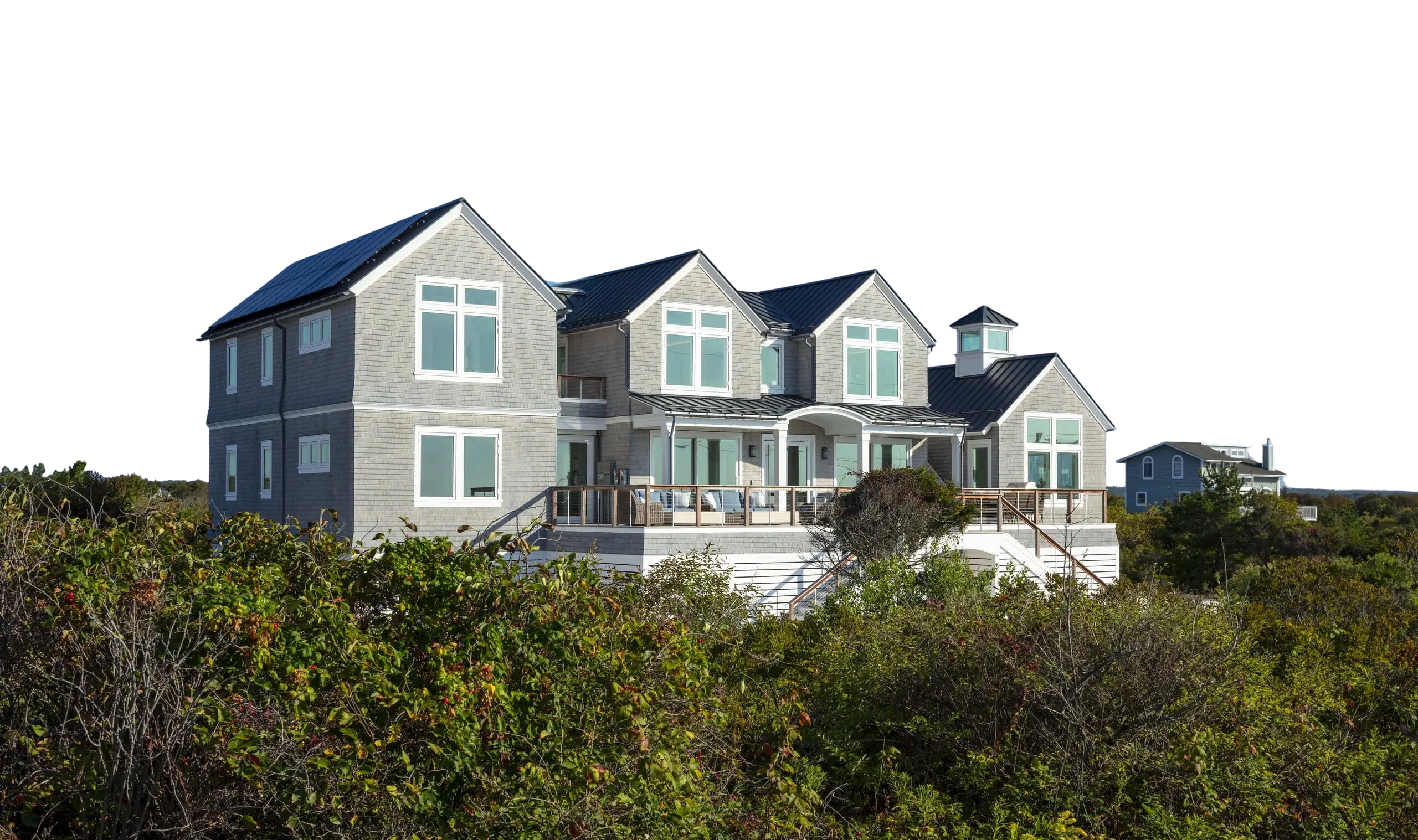
Building a custom home is the right choice for some buyers and a costly mistake for others — and the difference has as much to do with your timeline, finances, and temperament as it does with construction costs.
The numbers first. The median existing home sold for $417,700 in April 2026, per the National Association of Realtors — the 34th consecutive month of year-over-year price increases. The Census Bureau puts the median sale price of a new home at $387,400 as of March 2026, though that reflects production builder homes, not full custom construction. The NAHB puts the all-in cost of building a custom home — construction, land, financing, and soft costs — at approximately $665,000 for an average-sized build nationally.
On paper, building can look cheaper or more expensive than buying, depending entirely on how you count. This post gives you the full comparison — cost, timeline, risk, and the cases where each path genuinely makes more sense than the other.
The Honest Cost Comparison
Starting with what's actually comparable.
Buying an existing home in 2026: The median existing home price nationally is $417,700. Add closing costs of 2–5%, a typical inspection, and immediate repairs or updates, and the realistic all-in cost for most buyers is 105–115% of purchase price — roughly $440,000–$480,000 on a median-priced home. That number is fixed at the point of purchase. What you see is largely what you get.
Building a custom home in 2026: The NAHB national average construction cost for a standard single-family build is approximately $428,000, or $195 per square foot including contractor fees. Add land (highly variable — $30,000 in rural markets, $200,000+ in coastal or suburban markets), soft costs (permits, design, engineering, financing fees: $30,000–$100,000), and construction loan interest during the build period ($10,000–$30,000 or more), and the realistic all-in cost typically runs 130–160% of base construction cost.
The NAHB's all-in average for a new home — including land, financing, and builder overhead — is $665,298 nationally. The Census Bureau's median new home sale price of $387,400 reflects production builder homes in lower-cost markets; custom builds generally run higher.
What this means in practice:
In low-cost states with inexpensive land, building can be 10–20% cheaper than buying a comparable home, particularly if you're getting more square footage, modern systems, and custom finishes that would otherwise require renovation.
In high-cost markets — coastal areas, desirable suburbs, supply-constrained cities — building is typically 15–40% more expensive than buying an existing home at comparable quality. Land is expensive, permitting is slow, and labor costs are high. The math rarely favors building in these markets unless you have specific requirements that existing inventory genuinely can't meet.
The honest conclusion: "build is cheaper" or "buy is cheaper" is almost meaningless as a national statement - local conditions determine the answer.
When Building a Custom Home Makes Sense
There are five legitimate reasons to choose building over buying. If one or more of these applies to your situation, building may be the right path.
You can't find the right home after a serious search. The most common legitimate reason. If you've been searching actively for 6+ months and consistently failing to find homes that meet your basic requirements — layout, size, location, condition — building may be the only realistic path.
You have specific needs that existing homes don't meet. Multi-generational living with separate entrance and kitchenette. Accessibility requirements designed in from day one rather than retrofitted. A dedicated workshop, studio, or home office configuration that most existing homes don't accommodate. Passive house or net-zero energy performance that requires building to current standards from the ground up. These are legitimate needs that renovation often can't fully address.
You already own buildable land. Inheriting land, purchasing it separately, or building on a parcel you already own changes the math significantly. The land cost — often the largest variable differentiating build from buy — is already in hand. On owned land, building often becomes genuinely cost-competitive with or cheaper than purchasing an equivalent finished home.
The existing home market in your target area is low quality. In some markets — rural areas, certain older suburbs — most available inventory is dated, poorly maintained, or needs significant renovation. When renovation costs would approach build costs, starting from scratch with new systems and warranties can make more sense.
You value control and have the patience for it. Custom homes allow design decisions at every level — layout, materials, finishes, systems, energy performance. If you have strong opinions about how you want to live and the patience to see a 12–20 month process through, building delivers something buying genuinely can't: a home built specifically for you.
When Buying an Existing Home Makes More Sense
You need to move in within 12 months. This is the clearest case for buying. Custom builds typically take 7–12 months of construction after 3–6 months of pre-construction — design, permits, and financing. The full timeline from decision to move-in is commonly 12–20 months. If you have a job start, a school district deadline, or any other firm timeline, buying is almost always the right answer.
You're not willing or able to manage the process. Building a custom home requires sustained engagement over many months — hundreds of decisions about materials, finishes, systems, and configurations. Selections visits, contractor meetings, inspection schedules, change order reviews. If you're not willing or able to give this attention, the experience becomes miserable regardless of the outcome.
Your local existing home market has good inventory at fair prices. In markets with strong inventory of well-maintained homes, established neighborhood character, mature landscaping, and walkability, buying captures something building often can't replicate — the character and context that comes with a home in an established place. A great house in a great location is often a better long-term investment than a perfect house on a raw lot in a new development.
You're genuinely risk-averse with time and money. Existing homes have track records you can evaluate. A pre-purchase inspection identifies known issues. What you see at closing is largely what you're buying. Builds involve contractor reliability risk, timeline uncertainty, material cost volatility, and final quality risk that is difficult to fully mitigate in advance.
The Timeline Reality
This is the most frequently underestimated variable in the build-vs-buy decision.
Buying an existing home: From starting your search to closing is typically 1–3 months. Offer to closing runs 30–60 days in most markets. You can be in a house within a quarter of deciding to buy.
Building a custom home: Pre-construction — design, permitting, financing — takes 3–6 months before construction starts. Construction itself runs 7–12 months for most custom homes. Coastal or complex builds regularly run 12–18 months of construction alone. Add final inspection, certificate of occupancy, and punch list: typically another 1–2 months after construction completion.
Realistic full timeline from decision to move-in: 12–20 months. For complex projects or those with permitting delays, 24 months is not unusual.
The timeline cost is real money, not just inconvenience. If you're paying rent during the build period, 18 months at $2,500/month adds $45,000 to your effective build cost. If you're carrying a current mortgage on a property you're selling, the timing matters enormously. Construction loan interest — typically 6.7–8.8% on drawn amounts during the build — adds another $10,000–$30,000 or more depending on loan size and timeline.
What Customization Actually Gets You
Building custom doesn't automatically mean luxury finishes. The range is wide, and understanding what each tier buys is important.
Builder-grade custom ($195–$280/sq ft): A modified floor plan with standard layouts adjusted to your preferences. Mid-range finishes. Production-quality systems. On a 2,000 sq ft build, roughly $390,000–$560,000 before land. In many markets, this is comparable to or modestly above what you'd pay for a well-maintained existing home of the same size.
Mid-range custom ($280–$400/sq ft): A genuinely custom layout, quality finishes throughout, upgraded systems. On a 2,000 sq ft build, roughly $560,000–$800,000 before land. Generally above existing home cost in most markets.
High-end custom ($400–$600+/sq ft): Bespoke design, premium materials, top-tier systems and finishes. On a 2,000 sq ft build, $800,000–$1.2M+ before land. Significantly above existing home cost in all but the most expensive markets.
What custom builds deliver at every tier: new systems with full warranties, modern energy efficiency, no deferred maintenance to inherit, and layout designed for how you actually live. What they give up: established neighborhood character, mature landscaping, faster move-in, and cost predictability.
The Hidden Costs on Both Sides
Both paths carry costs that don't appear in headline comparisons.
Hidden costs of building: Site preparation — clearing, grading, drainage — runs $5,000–$50,000 depending on lot conditions. Utility connections (well, septic, electrical service, natural gas) add $10,000–$75,000 or more where municipal services aren't at the property line. Construction loan interest accumulates during the build. Design fees beyond base plans, soil testing, and engineering work add further. Change orders — which happen on virtually every build — typically add 4–10% to base contract cost. Landscaping after move-in: $7,500–$50,000 or more. Living costs during the build period.
Hidden costs of buying: Inspection-revealed repairs that weren't visible before closing: $5,000–$50,000+. Immediate cosmetic updates (paint, flooring, light fixtures, appliances): $10,000–$40,000+. System replacements within the first 5–10 years — HVAC, water heater, roof, windows — on a home with aging systems: $15,000–$50,000+. Renovation to make the layout work for your life: $20,000–$200,000+. Closing costs and lender fees: 2–5% of purchase price.
Both paths have significant costs beyond the headline number. The difference is that build costs are mostly visible upfront — with overrun risk — while buying costs reveal themselves over the first several years of ownership as systems age and renovation priorities emerge.
The Financing Difference
Often overlooked, but worth understanding before you start.
Buying an existing home: Standard 30-year mortgage. Predictable monthly payment from closing forward. One closing. Rate typically locked at offer acceptance.
Building a custom home: A construction loan during the build period — typically requiring around 20% down, a credit score of 740 or above for best rates, and interest paid on drawn amounts at rates currently running 6–8.8%. At completion, the construction loan converts to a permanent mortgage — either through a construction-to-permanent loan (one closing, but more complex underwriting) or through two separate closings. During the build, lenders draw funds in stages as work is completed, which requires more active management than a standard mortgage. The complexity, higher interest rates, and additional cash requirements mean building typically requires more savings and better financial positioning than buying.
The Long-Term Math
Most build-vs-buy comparisons stop at year one. They shouldn't.
Where building wins over 10–20 years: New construction means new systems — HVAC, plumbing, electrical, roofing — that typically don't need replacement for 15–25 years. Modern insulation and energy standards reduce utility costs throughout ownership. The early years of ownership carry far lower maintenance costs than an aging existing home. A well-built custom home to current energy codes will often save $20,000–$50,000 or more in operating costs over 20 years compared to a comparable pre-2010 existing home.
Where buying wins over 10–20 years: Established neighborhoods frequently appreciate more reliably than newer developments where neighborhood character is still forming. Lower upfront cost relative to building means more capital available for other investments. Faster occupancy means fewer carrying costs and earlier equity building. Easier resale in a changing market — established locations are typically more liquid than new development lots.
The long-term calculus tilts toward building when you're staying 15+ years, have strong energy cost concerns, and are building on an established site in a desirable location. It tilts toward buying when you value liquidity, aren't certain of your long-term plans, or are in a strong established neighborhood where existing inventory holds its value reliably.
The Decision Framework
Build if all three are true:
You have at least 12–18 months before you need to be in a home
You have a 15–25% financial buffer beyond your base construction estimate — in accessible cash, not paper equity
Existing inventory in your target area genuinely isn't meeting your needs after a serious search
Buy if any one of these is true:
You need to move in within 12 months
A 20% cost overrun would create meaningful financial hardship
You're not willing or able to engage actively with a 12–20 month decision-heavy process
Your local existing home market has reasonable inventory at fair prices
Consider buying and renovating. For many buyers, this is actually the smartest path — purchasing an existing home with strong bones in a great location and renovating to taste. You capture established neighborhood value and faster occupancy while still customizing your space. Renovation has its own cost and complexity risks, but they're often more contained than a full ground-up build.
No framework replaces local context. The build-vs-buy math in coastal Rhode Island is completely different from the math in rural Tennessee. Talking to a local builder and a local real estate agent — separately, and honestly — gives you the real numbers for your specific situation.
Frequently Asked Questions
Is it cheaper to build or buy a house in 2026? It depends on location and what you're comparing. The median existing home sold for $417,700 in April 2026. The NAHB puts all-in custom build costs at approximately $665,000 nationally when land and soft costs are included. In low-cost states with cheap land, building can come in below buying. In coastal and high-cost markets, buying is typically less expensive for comparable quality.
How long does it take to build a house vs buy? Buying an existing home: 1–3 months from search to move-in. Building a custom home: 12–20 months from decision to move-in, including pre-construction and construction. For complex or coastal builds, 24 months is not unusual.
What are the disadvantages of building a custom home? Longer timeline, higher upfront capital requirements, construction loan complexity, budget overrun risk, the need to manage a complex multi-month process, and uncertainty about final quality and timeline. In high-cost markets, the total cost often exceeds comparable existing homes.
What are the advantages of buying an existing home? Faster move-in, cost predictability, established neighborhood character, more straightforward financing, and the ability to see exactly what you're buying before purchase. Mature landscaping, established schools, and walkability are often only available in existing neighborhoods.
Is building a home a good investment? Generally yes, over a long enough horizon — particularly if you stay 15+ years and build with strong energy systems and quality construction. Modern systems and efficiency reduce operating costs throughout ownership. The investment case is weaker for shorter time horizons or in markets where existing home inventory holds value reliably.
How much money should I have saved before building a custom home? At minimum: 20–25% of estimated construction cost for the down payment, plus a 15–25% contingency buffer for overruns, plus land cost (if not already owned), plus soft costs (permits, design, engineering: $30,000–$100,000+). On a $500,000 construction project, having $200,000–$250,000 in accessible cash before starting is prudent.
Can you finance a custom home build? Yes, through a construction loan — typically requiring 20–25% down, strong credit (740+ for best rates), and qualification based on both the projected completed home value and the borrower's financial profile. Construction loans convert to permanent mortgages at completion, either through a construction-to-permanent loan structure or a separate refinance.
Is it worth building if I don't own land? Land cost is often the largest variable that makes or breaks the build-vs-buy math. Without land in hand, you need to factor full land acquisition cost into the comparison. In most markets, adding land purchase to construction cost produces an all-in figure that equals or exceeds buying an equivalent existing home. The clearest case for building assumes you already own the land.
What's the biggest mistake people make when building a house? Underestimating total cost and timeline. The base construction quote is not the final number — permits, site work, utility connections, design fees, change orders, landscaping, and construction loan interest all add substantially. Building with a 10% contingency is optimistic; 20% is prudent for most projects.
Sources
Let's Chat
Start your next project with Newport Renewables.
OUR SERVICES
Work with Newport Renewables
We do two things, and we do them at full scale: commercial solar across Rhode Island and ground-up custom homes built to perform. Here's where you fit.
Commercial solar for your property or business?
We design and install solar for commercial buildings, warehouses, and income properties across Rhode Island — sized to your actual load, your roof or land, and the incentives available right now. The goal isn't just panels on a roof; it's a system that pays for itself and keeps producing for decades.
→ See how commercial solar works
Building a new custom home?
We design and build custom homes with integrated zero-energy systems from the ground up. When every component — orientation, envelope, electrical capacity, HVAC, solar, storage — is planned together instead of bolted on later, you get a home that's built for long-term performance and value.
→ Learn about our zero-energy home builds
316 Columbia St • Wakefield, RI 02879 | 401.619.5906




Copyright © 2024 Newport Renewables. All Rights Reserved.
316 Columbia St • Wakefield, RI 02879 | 401.619.5906
Copyright © 2024 Newport Renewables. All Rights Reserved.
Build vs Buy: Should You Build a Custom Home in 2026?
Building a custom home is the right choice for some buyers and a costly mistake for others — and the difference has as much to do with your timeline, finances, and temperament as it does with construction costs.
The numbers first. The median existing home sold for $417,700 in April 2026, per the National Association of Realtors — the 34th consecutive month of year-over-year price increases. The Census Bureau puts the median sale price of a new home at $387,400 as of March 2026, though that reflects production builder homes, not full custom construction. The NAHB puts the all-in cost of building a custom home — construction, land, financing, and soft costs — at approximately $665,000 for an average-sized build nationally.
On paper, building can look cheaper or more expensive than buying, depending entirely on how you count. This post gives you the full comparison — cost, timeline, risk, and the cases where each path genuinely makes more sense than the other.
The Honest Cost Comparison
Starting with what's actually comparable.
Buying an existing home in 2026: The median existing home price nationally is $417,700. Add closing costs of 2–5%, a typical inspection, and immediate repairs or updates, and the realistic all-in cost for most buyers is 105–115% of purchase price — roughly $440,000–$480,000 on a median-priced home. That number is fixed at the point of purchase. What you see is largely what you get.
Building a custom home in 2026: The NAHB national average construction cost for a standard single-family build is approximately $428,000, or $195 per square foot including contractor fees. Add land (highly variable — $30,000 in rural markets, $200,000+ in coastal or suburban markets), soft costs (permits, design, engineering, financing fees: $30,000–$100,000), and construction loan interest during the build period ($10,000–$30,000 or more), and the realistic all-in cost typically runs 130–160% of base construction cost.
The NAHB's all-in average for a new home — including land, financing, and builder overhead — is $665,298 nationally. The Census Bureau's median new home sale price of $387,400 reflects production builder homes in lower-cost markets; custom builds generally run higher.
What this means in practice:
In low-cost states with inexpensive land, building can be 10–20% cheaper than buying a comparable home, particularly if you're getting more square footage, modern systems, and custom finishes that would otherwise require renovation.
In high-cost markets — coastal areas, desirable suburbs, supply-constrained cities — building is typically 15–40% more expensive than buying an existing home at comparable quality. Land is expensive, permitting is slow, and labor costs are high. The math rarely favors building in these markets unless you have specific requirements that existing inventory genuinely can't meet.
The honest conclusion: "build is cheaper" or "buy is cheaper" is almost meaningless as a national statement - local conditions determine the answer.
When Building a Custom Home Makes Sense
There are five legitimate reasons to choose building over buying. If one or more of these applies to your situation, building may be the right path.
You can't find the right home after a serious search. The most common legitimate reason. If you've been searching actively for 6+ months and consistently failing to find homes that meet your basic requirements — layout, size, location, condition — building may be the only realistic path.
You have specific needs that existing homes don't meet. Multi-generational living with separate entrance and kitchenette. Accessibility requirements designed in from day one rather than retrofitted. A dedicated workshop, studio, or home office configuration that most existing homes don't accommodate. Passive house or net-zero energy performance that requires building to current standards from the ground up. These are legitimate needs that renovation often can't fully address.
You already own buildable land. Inheriting land, purchasing it separately, or building on a parcel you already own changes the math significantly. The land cost — often the largest variable differentiating build from buy — is already in hand. On owned land, building often becomes genuinely cost-competitive with or cheaper than purchasing an equivalent finished home.
The existing home market in your target area is low quality. In some markets — rural areas, certain older suburbs — most available inventory is dated, poorly maintained, or needs significant renovation. When renovation costs would approach build costs, starting from scratch with new systems and warranties can make more sense.
You value control and have the patience for it. Custom homes allow design decisions at every level — layout, materials, finishes, systems, energy performance. If you have strong opinions about how you want to live and the patience to see a 12–20 month process through, building delivers something buying genuinely can't: a home built specifically for you.
When Buying an Existing Home Makes More Sense
You need to move in within 12 months. This is the clearest case for buying. Custom builds typically take 7–12 months of construction after 3–6 months of pre-construction — design, permits, and financing. The full timeline from decision to move-in is commonly 12–20 months. If you have a job start, a school district deadline, or any other firm timeline, buying is almost always the right answer.
You're not willing or able to manage the process. Building a custom home requires sustained engagement over many months — hundreds of decisions about materials, finishes, systems, and configurations. Selections visits, contractor meetings, inspection schedules, change order reviews. If you're not willing or able to give this attention, the experience becomes miserable regardless of the outcome.
Your local existing home market has good inventory at fair prices. In markets with strong inventory of well-maintained homes, established neighborhood character, mature landscaping, and walkability, buying captures something building often can't replicate — the character and context that comes with a home in an established place. A great house in a great location is often a better long-term investment than a perfect house on a raw lot in a new development.
You're genuinely risk-averse with time and money. Existing homes have track records you can evaluate. A pre-purchase inspection identifies known issues. What you see at closing is largely what you're buying. Builds involve contractor reliability risk, timeline uncertainty, material cost volatility, and final quality risk that is difficult to fully mitigate in advance.
The Timeline Reality
This is the most frequently underestimated variable in the build-vs-buy decision.
Buying an existing home: From starting your search to closing is typically 1–3 months. Offer to closing runs 30–60 days in most markets. You can be in a house within a quarter of deciding to buy.
Building a custom home: Pre-construction — design, permitting, financing — takes 3–6 months before construction starts. Construction itself runs 7–12 months for most custom homes. Coastal or complex builds regularly run 12–18 months of construction alone. Add final inspection, certificate of occupancy, and punch list: typically another 1–2 months after construction completion.
Realistic full timeline from decision to move-in: 12–20 months. For complex projects or those with permitting delays, 24 months is not unusual.
The timeline cost is real money, not just inconvenience. If you're paying rent during the build period, 18 months at $2,500/month adds $45,000 to your effective build cost. If you're carrying a current mortgage on a property you're selling, the timing matters enormously. Construction loan interest — typically 6.7–8.8% on drawn amounts during the build — adds another $10,000–$30,000 or more depending on loan size and timeline.
What Customization Actually Gets You
Building custom doesn't automatically mean luxury finishes. The range is wide, and understanding what each tier buys is important.
Builder-grade custom ($195–$280/sq ft): A modified floor plan with standard layouts adjusted to your preferences. Mid-range finishes. Production-quality systems. On a 2,000 sq ft build, roughly $390,000–$560,000 before land. In many markets, this is comparable to or modestly above what you'd pay for a well-maintained existing home of the same size.
Mid-range custom ($280–$400/sq ft): A genuinely custom layout, quality finishes throughout, upgraded systems. On a 2,000 sq ft build, roughly $560,000–$800,000 before land. Generally above existing home cost in most markets.
High-end custom ($400–$600+/sq ft): Bespoke design, premium materials, top-tier systems and finishes. On a 2,000 sq ft build, $800,000–$1.2M+ before land. Significantly above existing home cost in all but the most expensive markets.
What custom builds deliver at every tier: new systems with full warranties, modern energy efficiency, no deferred maintenance to inherit, and layout designed for how you actually live. What they give up: established neighborhood character, mature landscaping, faster move-in, and cost predictability.
The Hidden Costs on Both Sides
Both paths carry costs that don't appear in headline comparisons.
Hidden costs of building: Site preparation — clearing, grading, drainage — runs $5,000–$50,000 depending on lot conditions. Utility connections (well, septic, electrical service, natural gas) add $10,000–$75,000 or more where municipal services aren't at the property line. Construction loan interest accumulates during the build. Design fees beyond base plans, soil testing, and engineering work add further. Change orders — which happen on virtually every build — typically add 4–10% to base contract cost. Landscaping after move-in: $7,500–$50,000 or more. Living costs during the build period.
Hidden costs of buying: Inspection-revealed repairs that weren't visible before closing: $5,000–$50,000+. Immediate cosmetic updates (paint, flooring, light fixtures, appliances): $10,000–$40,000+. System replacements within the first 5–10 years — HVAC, water heater, roof, windows — on a home with aging systems: $15,000–$50,000+. Renovation to make the layout work for your life: $20,000–$200,000+. Closing costs and lender fees: 2–5% of purchase price.
Both paths have significant costs beyond the headline number. The difference is that build costs are mostly visible upfront — with overrun risk — while buying costs reveal themselves over the first several years of ownership as systems age and renovation priorities emerge.
The Financing Difference
Often overlooked, but worth understanding before you start.
Buying an existing home: Standard 30-year mortgage. Predictable monthly payment from closing forward. One closing. Rate typically locked at offer acceptance.
Building a custom home: A construction loan during the build period — typically requiring around 20% down, a credit score of 740 or above for best rates, and interest paid on drawn amounts at rates currently running 6–8.8%. At completion, the construction loan converts to a permanent mortgage — either through a construction-to-permanent loan (one closing, but more complex underwriting) or through two separate closings. During the build, lenders draw funds in stages as work is completed, which requires more active management than a standard mortgage. The complexity, higher interest rates, and additional cash requirements mean building typically requires more savings and better financial positioning than buying.
The Long-Term Math
Most build-vs-buy comparisons stop at year one. They shouldn't.
Where building wins over 10–20 years: New construction means new systems — HVAC, plumbing, electrical, roofing — that typically don't need replacement for 15–25 years. Modern insulation and energy standards reduce utility costs throughout ownership. The early years of ownership carry far lower maintenance costs than an aging existing home. A well-built custom home to current energy codes will often save $20,000–$50,000 or more in operating costs over 20 years compared to a comparable pre-2010 existing home.
Where buying wins over 10–20 years: Established neighborhoods frequently appreciate more reliably than newer developments where neighborhood character is still forming. Lower upfront cost relative to building means more capital available for other investments. Faster occupancy means fewer carrying costs and earlier equity building. Easier resale in a changing market — established locations are typically more liquid than new development lots.
The long-term calculus tilts toward building when you're staying 15+ years, have strong energy cost concerns, and are building on an established site in a desirable location. It tilts toward buying when you value liquidity, aren't certain of your long-term plans, or are in a strong established neighborhood where existing inventory holds its value reliably.
The Decision Framework
Build if all three are true:
You have at least 12–18 months before you need to be in a home
You have a 15–25% financial buffer beyond your base construction estimate — in accessible cash, not paper equity
Existing inventory in your target area genuinely isn't meeting your needs after a serious search
Buy if any one of these is true:
You need to move in within 12 months
A 20% cost overrun would create meaningful financial hardship
You're not willing or able to engage actively with a 12–20 month decision-heavy process
Your local existing home market has reasonable inventory at fair prices
Consider buying and renovating. For many buyers, this is actually the smartest path — purchasing an existing home with strong bones in a great location and renovating to taste. You capture established neighborhood value and faster occupancy while still customizing your space. Renovation has its own cost and complexity risks, but they're often more contained than a full ground-up build.
No framework replaces local context. The build-vs-buy math in coastal Rhode Island is completely different from the math in rural Tennessee. Talking to a local builder and a local real estate agent — separately, and honestly — gives you the real numbers for your specific situation.
Frequently Asked Questions
Is it cheaper to build or buy a house in 2026? It depends on location and what you're comparing. The median existing home sold for $417,700 in April 2026. The NAHB puts all-in custom build costs at approximately $665,000 nationally when land and soft costs are included. In low-cost states with cheap land, building can come in below buying. In coastal and high-cost markets, buying is typically less expensive for comparable quality.
How long does it take to build a house vs buy? Buying an existing home: 1–3 months from search to move-in. Building a custom home: 12–20 months from decision to move-in, including pre-construction and construction. For complex or coastal builds, 24 months is not unusual.
What are the disadvantages of building a custom home? Longer timeline, higher upfront capital requirements, construction loan complexity, budget overrun risk, the need to manage a complex multi-month process, and uncertainty about final quality and timeline. In high-cost markets, the total cost often exceeds comparable existing homes.
What are the advantages of buying an existing home? Faster move-in, cost predictability, established neighborhood character, more straightforward financing, and the ability to see exactly what you're buying before purchase. Mature landscaping, established schools, and walkability are often only available in existing neighborhoods.
Is building a home a good investment? Generally yes, over a long enough horizon — particularly if you stay 15+ years and build with strong energy systems and quality construction. Modern systems and efficiency reduce operating costs throughout ownership. The investment case is weaker for shorter time horizons or in markets where existing home inventory holds value reliably.
How much money should I have saved before building a custom home? At minimum: 20–25% of estimated construction cost for the down payment, plus a 15–25% contingency buffer for overruns, plus land cost (if not already owned), plus soft costs (permits, design, engineering: $30,000–$100,000+). On a $500,000 construction project, having $200,000–$250,000 in accessible cash before starting is prudent.
Can you finance a custom home build? Yes, through a construction loan — typically requiring 20–25% down, strong credit (740+ for best rates), and qualification based on both the projected completed home value and the borrower's financial profile. Construction loans convert to permanent mortgages at completion, either through a construction-to-permanent loan structure or a separate refinance.
Is it worth building if I don't own land? Land cost is often the largest variable that makes or breaks the build-vs-buy math. Without land in hand, you need to factor full land acquisition cost into the comparison. In most markets, adding land purchase to construction cost produces an all-in figure that equals or exceeds buying an equivalent existing home. The clearest case for building assumes you already own the land.
What's the biggest mistake people make when building a house? Underestimating total cost and timeline. The base construction quote is not the final number — permits, site work, utility connections, design fees, change orders, landscaping, and construction loan interest all add substantially. Building with a 10% contingency is optimistic; 20% is prudent for most projects.
Sources
OUR SERVICES
Work with Newport Renewables
We do two things, and we do them at full scale: commercial solar across Rhode Island and ground-up custom homes built to perform. Here's where you fit.
Commercial solar for your property or business?
We design and install solar for commercial buildings, warehouses, and income properties across Rhode Island — sized to your actual load, your roof or land, and the incentives available right now. The goal isn't just panels on a roof; it's a system that pays for itself and keeps producing for decades.
→ See how commercial solar works
Building a new custom home?
We design and build custom homes with integrated zero-energy systems from the ground up. When every component — orientation, envelope, electrical capacity, HVAC, solar, storage — is planned together instead of bolted on later, you get a home that's built for long-term performance and value.
→ Learn about our zero-energy home builds
316 Columbia St • Wakefield, RI 02879 | 401.619.5906
Copyright © 2024 Newport Renewables. All Rights Reserved.

Build vs Buy: Should You Build a Custom Home in 2026?
Building a custom home is the right choice for some buyers and a costly mistake for others — and the difference has as much to do with your timeline, finances, and temperament as it does with construction costs.
The numbers first. The median existing home sold for $417,700 in April 2026, per the National Association of Realtors — the 34th consecutive month of year-over-year price increases. The Census Bureau puts the median sale price of a new home at $387,400 as of March 2026, though that reflects production builder homes, not full custom construction. The NAHB puts the all-in cost of building a custom home — construction, land, financing, and soft costs — at approximately $665,000 for an average-sized build nationally.
On paper, building can look cheaper or more expensive than buying, depending entirely on how you count. This post gives you the full comparison — cost, timeline, risk, and the cases where each path genuinely makes more sense than the other.
The Honest Cost Comparison
Starting with what's actually comparable.
Buying an existing home in 2026: The median existing home price nationally is $417,700. Add closing costs of 2–5%, a typical inspection, and immediate repairs or updates, and the realistic all-in cost for most buyers is 105–115% of purchase price — roughly $440,000–$480,000 on a median-priced home. That number is fixed at the point of purchase. What you see is largely what you get.
Building a custom home in 2026: The NAHB national average construction cost for a standard single-family build is approximately $428,000, or $195 per square foot including contractor fees. Add land (highly variable — $30,000 in rural markets, $200,000+ in coastal or suburban markets), soft costs (permits, design, engineering, financing fees: $30,000–$100,000), and construction loan interest during the build period ($10,000–$30,000 or more), and the realistic all-in cost typically runs 130–160% of base construction cost.
The NAHB's all-in average for a new home — including land, financing, and builder overhead — is $665,298 nationally. The Census Bureau's median new home sale price of $387,400 reflects production builder homes in lower-cost markets; custom builds generally run higher.
What this means in practice:
In low-cost states with inexpensive land, building can be 10–20% cheaper than buying a comparable home, particularly if you're getting more square footage, modern systems, and custom finishes that would otherwise require renovation.
In high-cost markets — coastal areas, desirable suburbs, supply-constrained cities — building is typically 15–40% more expensive than buying an existing home at comparable quality. Land is expensive, permitting is slow, and labor costs are high. The math rarely favors building in these markets unless you have specific requirements that existing inventory genuinely can't meet.
The honest conclusion: "build is cheaper" or "buy is cheaper" is almost meaningless as a national statement - local conditions determine the answer.
When Building a Custom Home Makes Sense
There are five legitimate reasons to choose building over buying. If one or more of these applies to your situation, building may be the right path.
You can't find the right home after a serious search. The most common legitimate reason. If you've been searching actively for 6+ months and consistently failing to find homes that meet your basic requirements — layout, size, location, condition — building may be the only realistic path.
You have specific needs that existing homes don't meet. Multi-generational living with separate entrance and kitchenette. Accessibility requirements designed in from day one rather than retrofitted. A dedicated workshop, studio, or home office configuration that most existing homes don't accommodate. Passive house or net-zero energy performance that requires building to current standards from the ground up. These are legitimate needs that renovation often can't fully address.
You already own buildable land. Inheriting land, purchasing it separately, or building on a parcel you already own changes the math significantly. The land cost — often the largest variable differentiating build from buy — is already in hand. On owned land, building often becomes genuinely cost-competitive with or cheaper than purchasing an equivalent finished home.
The existing home market in your target area is low quality. In some markets — rural areas, certain older suburbs — most available inventory is dated, poorly maintained, or needs significant renovation. When renovation costs would approach build costs, starting from scratch with new systems and warranties can make more sense.
You value control and have the patience for it. Custom homes allow design decisions at every level — layout, materials, finishes, systems, energy performance. If you have strong opinions about how you want to live and the patience to see a 12–20 month process through, building delivers something buying genuinely can't: a home built specifically for you.
When Buying an Existing Home Makes More Sense
You need to move in within 12 months. This is the clearest case for buying. Custom builds typically take 7–12 months of construction after 3–6 months of pre-construction — design, permits, and financing. The full timeline from decision to move-in is commonly 12–20 months. If you have a job start, a school district deadline, or any other firm timeline, buying is almost always the right answer.
You're not willing or able to manage the process. Building a custom home requires sustained engagement over many months — hundreds of decisions about materials, finishes, systems, and configurations. Selections visits, contractor meetings, inspection schedules, change order reviews. If you're not willing or able to give this attention, the experience becomes miserable regardless of the outcome.
Your local existing home market has good inventory at fair prices. In markets with strong inventory of well-maintained homes, established neighborhood character, mature landscaping, and walkability, buying captures something building often can't replicate — the character and context that comes with a home in an established place. A great house in a great location is often a better long-term investment than a perfect house on a raw lot in a new development.
You're genuinely risk-averse with time and money. Existing homes have track records you can evaluate. A pre-purchase inspection identifies known issues. What you see at closing is largely what you're buying. Builds involve contractor reliability risk, timeline uncertainty, material cost volatility, and final quality risk that is difficult to fully mitigate in advance.
The Timeline Reality
This is the most frequently underestimated variable in the build-vs-buy decision.
Buying an existing home: From starting your search to closing is typically 1–3 months. Offer to closing runs 30–60 days in most markets. You can be in a house within a quarter of deciding to buy.
Building a custom home: Pre-construction — design, permitting, financing — takes 3–6 months before construction starts. Construction itself runs 7–12 months for most custom homes. Coastal or complex builds regularly run 12–18 months of construction alone. Add final inspection, certificate of occupancy, and punch list: typically another 1–2 months after construction completion.
Realistic full timeline from decision to move-in: 12–20 months. For complex projects or those with permitting delays, 24 months is not unusual.
The timeline cost is real money, not just inconvenience. If you're paying rent during the build period, 18 months at $2,500/month adds $45,000 to your effective build cost. If you're carrying a current mortgage on a property you're selling, the timing matters enormously. Construction loan interest — typically 6.7–8.8% on drawn amounts during the build — adds another $10,000–$30,000 or more depending on loan size and timeline.
What Customization Actually Gets You
Building custom doesn't automatically mean luxury finishes. The range is wide, and understanding what each tier buys is important.
Builder-grade custom ($195–$280/sq ft): A modified floor plan with standard layouts adjusted to your preferences. Mid-range finishes. Production-quality systems. On a 2,000 sq ft build, roughly $390,000–$560,000 before land. In many markets, this is comparable to or modestly above what you'd pay for a well-maintained existing home of the same size.
Mid-range custom ($280–$400/sq ft): A genuinely custom layout, quality finishes throughout, upgraded systems. On a 2,000 sq ft build, roughly $560,000–$800,000 before land. Generally above existing home cost in most markets.
High-end custom ($400–$600+/sq ft): Bespoke design, premium materials, top-tier systems and finishes. On a 2,000 sq ft build, $800,000–$1.2M+ before land. Significantly above existing home cost in all but the most expensive markets.
What custom builds deliver at every tier: new systems with full warranties, modern energy efficiency, no deferred maintenance to inherit, and layout designed for how you actually live. What they give up: established neighborhood character, mature landscaping, faster move-in, and cost predictability.
The Hidden Costs on Both Sides
Both paths carry costs that don't appear in headline comparisons.
Hidden costs of building: Site preparation — clearing, grading, drainage — runs $5,000–$50,000 depending on lot conditions. Utility connections (well, septic, electrical service, natural gas) add $10,000–$75,000 or more where municipal services aren't at the property line. Construction loan interest accumulates during the build. Design fees beyond base plans, soil testing, and engineering work add further. Change orders — which happen on virtually every build — typically add 4–10% to base contract cost. Landscaping after move-in: $7,500–$50,000 or more. Living costs during the build period.
Hidden costs of buying: Inspection-revealed repairs that weren't visible before closing: $5,000–$50,000+. Immediate cosmetic updates (paint, flooring, light fixtures, appliances): $10,000–$40,000+. System replacements within the first 5–10 years — HVAC, water heater, roof, windows — on a home with aging systems: $15,000–$50,000+. Renovation to make the layout work for your life: $20,000–$200,000+. Closing costs and lender fees: 2–5% of purchase price.
Both paths have significant costs beyond the headline number. The difference is that build costs are mostly visible upfront — with overrun risk — while buying costs reveal themselves over the first several years of ownership as systems age and renovation priorities emerge.
The Financing Difference
Often overlooked, but worth understanding before you start.
Buying an existing home: Standard 30-year mortgage. Predictable monthly payment from closing forward. One closing. Rate typically locked at offer acceptance.
Building a custom home: A construction loan during the build period — typically requiring around 20% down, a credit score of 740 or above for best rates, and interest paid on drawn amounts at rates currently running 6–8.8%. At completion, the construction loan converts to a permanent mortgage — either through a construction-to-permanent loan (one closing, but more complex underwriting) or through two separate closings. During the build, lenders draw funds in stages as work is completed, which requires more active management than a standard mortgage. The complexity, higher interest rates, and additional cash requirements mean building typically requires more savings and better financial positioning than buying.
The Long-Term Math
Most build-vs-buy comparisons stop at year one. They shouldn't.
Where building wins over 10–20 years: New construction means new systems — HVAC, plumbing, electrical, roofing — that typically don't need replacement for 15–25 years. Modern insulation and energy standards reduce utility costs throughout ownership. The early years of ownership carry far lower maintenance costs than an aging existing home. A well-built custom home to current energy codes will often save $20,000–$50,000 or more in operating costs over 20 years compared to a comparable pre-2010 existing home.
Where buying wins over 10–20 years: Established neighborhoods frequently appreciate more reliably than newer developments where neighborhood character is still forming. Lower upfront cost relative to building means more capital available for other investments. Faster occupancy means fewer carrying costs and earlier equity building. Easier resale in a changing market — established locations are typically more liquid than new development lots.
The long-term calculus tilts toward building when you're staying 15+ years, have strong energy cost concerns, and are building on an established site in a desirable location. It tilts toward buying when you value liquidity, aren't certain of your long-term plans, or are in a strong established neighborhood where existing inventory holds its value reliably.
The Decision Framework
Build if all three are true:
You have at least 12–18 months before you need to be in a home
You have a 15–25% financial buffer beyond your base construction estimate — in accessible cash, not paper equity
Existing inventory in your target area genuinely isn't meeting your needs after a serious search
Buy if any one of these is true:
You need to move in within 12 months
A 20% cost overrun would create meaningful financial hardship
You're not willing or able to engage actively with a 12–20 month decision-heavy process
Your local existing home market has reasonable inventory at fair prices
Consider buying and renovating. For many buyers, this is actually the smartest path — purchasing an existing home with strong bones in a great location and renovating to taste. You capture established neighborhood value and faster occupancy while still customizing your space. Renovation has its own cost and complexity risks, but they're often more contained than a full ground-up build.
No framework replaces local context. The build-vs-buy math in coastal Rhode Island is completely different from the math in rural Tennessee. Talking to a local builder and a local real estate agent — separately, and honestly — gives you the real numbers for your specific situation.
Frequently Asked Questions
Is it cheaper to build or buy a house in 2026? It depends on location and what you're comparing. The median existing home sold for $417,700 in April 2026. The NAHB puts all-in custom build costs at approximately $665,000 nationally when land and soft costs are included. In low-cost states with cheap land, building can come in below buying. In coastal and high-cost markets, buying is typically less expensive for comparable quality.
How long does it take to build a house vs buy? Buying an existing home: 1–3 months from search to move-in. Building a custom home: 12–20 months from decision to move-in, including pre-construction and construction. For complex or coastal builds, 24 months is not unusual.
What are the disadvantages of building a custom home? Longer timeline, higher upfront capital requirements, construction loan complexity, budget overrun risk, the need to manage a complex multi-month process, and uncertainty about final quality and timeline. In high-cost markets, the total cost often exceeds comparable existing homes.
What are the advantages of buying an existing home? Faster move-in, cost predictability, established neighborhood character, more straightforward financing, and the ability to see exactly what you're buying before purchase. Mature landscaping, established schools, and walkability are often only available in existing neighborhoods.
Is building a home a good investment? Generally yes, over a long enough horizon — particularly if you stay 15+ years and build with strong energy systems and quality construction. Modern systems and efficiency reduce operating costs throughout ownership. The investment case is weaker for shorter time horizons or in markets where existing home inventory holds value reliably.
How much money should I have saved before building a custom home? At minimum: 20–25% of estimated construction cost for the down payment, plus a 15–25% contingency buffer for overruns, plus land cost (if not already owned), plus soft costs (permits, design, engineering: $30,000–$100,000+). On a $500,000 construction project, having $200,000–$250,000 in accessible cash before starting is prudent.
Can you finance a custom home build? Yes, through a construction loan — typically requiring 20–25% down, strong credit (740+ for best rates), and qualification based on both the projected completed home value and the borrower's financial profile. Construction loans convert to permanent mortgages at completion, either through a construction-to-permanent loan structure or a separate refinance.
Is it worth building if I don't own land? Land cost is often the largest variable that makes or breaks the build-vs-buy math. Without land in hand, you need to factor full land acquisition cost into the comparison. In most markets, adding land purchase to construction cost produces an all-in figure that equals or exceeds buying an equivalent existing home. The clearest case for building assumes you already own the land.
What's the biggest mistake people make when building a house? Underestimating total cost and timeline. The base construction quote is not the final number — permits, site work, utility connections, design fees, change orders, landscaping, and construction loan interest all add substantially. Building with a 10% contingency is optimistic; 20% is prudent for most projects.
Sources
OUR SERVICES
Work with Newport Renewables
We do two things, and we do them at full scale: commercial solar across Rhode Island and ground-up custom homes built to perform. Here's where you fit.
Commercial solar for your property or business?
We design and install solar for commercial buildings, warehouses, and income properties across Rhode Island — sized to your actual load, your roof or land, and the incentives available right now. The goal isn't just panels on a roof; it's a system that pays for itself and keeps producing for decades.
→ See how commercial solar works
Building a new custom home?
We design and build custom homes with integrated zero-energy systems from the ground up. When every component — orientation, envelope, electrical capacity, HVAC, solar, storage — is planned together instead of bolted on later, you get a home that's built for long-term performance and value.
→ Learn about our zero-energy home builds
Let's Chat
Start your next project with Newport Renewables.
316 Columbia St • Wakefield, RI 02879 | 401.619.5906
Copyright © 2024 Newport Renewables. All Rights Reserved.
316 Columbia St • Wakefield, RI 02879 | 401.619.5906
Copyright © 2024 Newport Renewables. All Rights Reserved.